
Last updated November 22, 2026
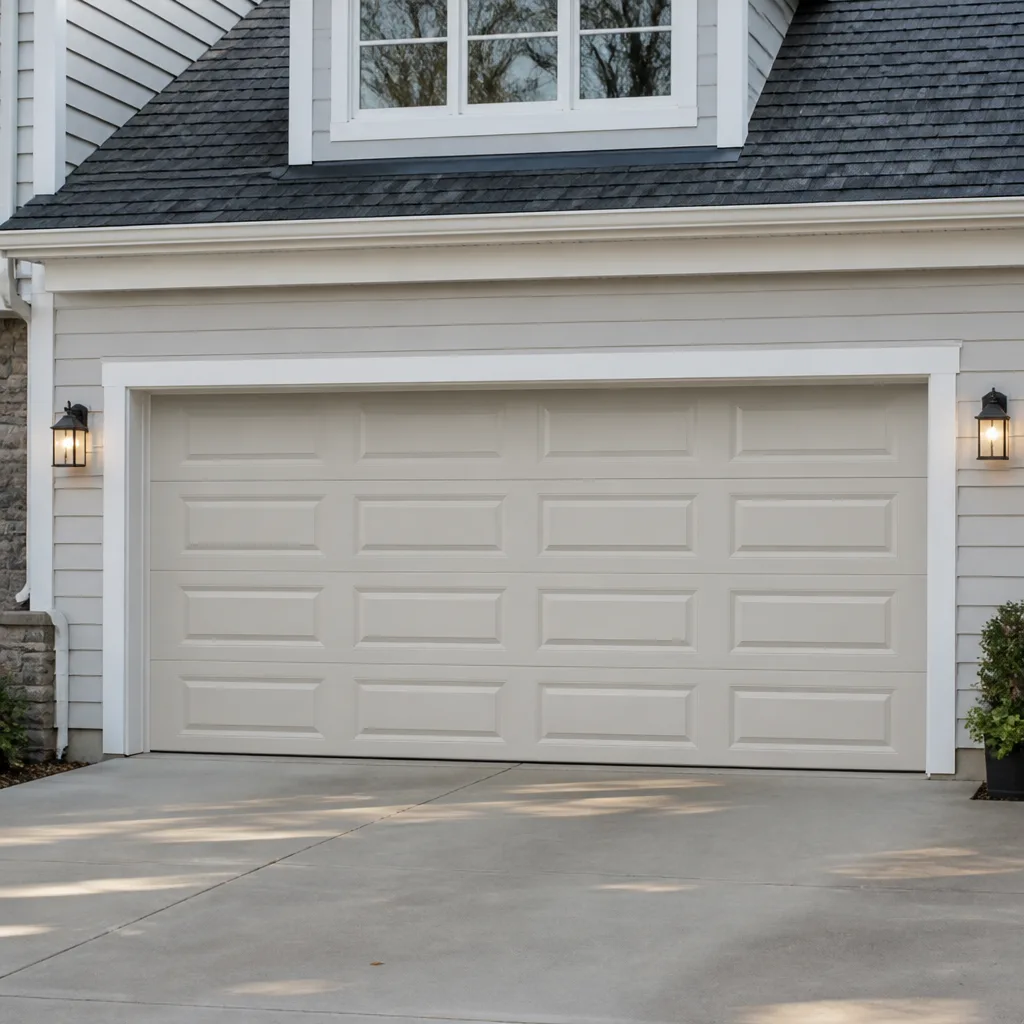 Raised-panel steel
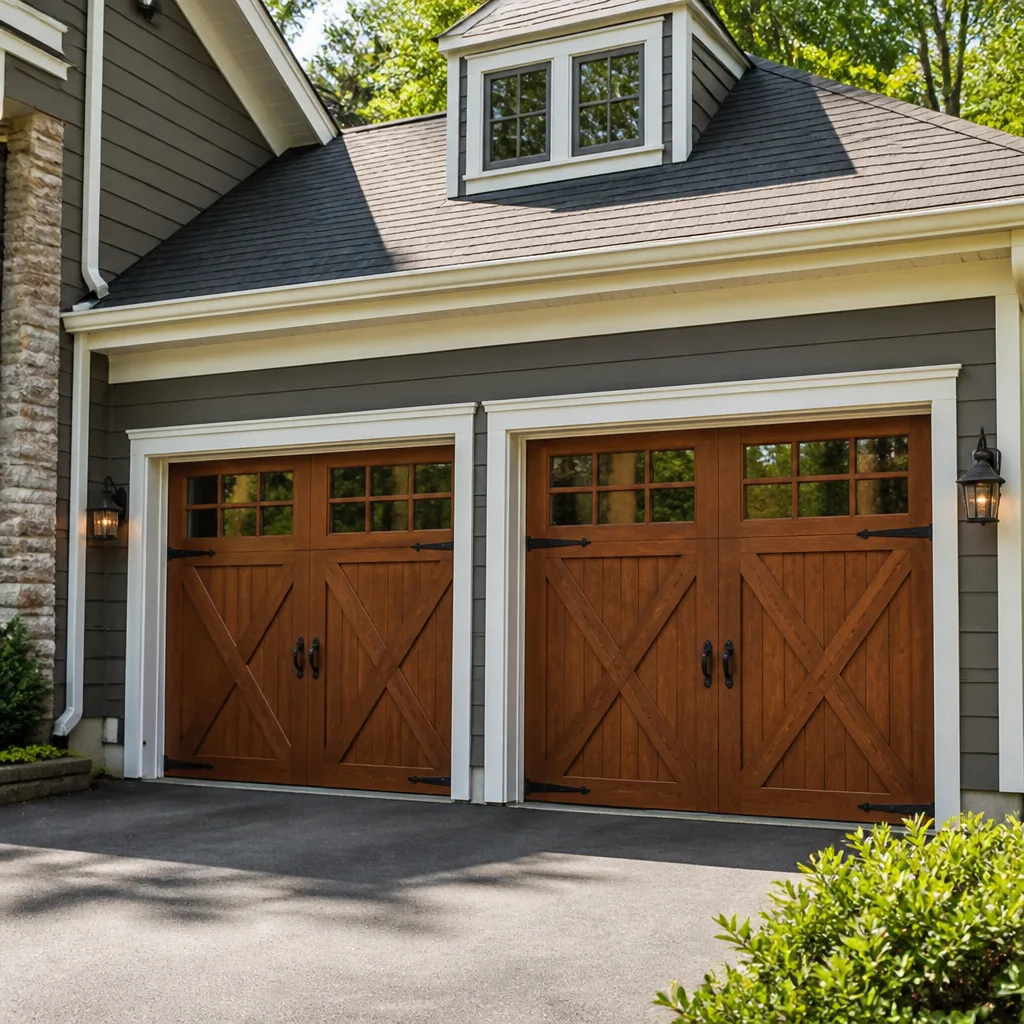 Carriage house
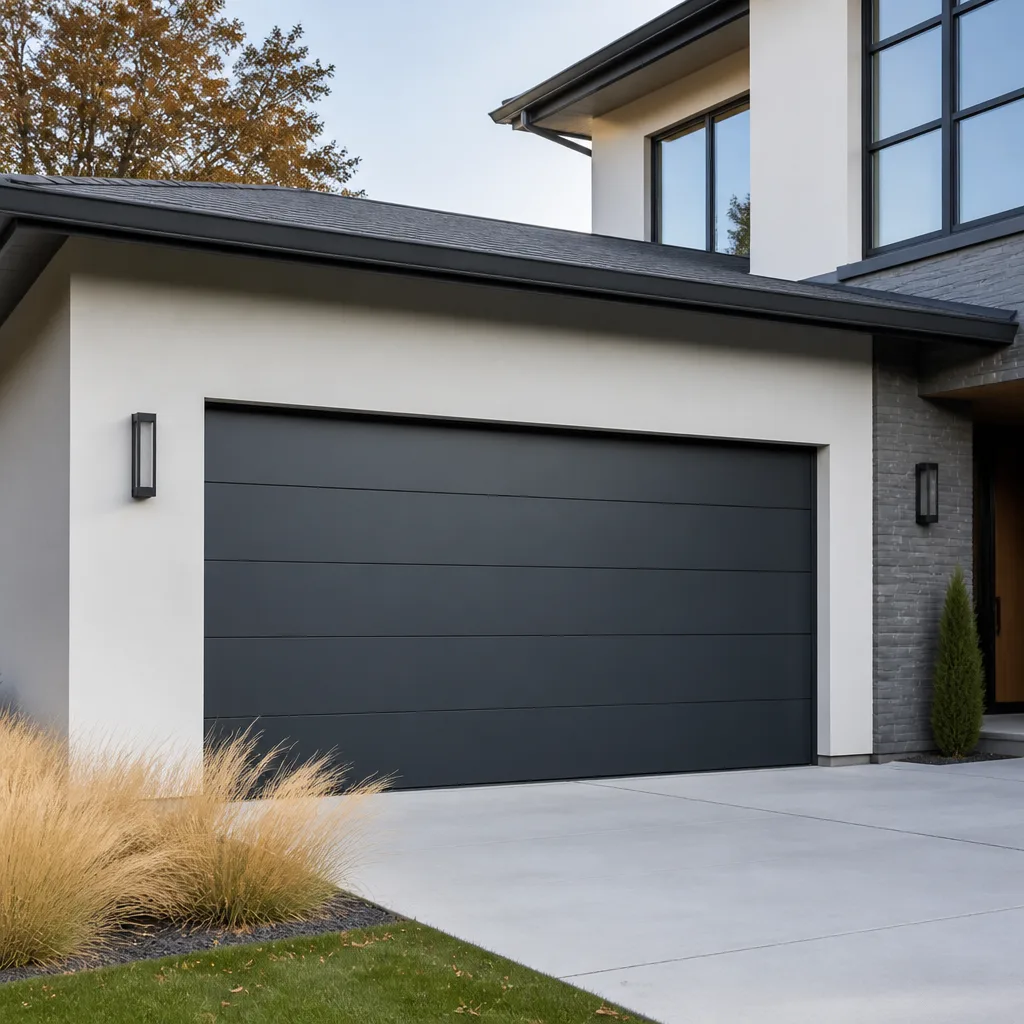 Modern flush
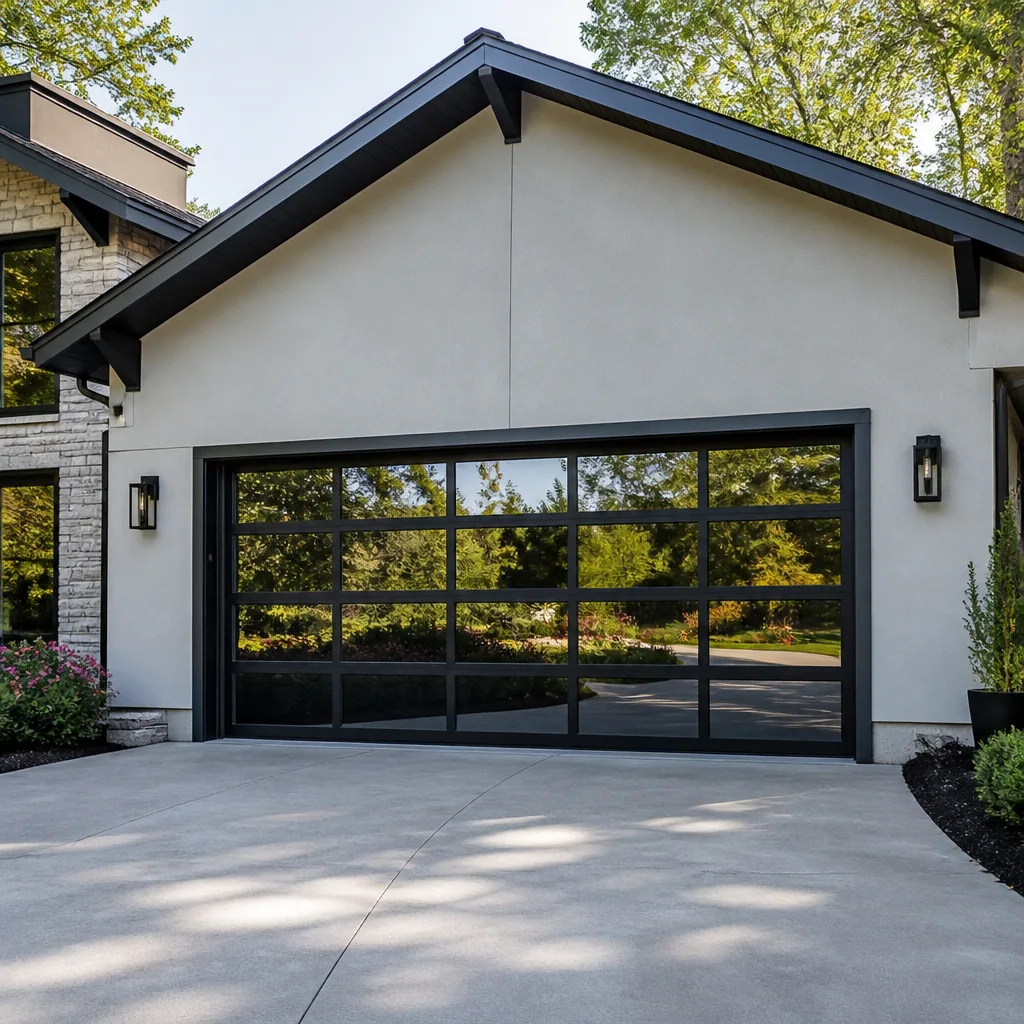 Full-view glass
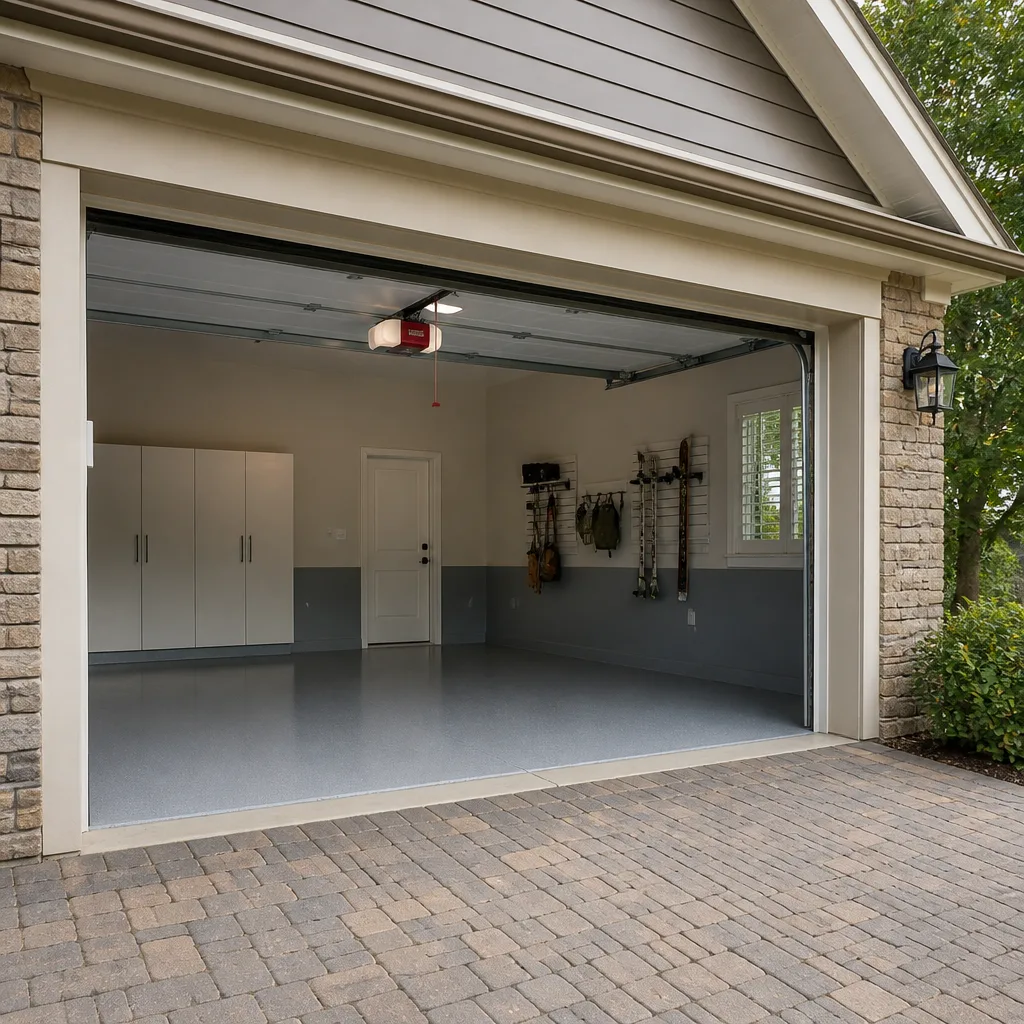 LiftMaster openers
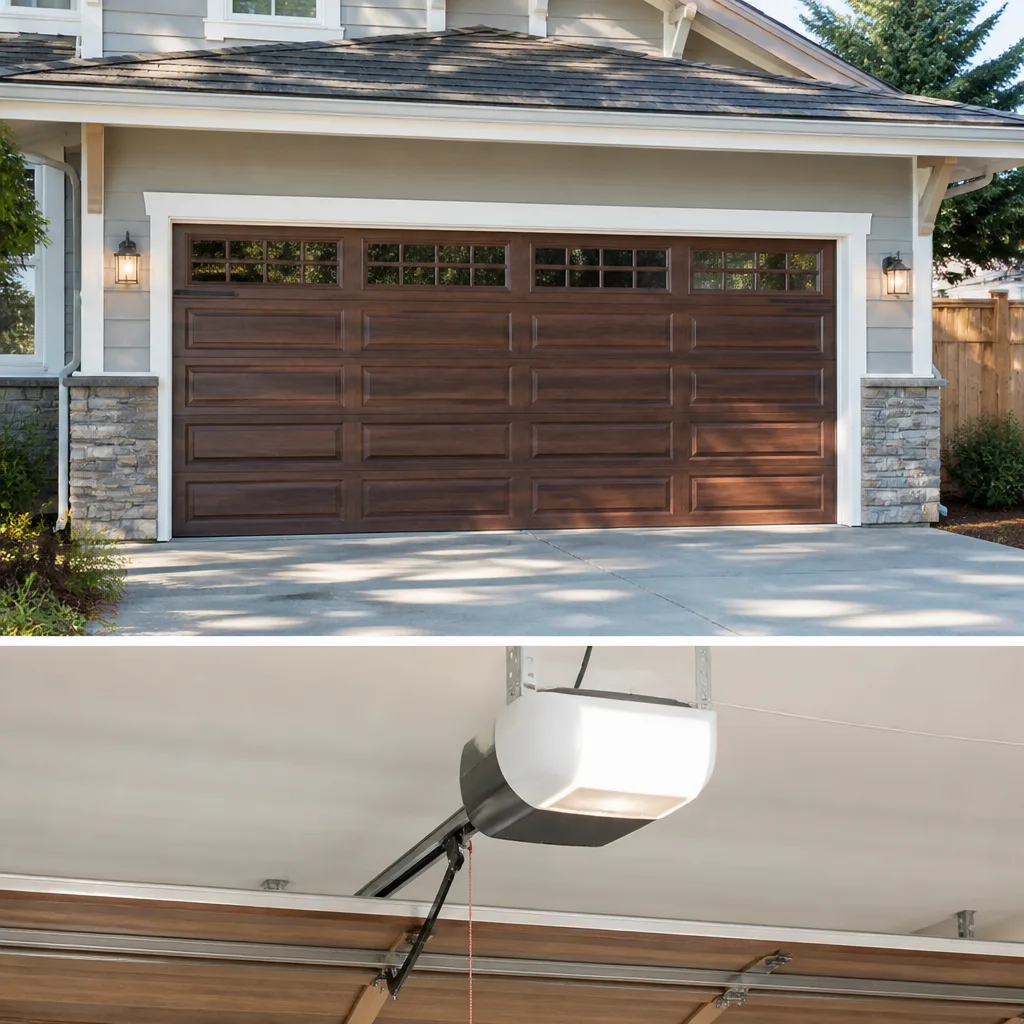 Chamberlain openers
Full 25-point door and opener safety check with every visit - springs, cables, rollers, tracks, and your LiftMaster or Chamberlain opener included
You get a price before we start. It does not change when the pro arrives.
Get your free estimateChoosing the Right Garage Door Brand: A Buyer’s Guide for Fall River
The brand that tops the national review sites was built and tested for a mid-Atlantic climate. Fall River doesn’t have one. It has freeze-thaw cycles that open and close every seam on a door panel, a harbor that puts moisture in the air year-round, and a housing stock where a garage door often faces the prevailing weather head-on rather than sitting tucked under a carport. Pick a door by its national ranking and you can end up with a system that looks fine in year one and starts showing its limits by year three. This guide covers what actually matters: gauge, finish, material, parts availability in southeastern Massachusetts, and how the door and opener behave as a pair. Mention Fall River once more and we’ll get to the specifics.
Quick Answer
The right garage door brand for a Fall River home is the one with a heavy enough steel gauge, a finish warranty that covers salt and freeze-thaw exposure, and parts you can actually get locally when a bracket, roller, or spring needs replacing. In this market, Amarr and Wayne Dalton are the two most commonly installed steel doors, and both hold up well when specified correctly. The brand matters less than the specification: a mid-grade door from a good manufacturer, sized and finished for this climate, outlasts a premium door chosen for the wrong reasons. Pair the door with an opener from a brand your technician can diagnose on the spot, and you’ll avoid most of the compatibility headaches that show up years later.
Styles & brands we work with
- Raised-panel steel
- Carriage house
- Modern flush
- Full-view glass
- LiftMaster openers
- Chamberlain openers
Table of Contents
- Why National Brand Rankings Miss the Mark in Fall River
- How to Evaluate a Garage Door Brand for Coastal New England
- Parts Availability in Southeastern Massachusetts
- An Honest Look at the Three Brands Most Common in This Market
- Steel vs. Wood vs. Composite vs. Aluminum: The 15-Year View
- Why the Door and Opener Need to Be Evaluated Together
- What a Specialist Checks Before Recommending a Brand
- What a New Garage Door Costs in Fall River
Why National Brand Rankings Miss the Mark in Fall River
Consumer review sites rank garage doors using lab data and climate assumptions that don’t match New England. A door tested for heat cycling in a mid-Atlantic setting tells you very little about how it handles 40 freeze-thaw cycles a winter. That’s not a knock on the rankings. It’s just that rankings answer a different question than the one a Fall River homeowner is actually asking.
Here’s the core problem: freeze-thaw. Water gets into a seam, a joint, or a scratch in the finish, freezes overnight, expands, and pries the material apart a fraction of a millimeter. Do that 40 times a winter and you’ve got peeling paint, rust bloom around the hinges, and a bottom section that’s starting to delaminate. A door tested in a warmer climate never sees this. A door specified for this one gets tested every February.
Add the harbor. Fall River sits on Mount Hope Bay and the Taunton River, and the moisture in the air doesn’t take a winter off. That’s not the same as salt spray on an oceanfront deck, but it does mean finish quality matters more here than it does in, say, a dry inland market. The brands that hold up in Fall River share three traits:
- Galvanized steel with a heavier gauge on the sections
- A baked-on finish system (not a sprayed-on coat) with a warranty that explicitly covers coastal exposure
- Hardware (hinges, brackets, rollers) that’s plated or coated, not bare steel
The brand that advertises the best insulation or the flashiest window options isn’t necessarily the one that gets those three right. Those are the specifications to check first.
How to Evaluate a Garage Door Brand for Coastal New England
A brand evaluation comes down to four measurable things: steel gauge, finish warranty terms, hardware materials, and whether the manufacturing tolerances are tight enough that the door stays square as it cycles. Everything else is secondary. Here’s how to read each one.
Steel gauge, in plain language
Gauge is thickness, and lower gauge means thicker steel. A 24-gauge door is a light builder-grade door that flexes under wind load and dents easily. A 25-gauge is thinner still and shows up on cheap doors at big-box stores. A 27-gauge or higher is the door you want on a home where the garage door is the largest moving object on the house and gets used every day. The heavier gauge costs more up front, but it stays flat, holds its finish, and doesn’t need replacing in year eight.
Finish warranty, read the fine print
Most garage door brands offer a limited lifetime finish warranty, but “lifetime” covers different things depending on the manufacturer. Some cover peeling and cracking. Some cover rust-through. Some exclude coastal areas entirely with a specific carve-out. Read the language before you buy. If a warranty excludes salt air or moisture-heavy environments, that door wasn’t built for Fall River.
Hardware materials
It doesn’t matter how good the panel finish is if the hinges rust through in two winters. Look for galvanized or zinc-plated hinges, nylon rollers (not steel), and bottom brackets that are powder-coated rather than finished with paint. These are small parts that cost very little at the factory and fail early when they’re skimped on.
Manufacturing tolerances
A door that comes off the line slightly out of square will bind on the track as it cycles, wear out rollers, and stress the opener. That’s where brand reputation actually matters. The brands that hold up over a 15-year horizon are the ones whose panels come out the same size, every time, and whose hardware aligns without needing to be forced.
Parts Availability in Southeastern Massachusetts
Parts availability is the factor most homeowners never think to check, and the one that causes the longest waits. When a bottom bracket, a hinge, or a set of rollers fails in February, the difference between a same-week repair and a three-week repair often comes down to whether the distributor network for that brand reaches southeastern Massachusetts. Some brands have local distribution. Some don’t.
Here’s why this matters practically. A torsion spring on a Fall River door fails on a Tuesday morning in January. The technician who arrives needs to match the spring to the door weight and the drum configuration on the original. For most common residential sizes, that’s a same-day fix because the parts are standard and the technician can source them locally. But if the door uses a proprietary endplate, a non-standard radius track, or a hinge pattern from a brand with no local distribution, you’re waiting on a shipment that comes from a facility out of state. That can mean several days without a working garage door.
What to check before you buy:
- Ask the installer where the brand’s nearest distributor is. If the answer is vague, that’s a signal.
- Confirm that common replacement parts (springs, rollers, hinges, brackets, bottom seals) are held locally, not just shipped from a national warehouse.
- Ask how long a repair takes if a bottom bracket or endplate fails.
- Check whether the opener and door share a dealer network, since a mismatched pair means two separate sourcing problems.
This is also where a specialist has an edge. Our technicians work on LiftMaster, Chamberlain, Genie, Clopay, Amarr, Wayne Dalton, Craftsman, and Raynor systems regularly, so we know which parts are locally available for each and can steer you away from a brand that will leave you waiting. When you’re weighing which system to buy, it’s worth understanding garage door repair realities in this market before you commit – the door that’s easiest to fix is often the one that’s easiest to live with.
An Honest Look at the Three Brands Most Common in This Market
Most of the doors we see in Fall River come from three manufacturers. Each one has real strengths and real weak spots. Here’s how they stack up when specified for this climate, judged on durability, finish, parts, and where each one under-delivers.
Amarr
Amarr builds a solid steel door and their residential line covers both raised-panel and flush styles, so the door fits almost any Fall River house. The steel is properly gauged, the finish holds up well, and the hardware is plated. Their warranties are among the clearer ones in the trade, without a lot of carve-outs for coastal conditions.
Where Amarr under-delivers: the off-the-shelf models at big-box stores are lighter than the dealer-specified versions of the same line. If you buy Amarr because the name is good and you don’t check the gauge, you can end up with a builder-grade door under a premium badge. The brand is fine. The version matters.
Wayne Dalton
Wayne Dalton is the workhorse of this market. Their 9100 and 9600 series are common on Fall River homes, the parts are widely distributed, and a technician who’s worked on Wayne Dalton doors knows the tolerances without checking a manual. That matters when a repair happens at an inconvenient time and you need the right part on the first visit.
Where Wayne Dalton under-delivers: some of their entry-level doors use a thinner gauge than the spec sheet suggests once you get to the actual panel. And their insulated models tend to be less efficient than comparable doors from Clopay at similar price points. If you have an insulated garage attached to living space, it’s worth comparing panels directly.
Raynor
Raynor is the brand homeowners tend to encounter when they buy a door from a specialist rather than a big-box store. The build quality is high, the finishes are excellent, and their commercial-grade hardware shows up even on residential doors. For a home where the door is used daily and the climate is unforgiving, that’s a real advantage.
Where Raynor under-delivers: the brand is less widely distributed in the northeast than Amarr or Wayne Dalton, so parts access can be slower for less common configurations. And the pricing is on the higher end of the residential range. It’s worth it on the right home and overkill on the wrong one.
None of these three is a universal answer. The right one depends on your gauge, your finish, your opener, and how long you plan to stay in the house.
Steel vs. Wood vs. Composite vs. Aluminum: The 15-Year View
Fifteen years is the right horizon for a garage door decision. That’s roughly how long a well-specified door lasts before it needs real attention, and it’s long enough for the material choice to show up in the maintenance column. In Fall River’s climate, the materials sort out clearly.
Steel
Steel is the default in this market for good reason. Steel doors with a heavy gauge and a good finish handle freeze-thaw without warping, and they hold their finish for a decade or more if they’re maintained. The weak point is the finish – a scratch or a chip that goes unrepaired will rust and spread. But that’s a paint-touch-up problem, not a door-replacement problem, and the parts are widely available. Steel is the lowest-risk choice for most Fall River homes.
Wood
Wood looks excellent and carries the highest maintenance burden of any material in this climate. It needs refinishing on a schedule, expands and contracts with the seasonal moisture swings, and rots from the bottom up if water finds its way into an end grain. A well-maintained wood door can last 20 years. A neglected one can start delaminating in five. If you choose wood in Fall River, plan to keep up with the finish – it’s not a set-and-forget material.
Composite
Composite doors (fiberglass or engineered wood composites) sit between wood and steel on maintenance and price. They don’t rot. They hold a finish well. They’re more resistant to moisture than wood. The catch is that the residential composites on the market have narrower parts networks than steel doors, so a damaged panel can be slow to replace. Composite is a good fit for a homeowner who wants wood’s look without the refinishing, and a reasonable choice in this climate if you accept the parts tradeoff.
Aluminum
Aluminum is best for full-view doors with glass panels and for applications where weight matters. It doesn’t rust, it doesn’t warp, and it holds up to moisture without issue. The weakness is that aluminum is lighter and softer than steel, so it dents more easily and insulates less. Full-view aluminum doors are common on modern Fall River renovations. Solid aluminum panels are less common and generally a special-order specification.
The material ranking for this climate over 15 years: steel first for most homes, composite second, aluminum third for full-view styles, wood last unless you’ll maintain it. That’s not a knock on wood. It’s a maintenance commitment.
Why the Door and Opener Need to Be Evaluated Together
Your garage door and its opener operate as a single system, and evaluating them separately is one of the most common mistakes we see. The door sets the load. The opener handles the load. Get the pairing wrong and you’ll be paying for repairs to both.
The core issue is door weight and opener capacity. A light builder-grade door paired with an oversized opener isn’t dangerous, but it’s inefficient and hard on the drive train. A heavy insulated door paired with an undersized opener will burn out the motor and strip the drive gear well before the door needs replacing. In this climate, the weight calculation also has to account for weather seals and a bottom seal that can freeze to the threshold during a cold snap. The opener has to be sized with that load in mind, not just the door’s dry weight.
Brand pairing matters too. Here’s how the shop-familiar pairings break down:
- LiftMaster and Chamberlain share a parent company and are largely interchangeable on accessories. If you’re pairing a LiftMaster door opener with a Chamberlain remote or Wi-Fi module, expect it to work.
- Genie openers are robust, but their accessories are proprietary. A Genie opener doesn’t play well with LiftMaster remotes or safety sensors.
- Craftsman openers were made by Chamberlain for decades, so their internals are similar, but the branding and parts have shifted over time. Older Craftsman openers can be harder to source parts for.
- Amarr, Wayne Dalton, Raynor, Clopay doors are opener-agnostic – they don’t require a proprietary opener – but the door height, weight, and drum size still need to be matched to the opener’s lift rating.
If you’re repairing rather than replacing, we regularly handle garage door opener repair on all these brands, and we can tell you within a few minutes whether an opener is compatible with the door you’re considering.
What a Specialist Checks Before Recommending a Brand
Brand selection should start with the building, not the manufacturer. A specialist who inspects first and recommends second will catch the details that most buyers miss, and those details often determine which brand is right. Here’s the sequence we run.
- Measure the opening precisely. The rough opening dimensions, the headroom above the opening, and the depth behind the door on each side set hard limits on which doors and tracks will actually fit.
- Assess the wall and roof above the door. On Fall River homes with old framing, the header above the garage opening sometimes can’t carry the weight of a heavy door and its track system. That has to be caught before a brand is chosen.
- Check the driveway slope and drainage. Water running toward the door rather than away from it is a bottom-seal and bottom-panel problem waiting to happen. If the slope is wrong, the door spec has to compensate.
- Measure the door weight against the opener capacity. Many openers in Fall River homes are older than the door they operate, and the door replacement is a chance to right-size both.
- Confirm the door size and style against the manufacturer’s current production. Some brands have tight lead times on special sizes; others don’t. This changes the schedule.
- Match the finish to the house and the climate. Factory-finish versus field-painted matters here, because field paint doesn’t hold up to freeze-thaw the way a factory-baked finish does.
If you’re at the point where a current door is failing and you’re deciding between repair and replacement, understanding what a garage door spring repair entails helps you weigh the two. A snapped spring on an otherwise sound door is not the same problem as a rusted-out bottom section that’s taking the whole system with it.
What a New Garage Door Costs in Fall River
Garage door pricing breaks into three pieces: the door itself, the opener (if it’s being replaced), and the installation labor. Here’s the typical range for each, expressed as estimates.
| Item | Typical Estimated Range |
|---|---|
| Steel single-car door, standard gauge, installed | $750 – $1,400 |
| Steel double-car door, standard gauge, installed | $1,200 – $2,400 |
| Heavier-gauge or insulated steel door, double-car, installed | $1,800 – $3,500 |
| Wood or composite door, installed | $2,000 – $4,500 |
| Full-view aluminum door, installed | $2,500 – $5,500 |
| Standard opener, installed | $350 – $650 |
| Smart or belt-drive opener, installed | $500 – $900 |
| Torsion spring replacement (one spring) | $180 – $340 |
| Matched pair of torsion springs | $360 – $680 |
These are estimates, not final prices. The written quote you receive after the measure sets the actual cost, and it’s agreed before any work starts. Two things drive most of the variation: the door weight and gauge, and whether the track and opener are being reused or replaced. Special sizes, custom finishes, and insulated door packages push toward the top of the range. Standard sizes on a home with sound framing sit near the bottom.
For a same-day repair, the range narrows further. A broken spring, a dead opener, or a door off track is typically a single-visit job, and the price for the repair is set by the written estimate before the technician starts. There’s no same-day premium – the work is the work.
If you’re weighing repair against replacement, that’s also part of the estimate conversation. We handle garage door repair on doors and openers across all the major brands, and there’s no charge to come out and give you a written price. We answer 24/7. Fast dispatch from 7am to 7pm, Sunday through Friday.
Common Mistakes to Avoid
- Buying on national ranking alone. The brand that tops the consumer sites was tested for a different climate. Check the gauge and the finish warranty carve-outs before you commit.
- Skipping the gauge check. Two doors from the same manufacturer, sold at different price points, can have different gauges. A 24-gauge door and a 27-gauge door look identical in a showroom and behave nothing alike in February.
- Assuming “lifetime warranty” means what you think it means. Many finish warranties carve out coastal conditions, high-moisture environments, or specific installation requirements. Read the exclusions before you sign.
- Buying a door with no local parts network. If a bottom bracket fails in March, the distributor’s location matters more than the brand name. Confirm local availability for standard parts.
- Pairing opposite-brand openers and accessories. A Genie opener won’t run with a LiftMaster remote. Match the accessory ecosystem to the opener brand, or know that you’re compromising somewhere.
- Ignoring the slope of the driveway. A garage door on a driveway that sheds water toward the threshold will wear out its bottom seal and bottom section faster than any other part of the door, regardless of brand.
- Choosing wood because it looks better and then not maintaining it. Wood in this climate needs refinishing on a schedule. If you’re not going to keep up with it, choose steel or composite instead.
See the difference
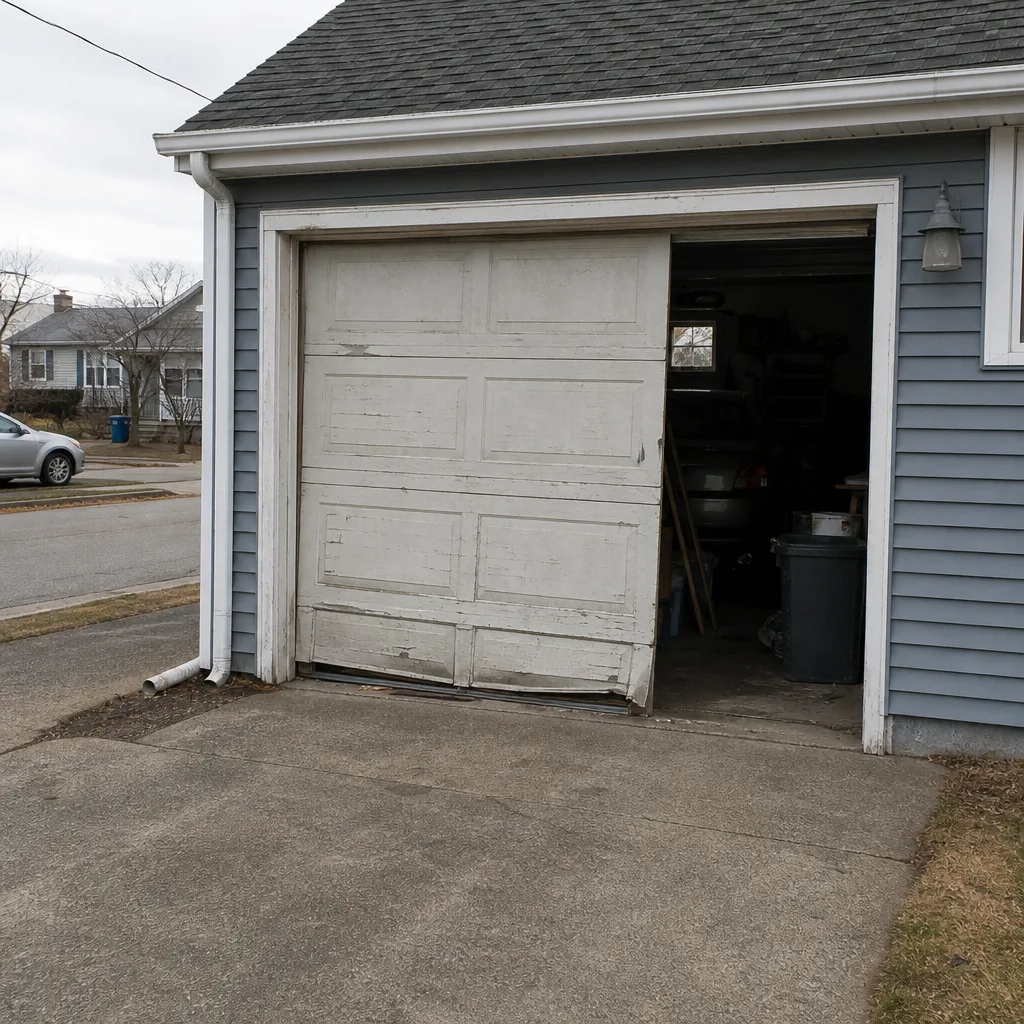 Before
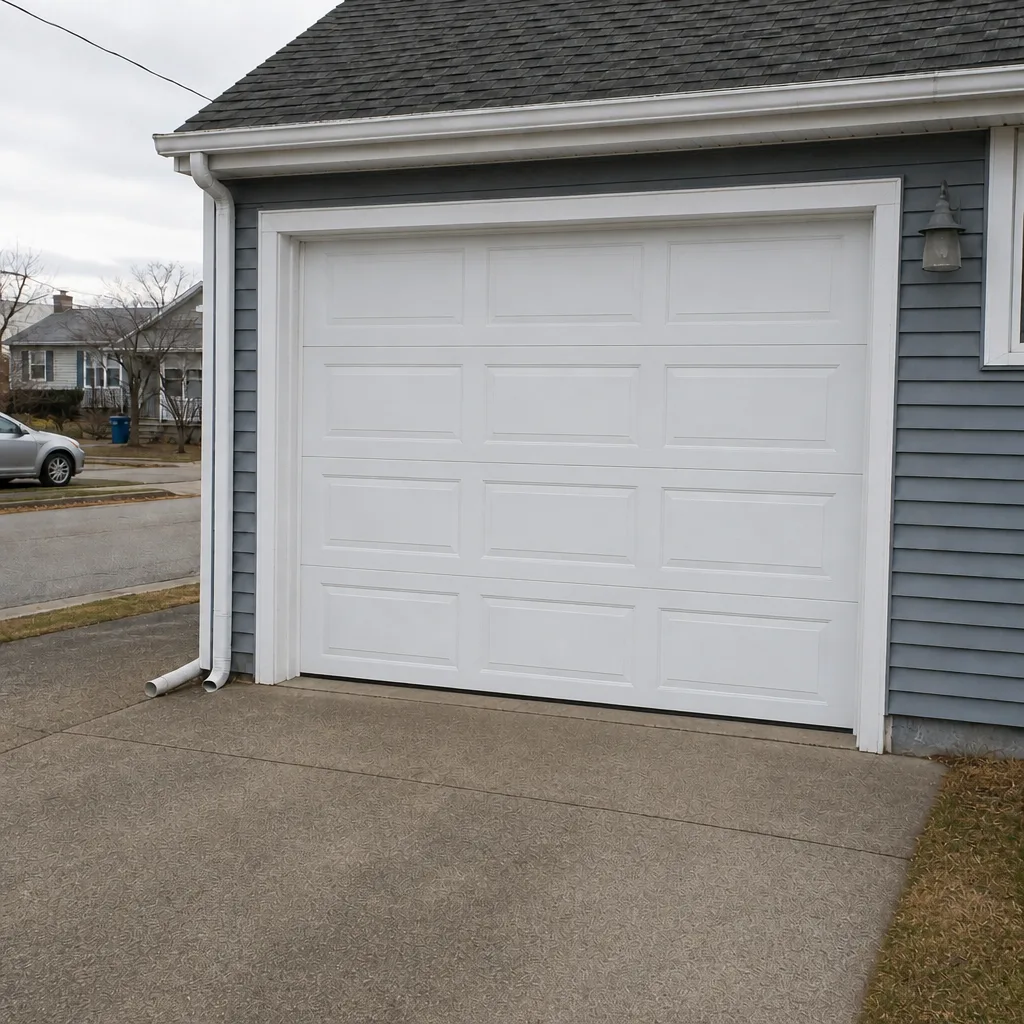 After
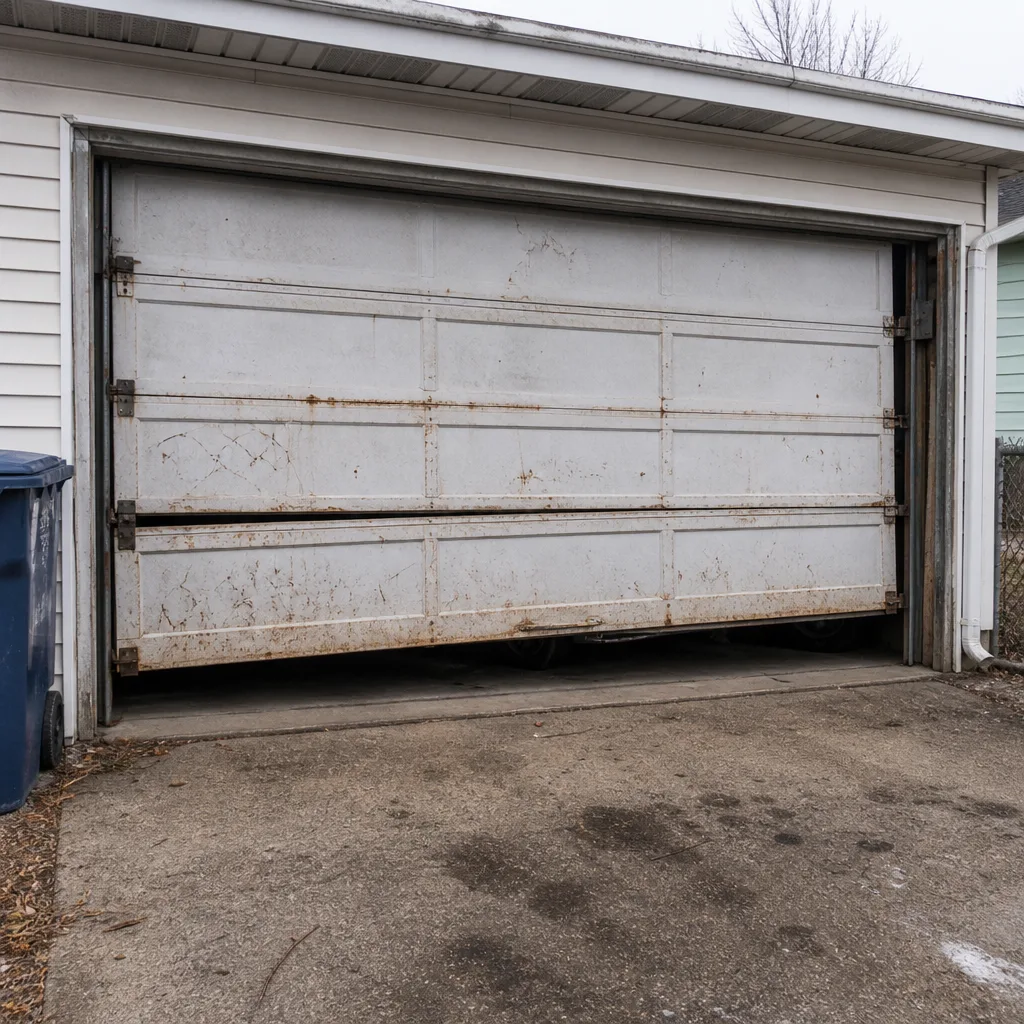 Before
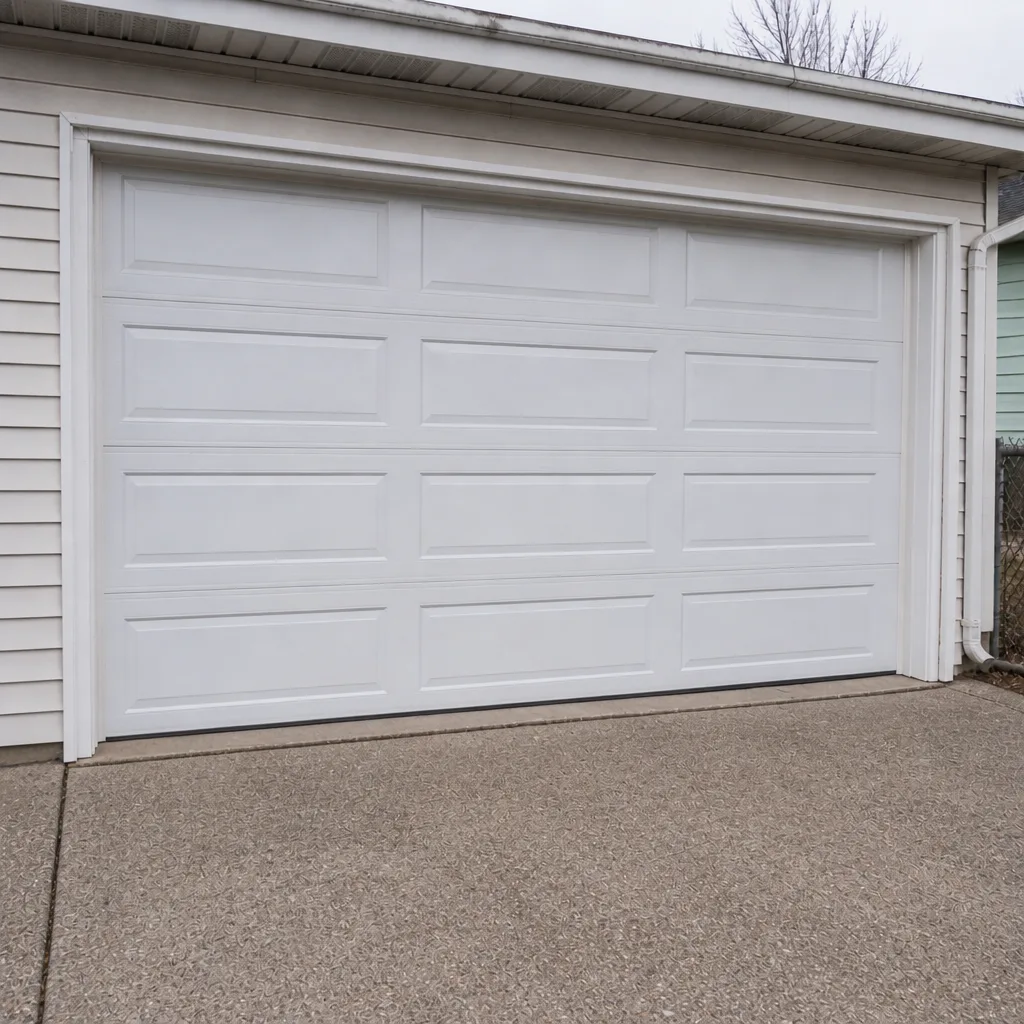 After
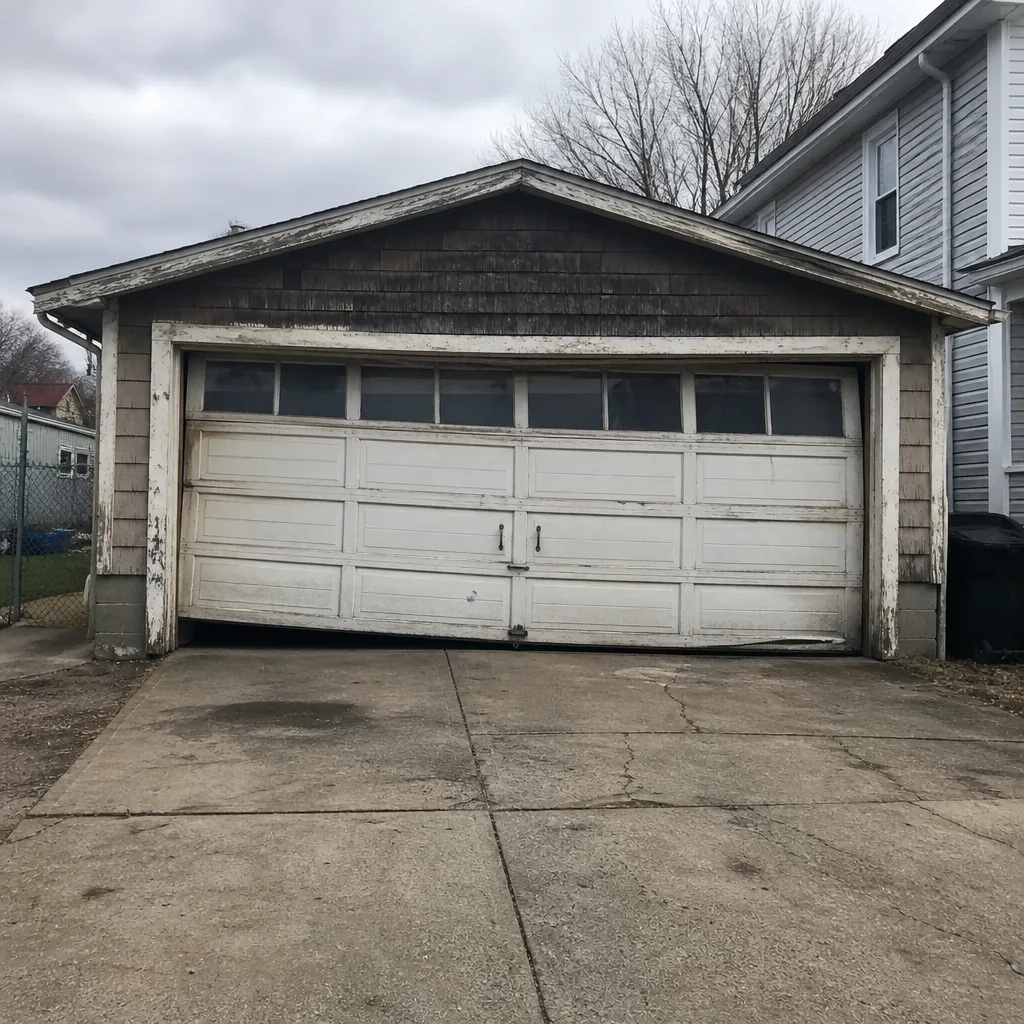 Before
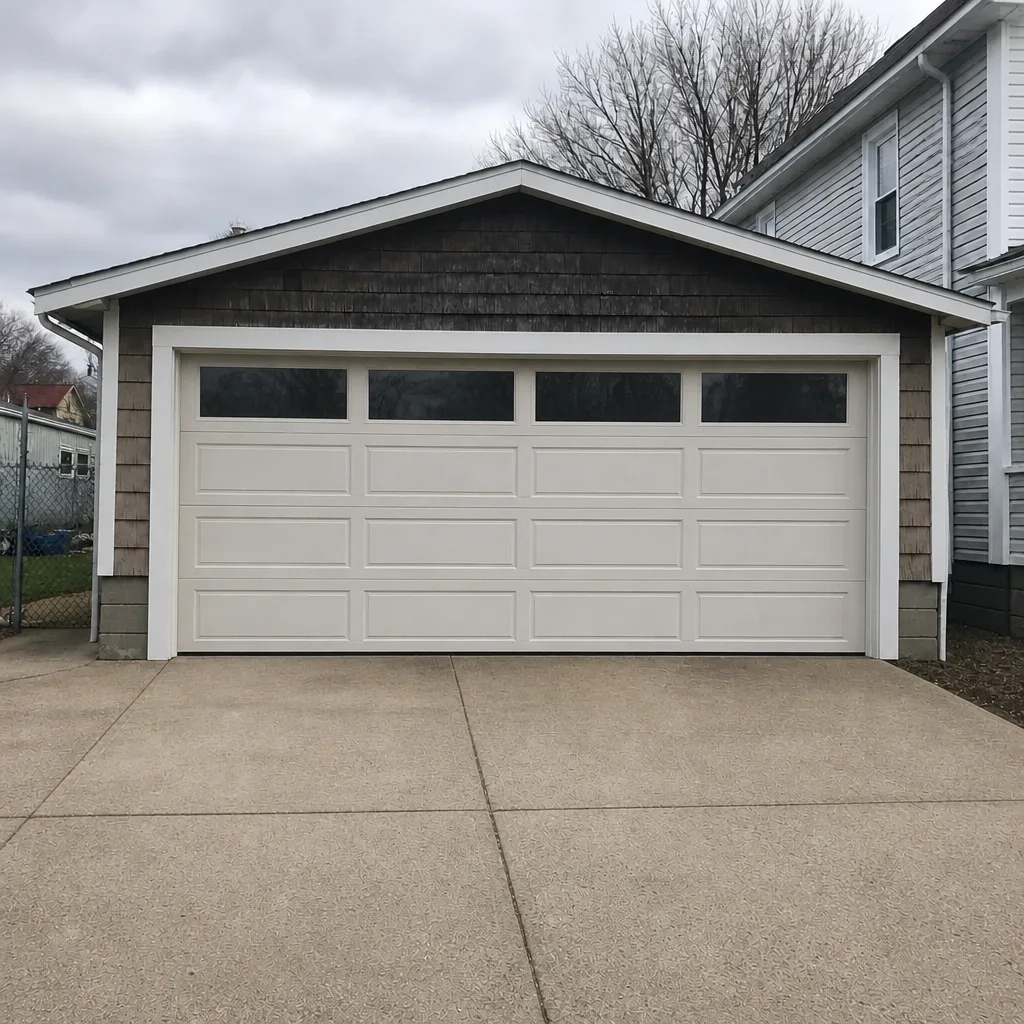 After
When to Call a Professional
Some garage door work should be a call, not a weekend project. The high-tension springs, cables, and torsion system on a garage door carry enough stored energy to cause serious injury, and a door that’s come off track or lost cable tension is unpredictable under load. Those are jobs for a trained technician with the right tools, not a homeowner with a winding bar and a YouTube video.
The same goes for opener diagnostics on a system that’s acting erratically, a door that reverses when it shouldn’t, and anything involving the wiring on an opener or a new installation where the door weight and the opener capacity need to be matched correctly. A brand evaluation for a new door or a new opener is a good time to have a specialist look at the building – measurements, header, slope, and existing track all affect which door works.
Fall River Garage Door Repair Pros offers free estimates in Fall River. Call (855) 658-4171. We answer 24/7. Fast dispatch from 7am to 7pm, Sunday through Friday.
Frequently Asked Questions
For most Fall River homes, a heavy-gauge steel door from Amarr, Wayne Dalton, or Clopay, specified with a finish warranty that covers coastal conditions, holds up best. The brand itself matters less than the gauge, the finish system, and local parts availability. Composite is a good second choice if you want a wood look without the refinishing schedule. Wood is the highest-maintenance option in this climate.
Look at three things: the steel gauge (24-gauge is light, 27-gauge and heavier holds up), the finish warranty (does it exclude coastal or high-moisture environments?), and the hardware (are the hinges and brackets galvanized or plated?). If any of those is vague or absent from the spec sheet, the door isn’t specified for this climate. Our technicians have up to 12 years of experience and can tell you within a few minutes whether a door you’re considering has the right specifications.
Because a broken bottom bracket or spring in February is a different problem if the part is days away versus in stock locally. Brands with limited distribution in southeastern Massachusetts can mean several days without a working garage door, especially for non-standard parts. Before you buy, confirm that standard replacement parts are held locally.
Not necessarily, but they should be evaluated together. The door sets the load and the opener has to be sized for it, including the added load from weather seals and a bottom seal that may freeze to the threshold. The brand matters for accessory compatibility: LiftMaster and Chamberlain accessories are largely interchangeable, while Genie accessories are proprietary. The door itself is opener-agnostic in most cases.
That depends on the current city code, so check with Fall River’s building department before scheduling the installation. Permit requirements vary by structure, and a specialist installer knows what to ask. It’s worth making that call before the measure appointment so the schedule isn’t delayed.
A typical steel double-car door installed runs an estimated $1,200 to $2,400, and a single-car door runs an estimated $750 to $1,400. Heavier-gauge and insulated doors, wood doors, and full-view aluminum doors run higher. The written estimate, given after the measure, sets the actual price, and it’s agreed before any work starts. Call (855) 658-4171 for a free estimate – estimates are free.
The Bottom Line
The right garage door brand for a Fall River home is the one that’s specified for this climate, not the one that tops a national ranking. Check the steel gauge before anything else. Read the finish warranty for coastal and high-moisture carve-outs. Confirm the parts network reaches southeastern Massachusetts. Then match the opener to the door by weight and accessory compatibility, because the two operate as a single system. The brand name is the last thing to check and the first thing most buyers check. Get the specifications right and the brand follows.
Whether you’re choosing a door for a new installation or deciding whether to repair what you have, we’d rather talk through the details with you than steer you to the wrong specification. That’s what a dedicated garage door specialist does. We handle everything from a snapped torsion spring to a full door and opener replacement, and we work on all the major brands. Call (855) 658-4171 for a free estimate. We answer 24/7. Fast dispatch from 7am to 7pm, Sunday through Friday. And if you want to see how we handle the full range of work in this city, start at Fall River Garage Door Repair Pros.
Written by the team at Fall River Garage Door Repair Pros.