
Last updated November 22, 2026
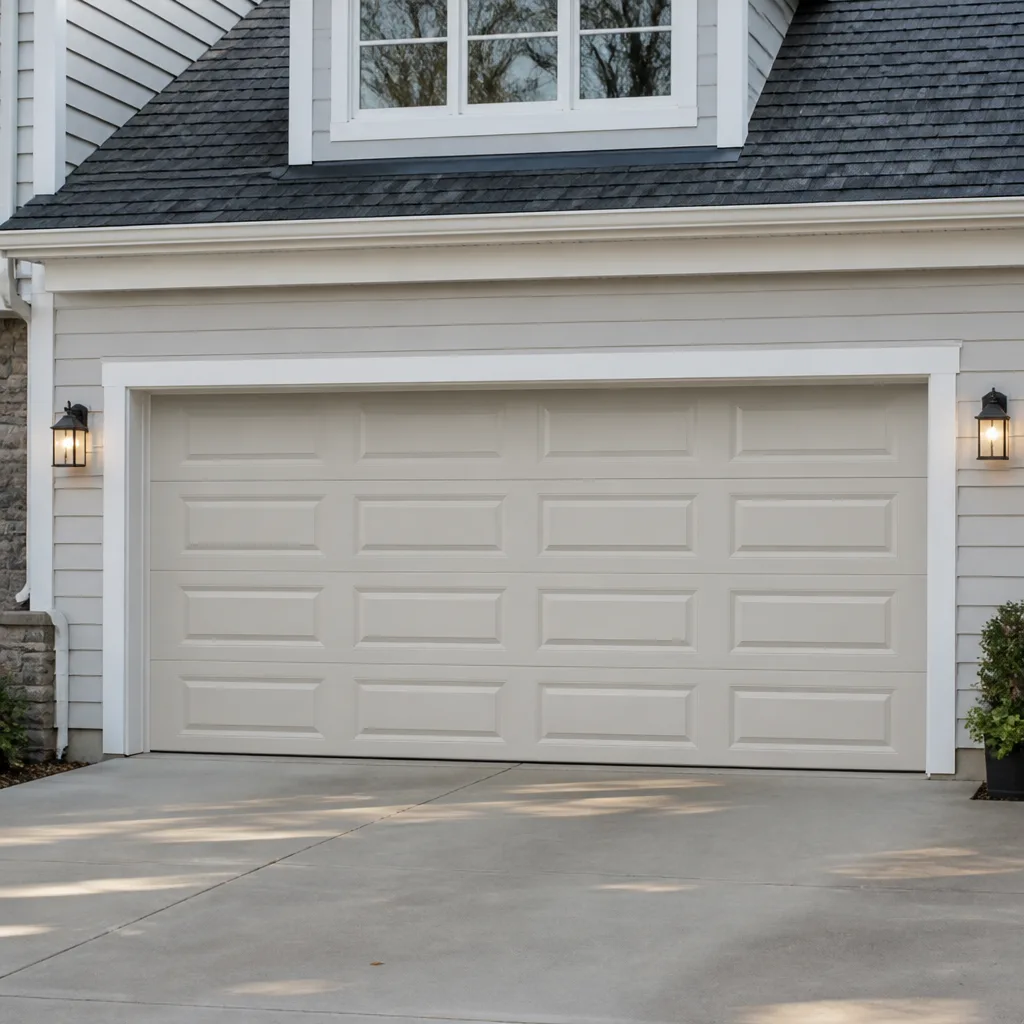 Raised-panel steel
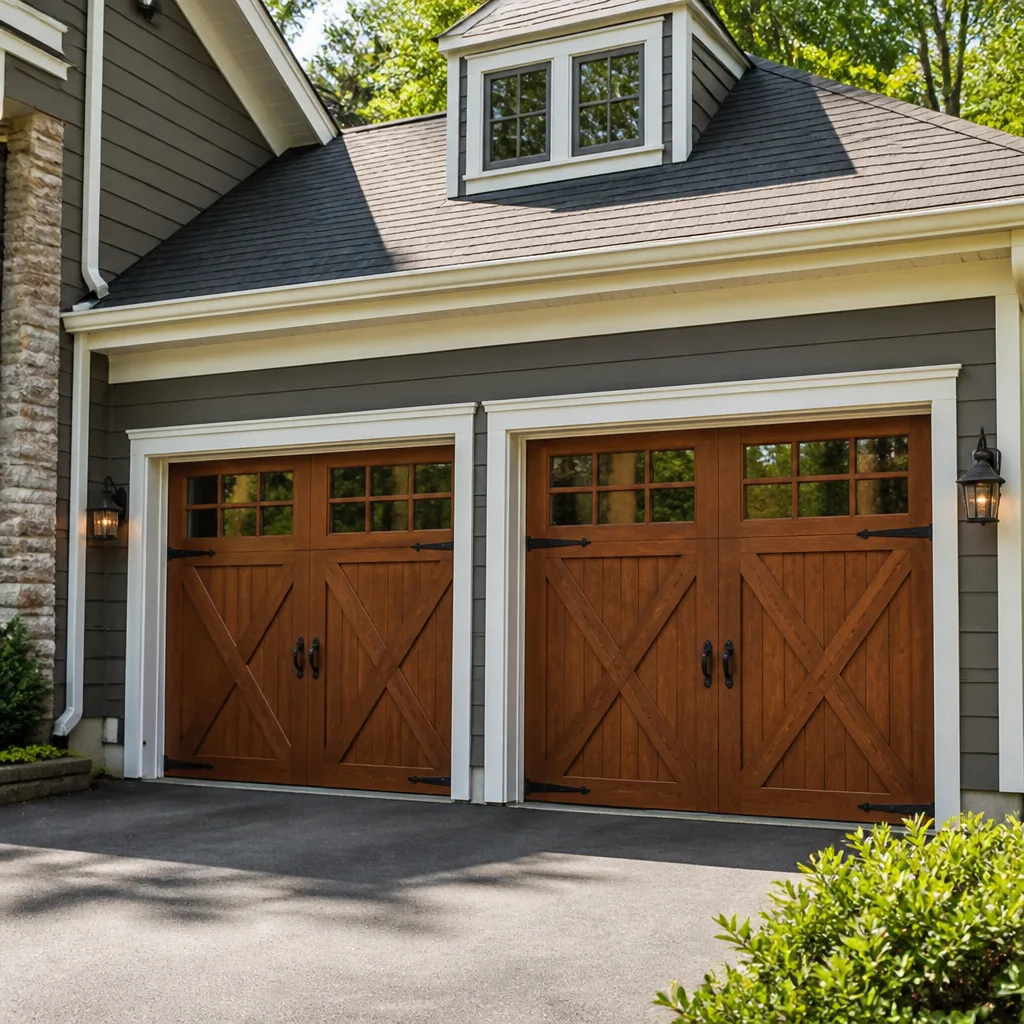 Carriage house
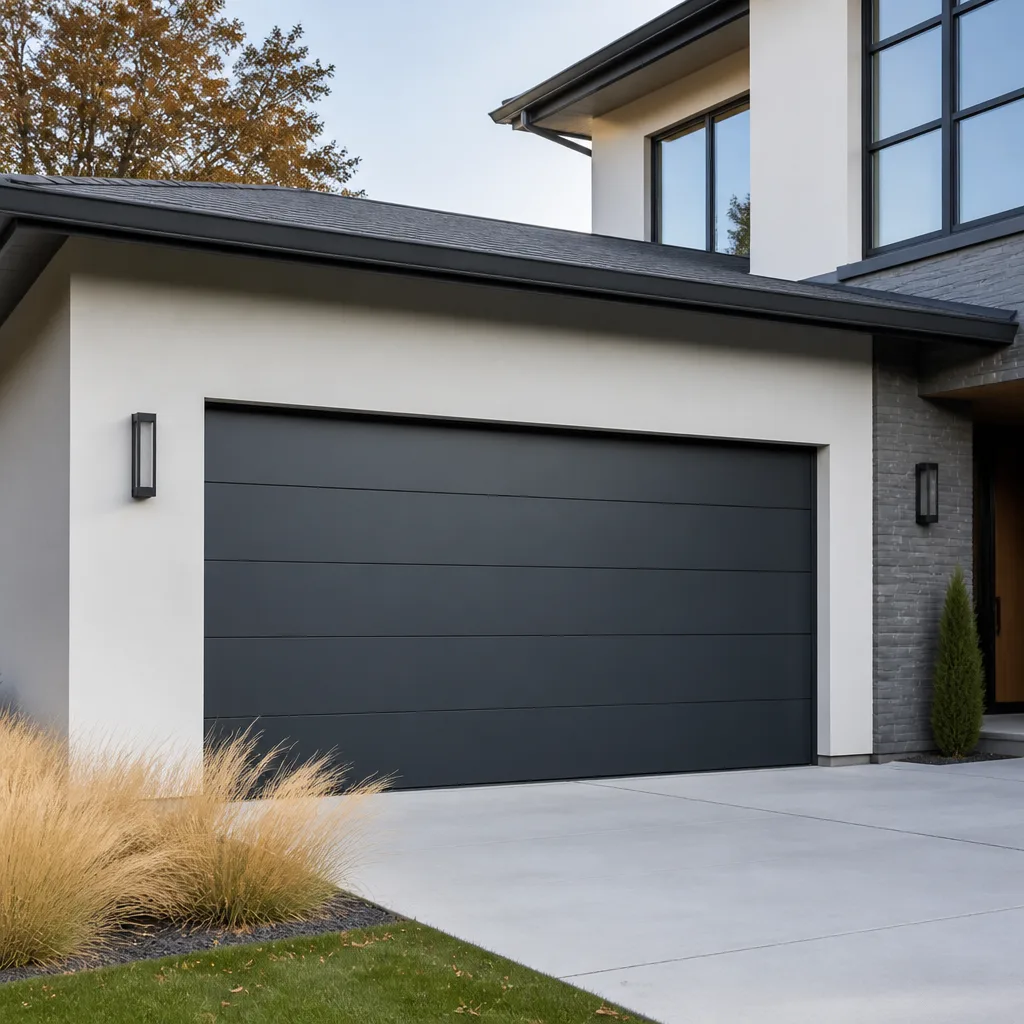 Modern flush
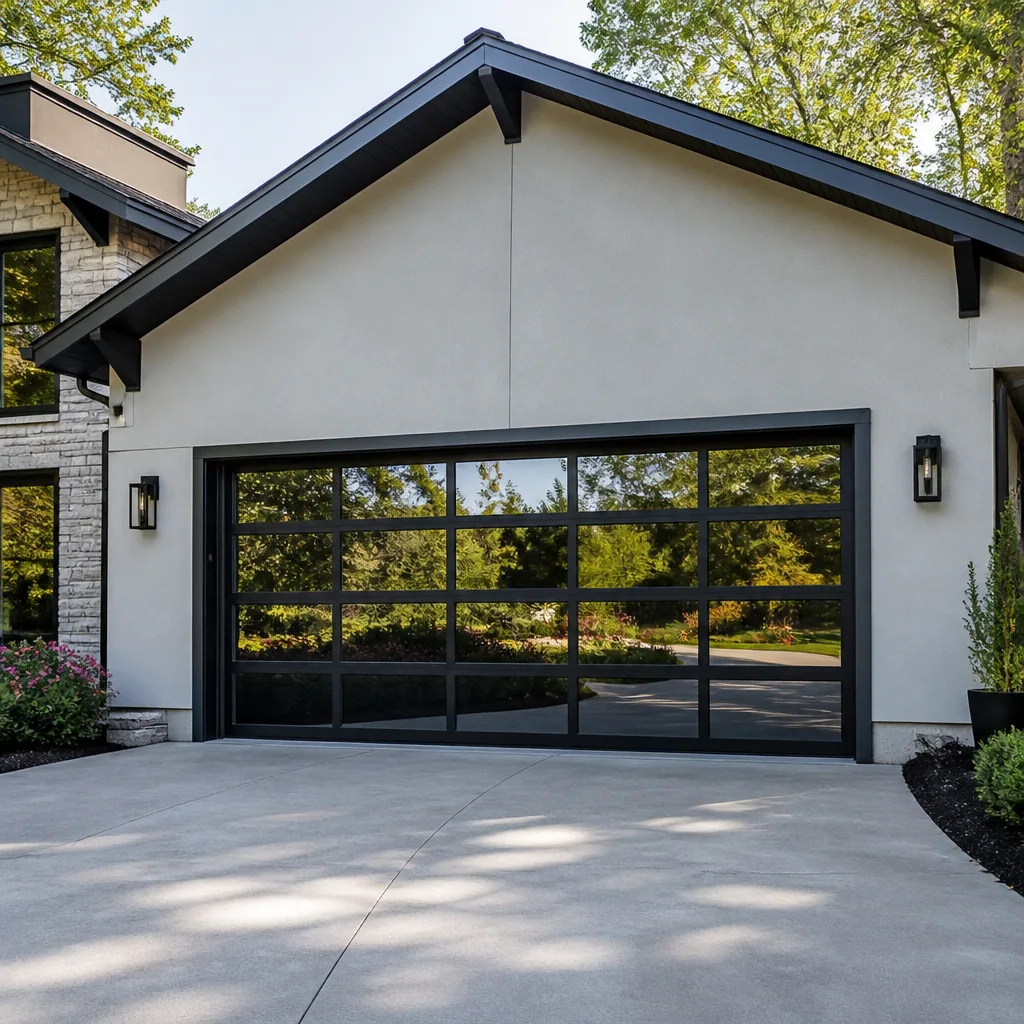 Full-view glass
 LiftMaster openers
 Chamberlain openers
Full 25-point door and opener safety check with every visit - springs, cables, rollers, tracks, and your LiftMaster or Chamberlain opener included
You get a price before we start. It does not change when the pro arrives.
Get your free estimateDIY vs Professional Garage Door: The Fall River Homeowner’s Decision Guide
Most homeowners weigh a garage door repair the same way they’d weigh a leaky faucet: what’s the part cost, what’s the labor cost, and is the gap worth my Saturday? That math works fine for a wobbling handle. It falls apart for a garage door, because the component that fails most often stores enough energy to break bones or kill you when it lets go wrong. This guide starts with physics, moves through liability and insurance, and only then gets to money. By the end you’ll know exactly which tasks are genuine do-it-yourself work and which ones belong on our phone line. We’re writing this from Fall River, where older housing stock and hard winters shape how these doors fail.
Quick Answer
Springs, cables, and anything under load are professional work every time, with no exceptions. Everything above the springs (rollers, hinges, weather seals, opener remotes, sensor alignment, lubrication, balancing) is realistic for a careful homeowner with the right tools and a healthy respect for the door. In Fall River, an honest comparison of typical service pricing against your own parts-shopping and weekend time usually closes the gap to within the cost of a good meal, which is why most homeowners choose to have it done properly.
Styles & brands we work with
- Raised-panel steel
- Carriage house
- Modern flush
- Full-view glass
- LiftMaster openers
- Chamberlain openers
Table of Contents
- Why Garage Door Springs Are in a Different Category Entirely
- What a Skilled Homeowner Can Safely Do
- The Insurance Angle Nobody Talks About
- When DIY Savings Evaporate: The Expensive Mistakes
- Fall River Pricing: A Side-by-Side for the Five Most Common Repairs
- How Fall River Climate and Housing Shape These Repairs
- How to Diagnose Your Door Before You Call Anyone
- Codes, Permits, and What the City Actually Requires
Why Garage Door Springs Are in a Different Category Entirely
A residential torsion spring on a standard single-car door is wound to somewhere in the neighborhood of seven to nine full turns of tension. That wound coil is holding the entire weight of the door in suspension. If you’ve ever lifted a garage door by hand with the spring disconnected, you know roughly what the spring is doing: on a standard seven-foot door it’s counterbalancing something like 130 to 200 pounds. That energy has to go somewhere when the spring releases, and it releases in milliseconds.
This is the part most DIY content skips. Replacing a spring isn’t a skill problem in the way that, say, replacing a toilet flapper is a skill problem. It’s a stored-energy problem. Extension springs, common on older doors around Fall River, are the other category: they run along the horizontal tracks and when they break they can travel. The safety cables that should be threaded through them exist for exactly that reason, and plenty of older doors in this city have had those cables removed or never had them installed.
The winding tools matter too. Torsion springs require specific winding bars sized to the cone, and the wrong bar, or a socket extension, or a screwdriver, is how serious injuries happen. The bar can slip out under load and the spring unwinds in a fraction of a second. There is no version of this repair where an improvised tool is safe, and no version where standing in the wrong place is safe.
What this means practically:
- If the work involves a torsion spring, a winding cone, an extension spring under tension, or a cable under tension, it’s professional work. No exceptions, no “I’ll be careful.”
- If the door is being held up by a spring that has already broken on one side of a two-spring system, the remaining spring is carrying double its design load. Don’t run the opener. Don’t lift the door by hand. Call.
- If your door has extension springs without safety cables, that’s worth addressing even before a spring breaks. When they fail they can cause damage to whatever is in the path.
This is exactly the ground where generalist trades and specialists part ways. Spring physics are the same everywhere, but the tools, the sizing conventions, and the failure patterns of a particular door system take repetition to learn. Our technicians work on garage door spring repair as a regular part of the job, which is also the reason we treat every spring call as a safety call rather than a maintenance visit.
What a Skilled Homeowner Can Safely Do
The honest list is longer than a lot of contractors want to admit. If you’re reasonably handy, own a socket set and a level, and can be bothered to read a manual, these tasks are well within reach and there’s no reason to pay someone to do them.
- Lubricate the moving parts. Rollers, hinges, the torsion bar bearings, and the opener rail. A garage-door-specific lubricant, not WD-40 and not grease, applied once or twice a year, quiets a noisy door and slows hinge wear. This is the single highest-value thing a homeowner can do.
- Replace rollers. Nylon rollers on a standard residential door unbolt one at a time with the door in the closed position. Do them one at a time, never with the door up, never with the spring under load and the cables slack.
- Replace hinges. Hinges are numbered by position. Order the matching number, swap them one at a time, and don’t mix them up.
- Replace the bottom weather seal. A cracked bottom seal is one of the most common Winter complaints in Fall River and one of the cheapest fixes. It slides or clips out of the bottom section.
- Align and clean the safety sensors. If the door reverses on the way down for no obvious reason, nine times out of ten it’s a sensor knocked out of line, dusty, or with a sun-glare issue. A level and a cloth fix most of it.
- Program or replace a remote or keypad. With most modern openers this is a button sequence and a manual.
- Adjust the opener’s force and travel limits. This is owner-reachable on most openers. It’s not a substitute for a proper balance check, though, and if you find yourself maxing out the force setting to get a sluggish door to close, that’s the door telling you the spring or the tracks are the real problem.
What connects most of these: none of them require you to defeat a spring under tension, and none of them require you to be underneath a door that’s held up only by mechanical energy.
The Insurance Angle Nobody Talks About
Here’s the part that changes the whole calculation. A standard Massachusetts homeowner policy responds to a lot of things, but it isn’t a warranty on your own work, and it isn’t there to make you whole if an injury happens in your garage during a repair you performed yourself. The coverage questions come down to a few basic buckets.
On the injury side: your policy’s medical payments or liability coverage may respond if a guest or a family member is injured by a garage door failure, subject to the terms of the policy. Whether it responds when the injury happened during a repair you were performing yourself is not something you want to find out after the fact, and the answer can vary significantly by carrier and by policy form. Read the exclusions in your own policy; we can’t speak for any insurer.
On the damage side: if a DIY repair leads to the door coming off track and damaging a car, the door itself, or the structure, the policy may cover some of it and may exclude some of it. If a spring lets go and puts a hole in drywall, that’s the kind of thing that often falls under a “faulty workmanship” exclusion rather than under the general property coverage. Again: read your own policy, and call your agent with the specific question.
The part that matters for the DIY-vs-pro decision isn’t really the coverage itself. It’s the fact that when a licensed, insured local professional performs the work, the liability question moves off your shoulders and onto theirs. That’s a piece of the value that never shows up in a parts-vs-labor comparison, and it’s a real one. It’s also why we’re clear about what we do: the local pro we connect you with is licensed and insured as their state requires, and that insurance exists because the work is dangerous when it goes wrong.
When DIY Savings Evaporate: The Expensive Mistakes
The gap between a parts-and-buttons repair and a proper repair isn’t usually the cost of the original part. It’s the cost of undoing the damage. In our experience, the mistakes below are the ones that turn a normal repair into a bigger one.
- Winding a spring with the wrong bar. A socket extension, a screwdriver, or a piece of stock steel can slip out of the winding cone under load. When it does, the spring unwinds, the door drops, and what was a spring swap becomes a bent center bracket, damaged drums, and sometimes a warped panel or kinked track. The original repair didn’t fail; the tool did.
- Using the opener to “test” a door with a broken spring. The opener isn’t designed to lift the door without the spring’s help. Running it burns out the gear and the motor, and turns a spring replacement into a spring replacement plus an opener replacement. That’s the classic second-repair situation.
- Forcing a door that’s off its track. A door that’s jumped a roller is trying to tell you something about a bent track, a worn hinge, or a loose section. Crank it up with the opener and you bend the track and crack the panel.
- Mixing up the bottom bracket. The bottom corner brackets hold the cables under tension. Loosening the wrong bolt releases the cable. That’s a serious injury risk on its own, and it’s the single most common mistake we see on a “I just wanted to adjust the door” call.
- Replacing one spring of a pair. On a two-spring door, the springs are matched. Replacing one leaves you with a new spring fighting an old, tired one, and the old one usually goes within months. The whole point of replacing them as a pair is to avoid doing the job twice.
- Overtightening opener force settings to compensate. If the door is stiff, the fix is a balance adjustment or a spring, not more force from the opener. Maxing out the force setting masks a mechanical problem and stresses the opener.
- Ignoring a small thing that isn’t small. A slight sag at one corner, a door that’s suddenly slow at the top of the travel, a click that wasn’t there last month. Fall River winters accelerate wear, and a small thing in November has a habit of becoming a bigger thing in January.
The common thread is that each of these is cheap to avoid and expensive to fix, and each of them is a reason a trained eye is worth the call. We’ve explained this on our garage door repair page too: the cheapest repair is almost always the one done once.
Fall River Pricing: A Side-by-Side for the Five Most Common Repairs
Numbers help, with the caveat that they’re estimates. Every price we quote is set per job by a written estimate that’s agreed before any work starts, and that written estimate is the final price. What follows are typical ranges for the jobs we see most often in Fall River, set against what a careful DIY-er would spend on parts. A spring price is for one spring. A matched pair is usually replaced together, so a pair runs roughly twice the single-spring number.
| Repair | Typical pro estimate | DIY ballpark (parts + tools) | Verdict |
|---|---|---|---|
| Torsion spring replacement (single) | $180 to $340 | $40 to $80 for the spring, $35 to $60 for winding bars, plus personal risk | Professional, no exceptions |
| Extension spring replacement | $150 to $260 | $25 to $60 per spring, plus safety cables if missing | Professional |
| Opener repair (board, gear, or motor) | $150 to $350 | $40 to $130 for parts, with a real chance of buying the wrong board | Depends on the fault; diagnostics are the hard part |
| Roller and hinge replacement (full set) | $120 to $220 | $40 to $90 for parts | Fine to DIY if you’re methodical |
| Weather seal replacement | $90 to $180 | $25 to $60 for the seal | Fine to DIY |
What the table gets wrong on purpose: the “misdiagnosis” column. On the opener jobs especially, the part a homeowner buys is often not the part that’s broken. The board, the travel module, the safety sensor, and the capacitor all produce similar symptoms, and the cheapest way to sort them out is a diagnostic that most of us don’t have at home. Same story with the pairing of springs: a single replacement looks cheaper on the receipt and more expensive on the calendar.
One more note on the table. Where a door uses a specific opener family, part numbers and fault patterns differ. On a LiftMaster or a Chamberlain, we know the common faults from repetition. On a Genie, the travel and force calibration behaves differently. That’s why our page on garage door opener repair calls out brand fluency as a diagnostic shortcut, not a marketing line. It saves time and it saves wrong-part purchases.
How Fall River Climate and Housing Shape These Repairs
Fall River sits where a lot of New England housing stock does: a mix of dense older neighborhoods on the hills and newer construction on the edges. The doors we see reflect that. Older doors often have extension springs, less insulation, and tracks that have been adjusted more than once. Newer doors tend to have torsion springs and modern openers, and their failures are more often electronic or sensor-related than mechanical.
The weather does its share. Freeze-thaw cycles through January and February work on the bottom seal and the metal at the bottom of the door. Doors that face a cold wind ride harder on the opener. Snow piled against the bottom panel is a specific Fall River problem: an inch or two of packed snow under the door puts the opener into a “close” cycle it can’t finish, and over time the force-limit is the thing that gives out. A blown-out weather seal in December lets in a draft that a lot of people blame on their heating, when the actual culprit is a door seal that’s cracked, torn, or no longer sealing across the full width.
Housing age matters in a second way: safety features that feel obvious today aren’t present in every door in Fall River. A pre-1993 door won’t have the newer photoelectric sensor reversal, and it may or may not have the older pressure-reversal. We check for that on every call, because a door built without the newer sensors is a door that needs more careful use, particularly if there are children in the household, and it’s a good argument for a full inspection rather than just fixing the thing that broke.
How to Diagnose Your Door Before You Call Anyone
You don’t need to be a technician to know roughly what’s wrong. These checks are safe to do, and they save everyone time, including you. Don’t start them with a door that’s visibly off track, with a spring that’s obviously broken on one side, or with cables that are visibly slack or off their drums. Those are stop-and-call conditions.
- Pull the opener’s release handle. With the door closed, pull the manual release so the door is disconnected from the opener. This is the first step in almost every safe check.
- Lift the door halfway by hand. It should move smoothly, and it should stay roughly where you leave it. If it won’t hold, the spring is tired. If it feels heavy all the way up, the spring is broken or under-tensioned. If it slams down, don’t run the opener.
- Listen for the door, not the opener. Rollers that squeal, a hinge that clicks, a track that rattles. These are the cheap repairs.
- Look at the springs. A torsion spring with a visible gap is broken. An extension spring that’s stretched longer than its neighbor is on its way out. Don’t touch either one. Look, don’t adjust.
- Watch the safety sensors. A lamp on each sensor, steady not flickering, and pointed at each other, is what you want. If the door reverses on the way down, this is the first thing to check.
- Check the bottom seal. From inside with the door closed, a sliver of daylight under the door means the seal is due. That’s a Fall River winter problem.
Once you’ve got a rough idea, the decision is easier. A door that won’t hold itself up, a spring with a visible break, or a door off track means a call. A noisy hinge or a drafty bottom seal means a weekend project. If you’re not sure which side of that line you’re on, call us and describe what you see. We can usually narrow it down on the phone before anyone comes out. And if you’d like a broader reference for the services we cover, start with Fall River Garage Door Repair Pros.
Codes, Permits, and What the City Actually Requires
Here’s a question that gets answered badly in a lot of places: does a garage door repair need a permit in Fall River? The short honest answer is that it depends on what’s being done, and the people who actually know are at the city’s building department. Call them with the specific scope before you start. A spring swap and a full door replacement are not the same permit question, and a door replacement in some jurisdictions involves both a permit and inspection.
The parts of the code that matter most to a homeowner aren’t usually the parts you’d think. Safety features are where the rules have teeth. If you’re replacing an opener, the sensors are part of the required setup, not an optional add-on. If you’re replacing a whole door, the balance and the reversal settings are the things a professional checks before signing off, because those are the features that keep children and pets safe. A door that works but has faulty reversal is more dangerous than a door that doesn’t work at all.
The practical upshot: on a repair, ask the building department. On an installation, ask them before you order the door, because the answer sometimes changes what you need to specify. On any job, if you’re not sure, frame the question as a scope rather than a category (“I’m replacing the torsion spring, not the door”) and the answer gets clearer. That’s not us dodging the question; it’s how we’d want to be told it if we were on your side of the counter.
Common Mistakes to Avoid
- Buying the spring before you know the size. Springs are sized by wire gauge, inside diameter, and length. Measure the wrong one and you’ve bought the wrong one, and the return policy on a wound spring is not generous. Measure twice.
- Replacing a single spring on a two-spring door. The new spring outlasts the old one, and the old one goes within months. Do the pair. It’s cheaper than two visits.
- Running the opener with a broken spring. This is the most expensive way to save a phone call. The opener isn’t designed to lift the door’s full weight, and the motor and gear pay for it.
- Forcing a door that’s off its track. If it’s jumped a roller, the fix is the track and the hinge, not a bigger push. Forcing it turns a small repair into a track replacement and a cracked panel.
- Removing the safety cables on extension springs. Sometimes they’re missing, sometimes they’re loose, sometimes someone took them off to “get the door working.” They exist because a failing extension spring can travel, and a door without them is a hazard.
- Skipping the bottom seal before winter. A Fall River December with a cracked bottom seal means a draft that a lot of households blame on the heating. It’s a $30 part and a half-hour job. Don’t put it off.
- Assuming the door is fine because it opens. A door that opens slowly, or that reverses on its own, or that sounds different than it did in the fall, isn’t fine. It’s telling you something, and the cheaper version of the story is the one that gets fixed earlier.
See the difference
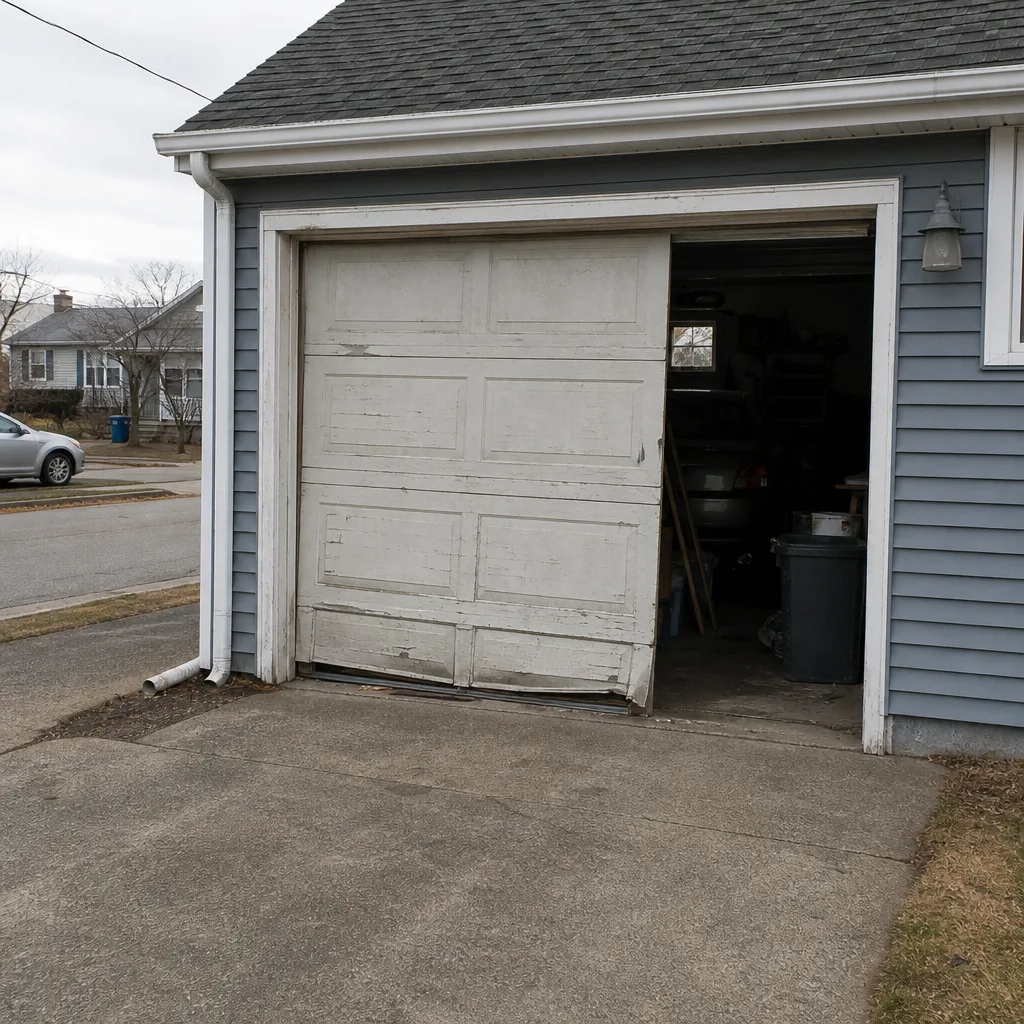 Before
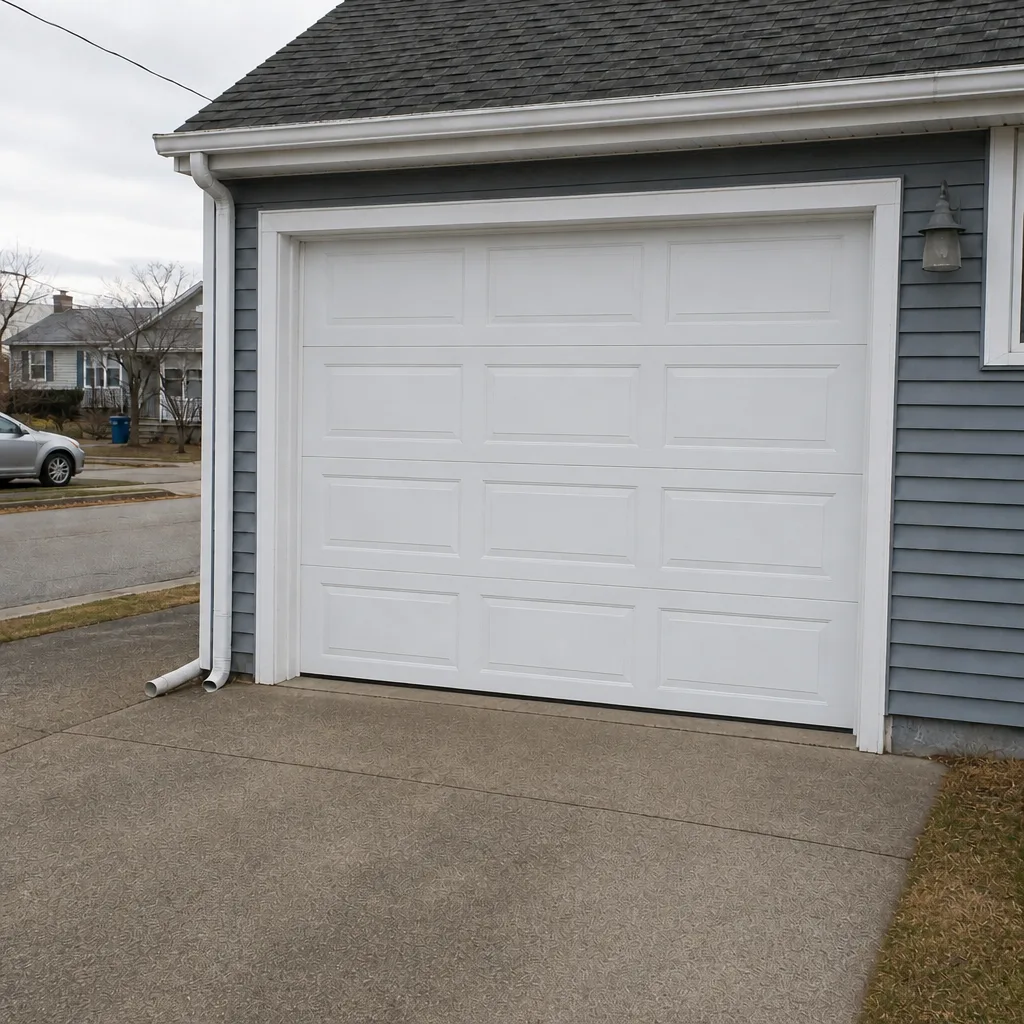 After
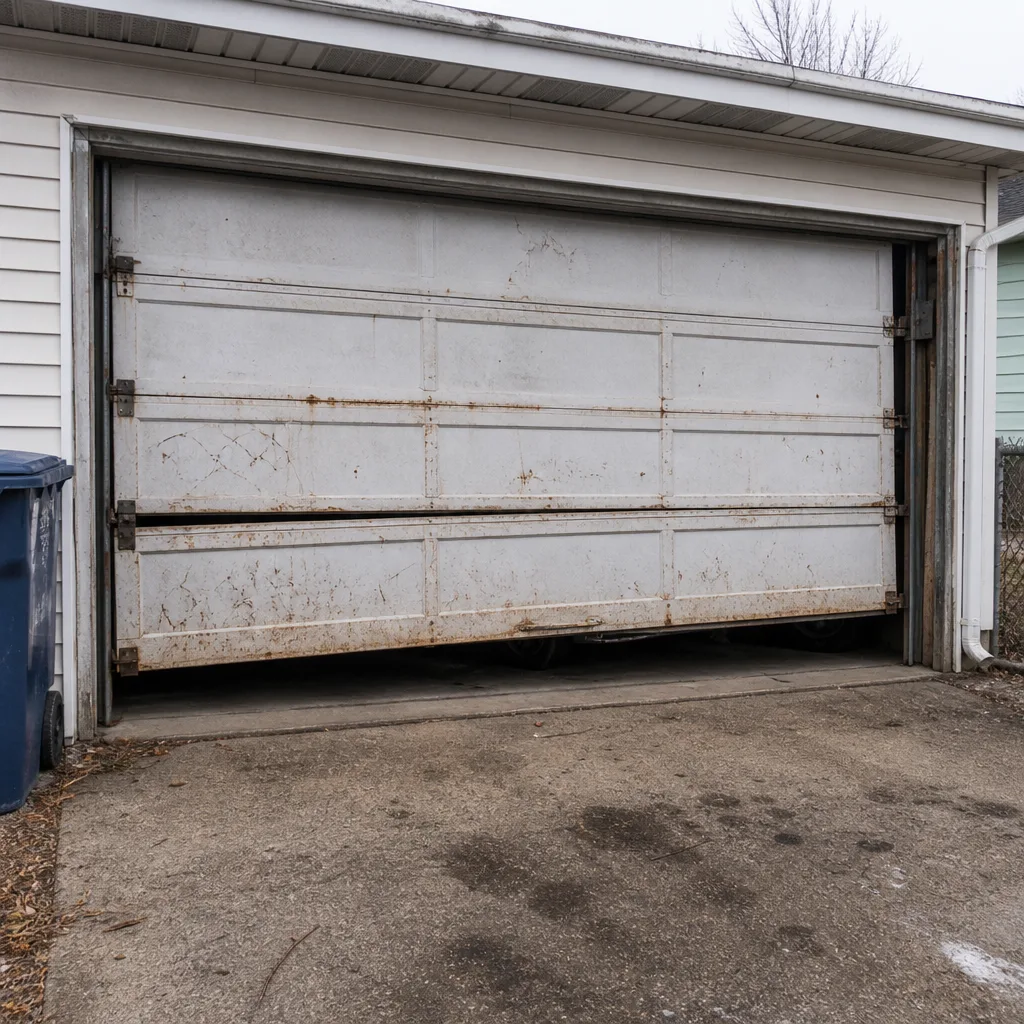 Before
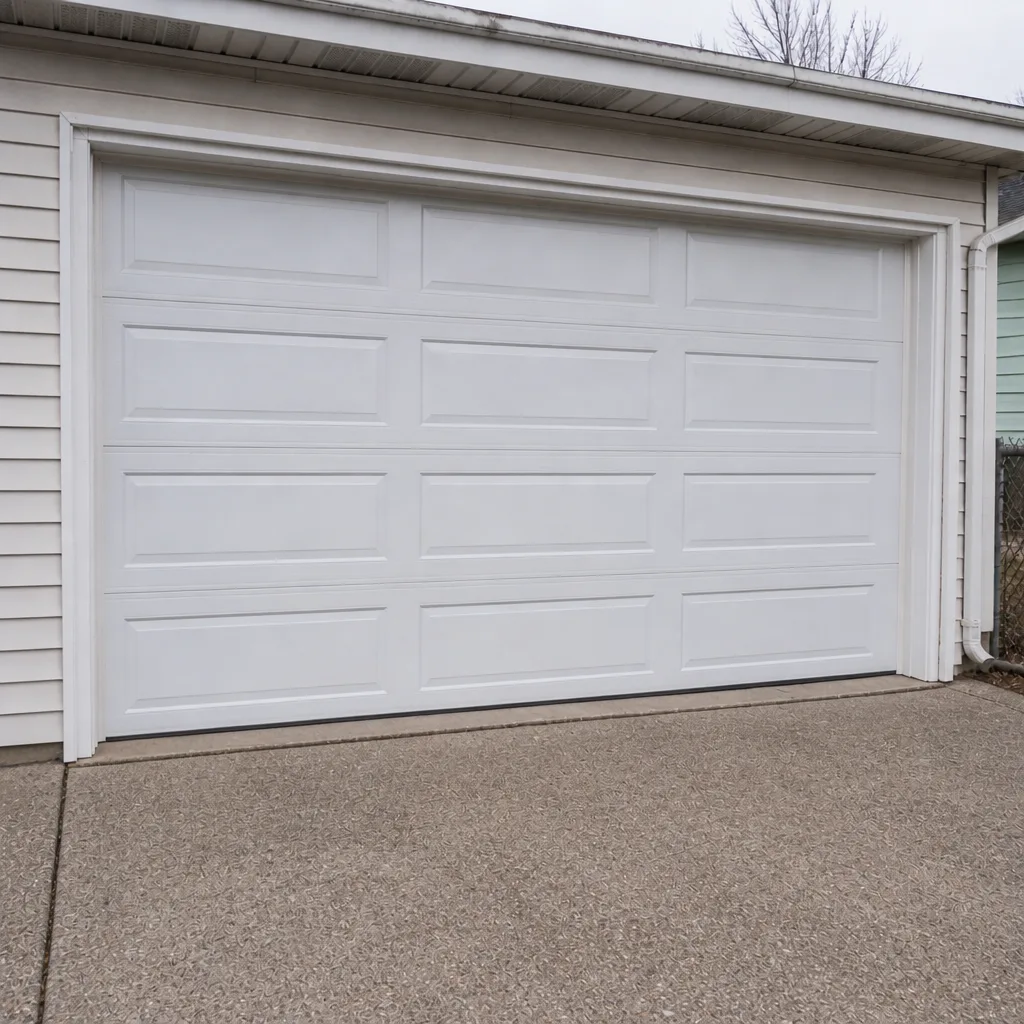 After
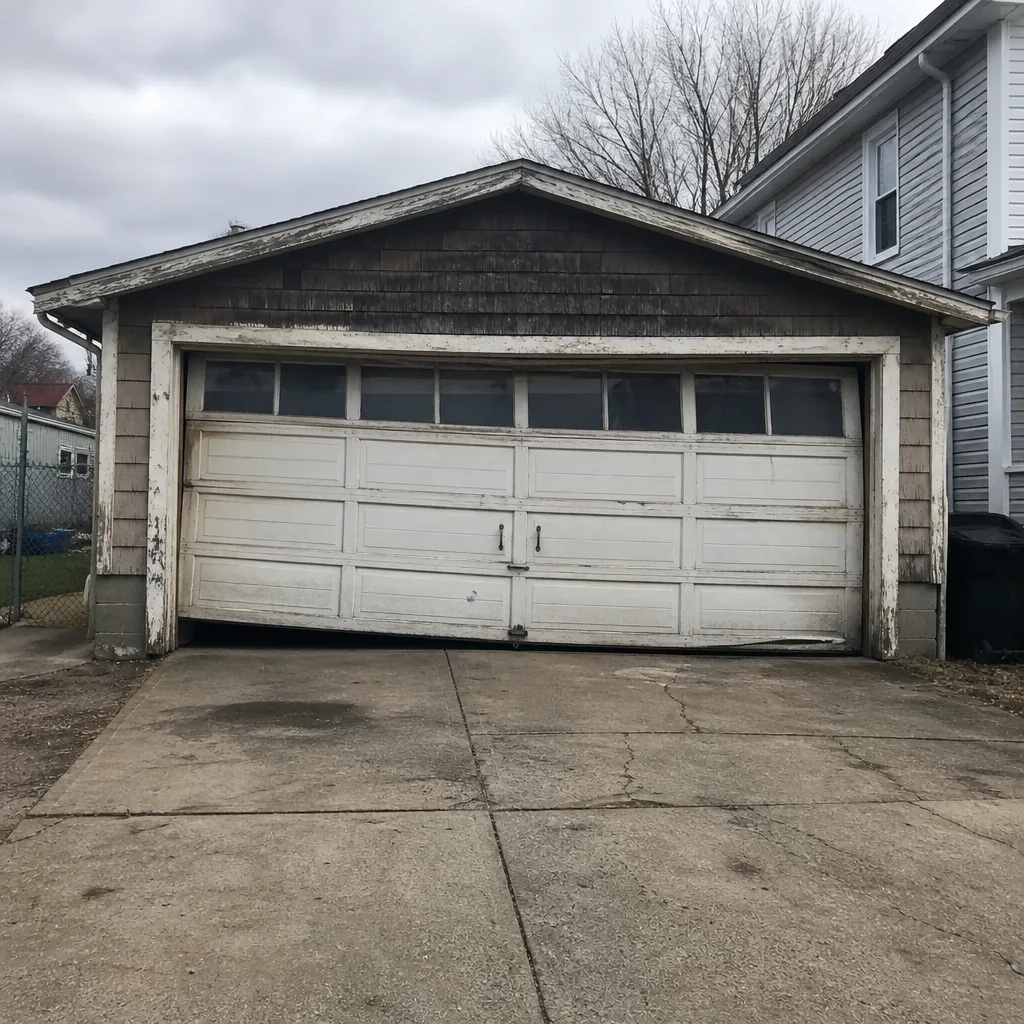 Before
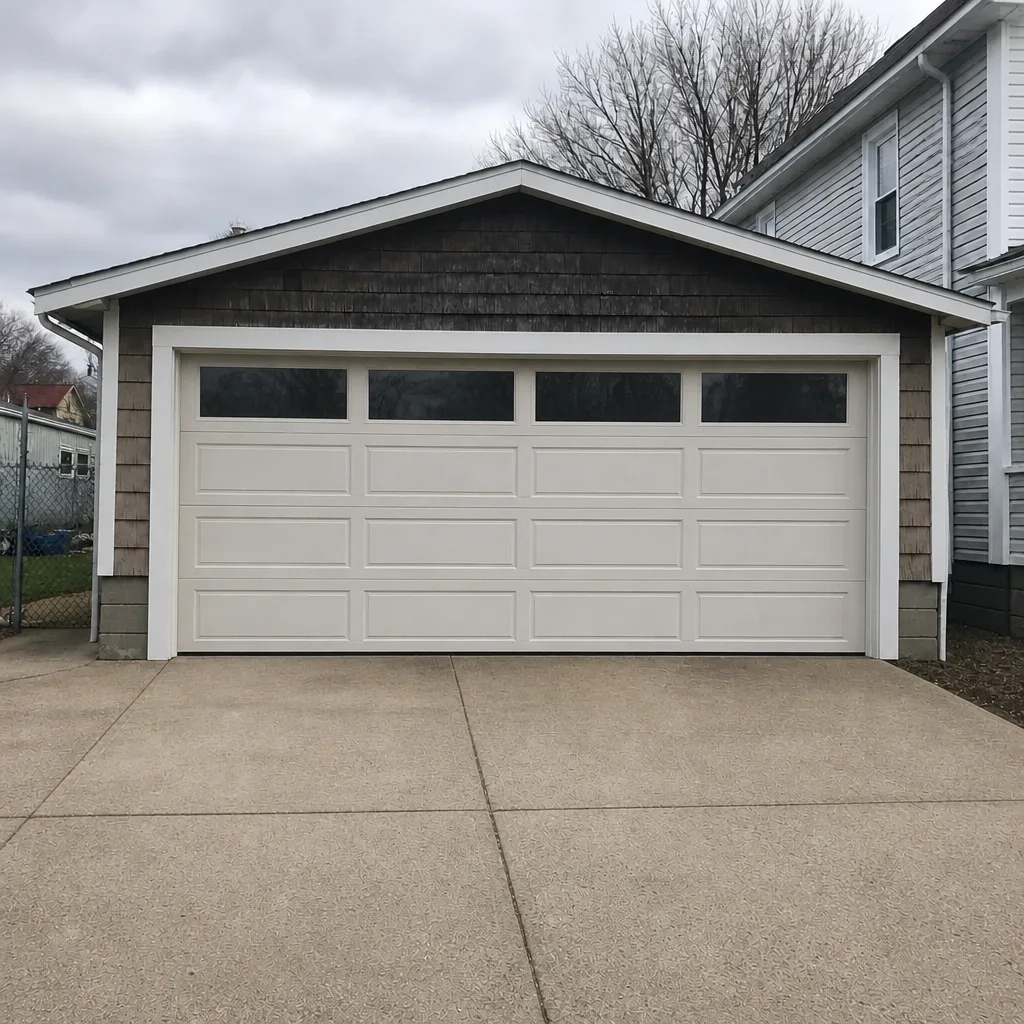 After
When to Call a Professional
Call if the work involves a spring, a cable, a bottom bracket, or a door that’s off its track. Call if the door won’t hold itself up when you lift it by hand. Call if the opener runs but the door doesn’t move, if the door reverses on the way down, or if you’re not sure what’s happening. Call if you’re considering a full replacement rather than a repair, because a replacement is a measure-and-order job that has nothing to do with today’s repair and a lot to do with the measurements. And call if the work involves a torsion spring, because there’s no safe version of that job for a homeowner. Fall River Garage Door Repair Pros offers free estimates in Fall River. Call (855) 658-4171. We answer 24/7, and fast dispatch from 7am to 7pm, Sunday through Friday. Our technicians have up to 12 years of experience across systems from LiftMaster, Chamberlain, Genie, and Clopay.
Frequently Asked Questions
No. Torsion springs store enough energy to cause serious injury or worse when they release unexpectedly, and the winding process requires specific tools and know-how that can’t be improvised. This is the one repair in the garage where “I’ll be careful” isn’t good enough. Call (855) 658-4171 for an exact quote. Estimates are free.
A single torsion spring replacement in Fall River typically runs $180 to $340, and a matched pair runs roughly twice that because both springs are usually replaced together. Extension springs are typically $150 to $260. The written estimate sets the final price, and the price is agreed before any work starts. Call (855) 658-4171. Estimates are free.
No. Don’t run the opener and don’t lift the door by hand. On a two-spring door, the remaining spring is carrying double its design load, and the opener isn’t built to lift the door’s full weight. Running it turns a spring swap into a spring plus opener repair. Call (855) 658-4171 and describe what you see. Estimates are free.
Usually not the way you’d hope. Most policies exclude damage from faulty workmanship, and injury during a repair you performed yourself is not the kind of thing coverage is designed to respond to. Read your policy and call your agent with the specific scenario. When a licensed, insured local professional does the work, that liability question moves off your shoulders.
Lubrication, roller replacement, hinge replacement, bottom weather seal replacement, sensor alignment, remote and keypad programming, and force and travel limit adjustments. Those are all reachable for a careful homeowner with the right tools. Anything involving springs, cables, the bottom bracket, or a door off its track is professional work. Call (855) 658-4171 if you’re on the fence. Estimates are free.
On repair and emergency calls, same-day service is often possible. We answer 24/7 and dispatch from 7am to 7pm, Sunday through Friday. We’re closed Saturday; a call outside dispatch hours is booked into the next opening. For a new installation, the work is measured and scheduled rather than same-day, and you’ll get a written price first. Call (855) 658-4171.
No. The written estimate is the price, and it’s agreed before any work starts. The initial estimate is free. If we find something the first look didn’t reveal, we stop, you get a new written price, and you decide. Call (855) 658-4171 for an exact quote.
The local pro is licensed and insured as their state requires, and they work only on garage doors. They come to a Fall River door already familiar with the tolerances and failure patterns of the system, whether it’s a LiftMaster or a Clopay, which cuts diagnostic time. Call (855) 658-4171. Estimates are free.
The Bottom Line
Springs, cables, and anything under tension are professional work. Rollers, hinges, seals, sensors, and lubrication are fair game for a careful homeowner. That’s the whole decision, and everything else is detail. The money math mostly supports it, but the real reason is that the expensive mistakes in this trade are the ones that happen when a homeowner takes on a repair that should never have been a DIY job. In Fall River, a hard winter and older housing stock make that distinction more important, not less. If you’re not sure where your repair sits, call. A free estimate costs less than a wrong guess. Call (855) 658-4171. We answer 24/7. Fast dispatch from 7am to 7pm, Sunday through Friday. We’re closed Saturday.
Written by the team at Fall River Garage Door Repair Pros.