
Last updated November 22, 2026
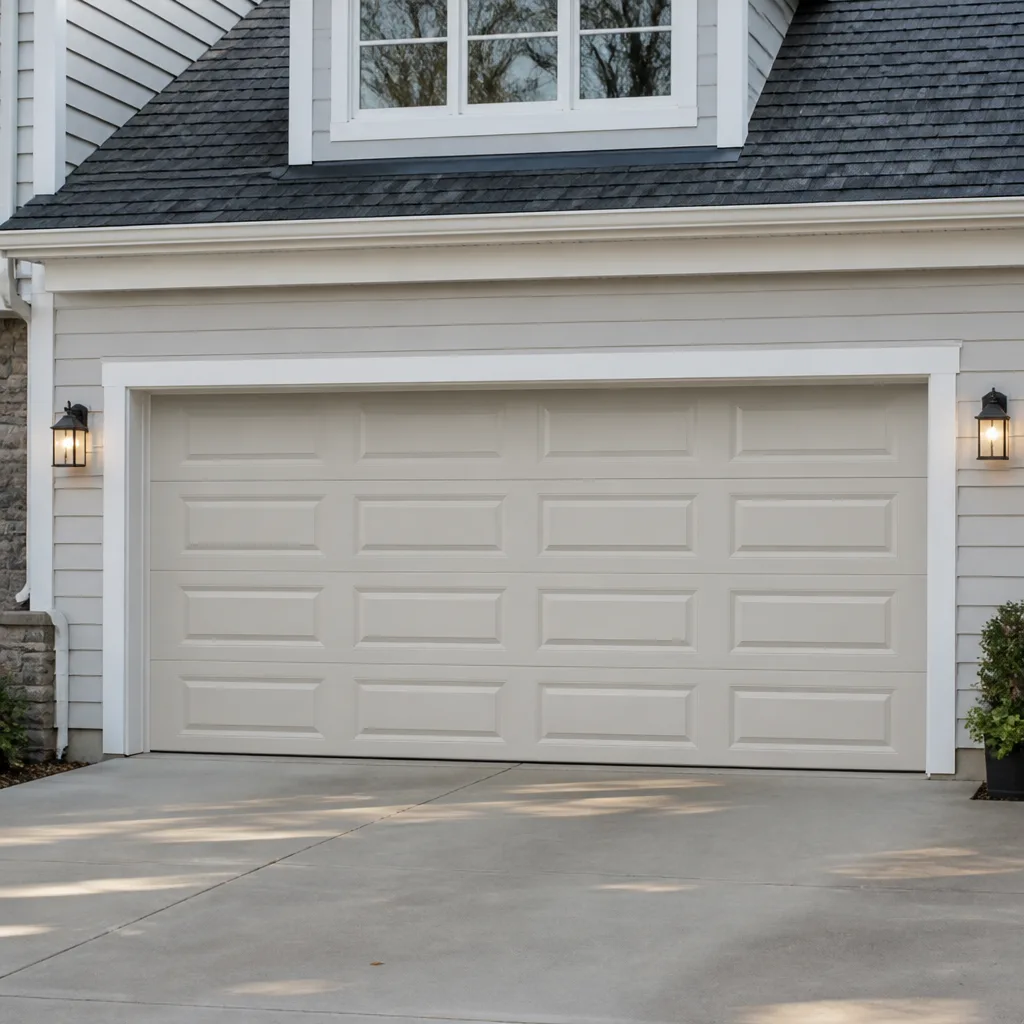 Raised-panel steel
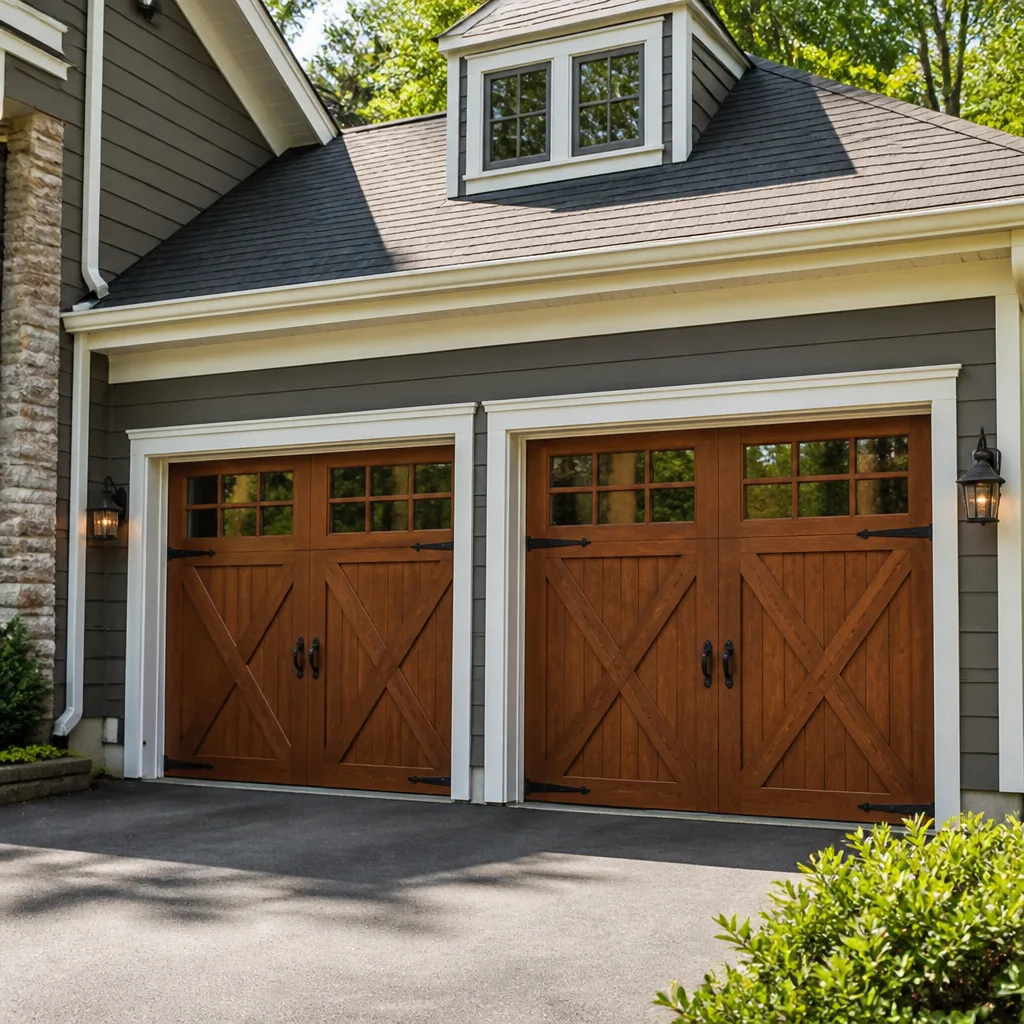 Carriage house
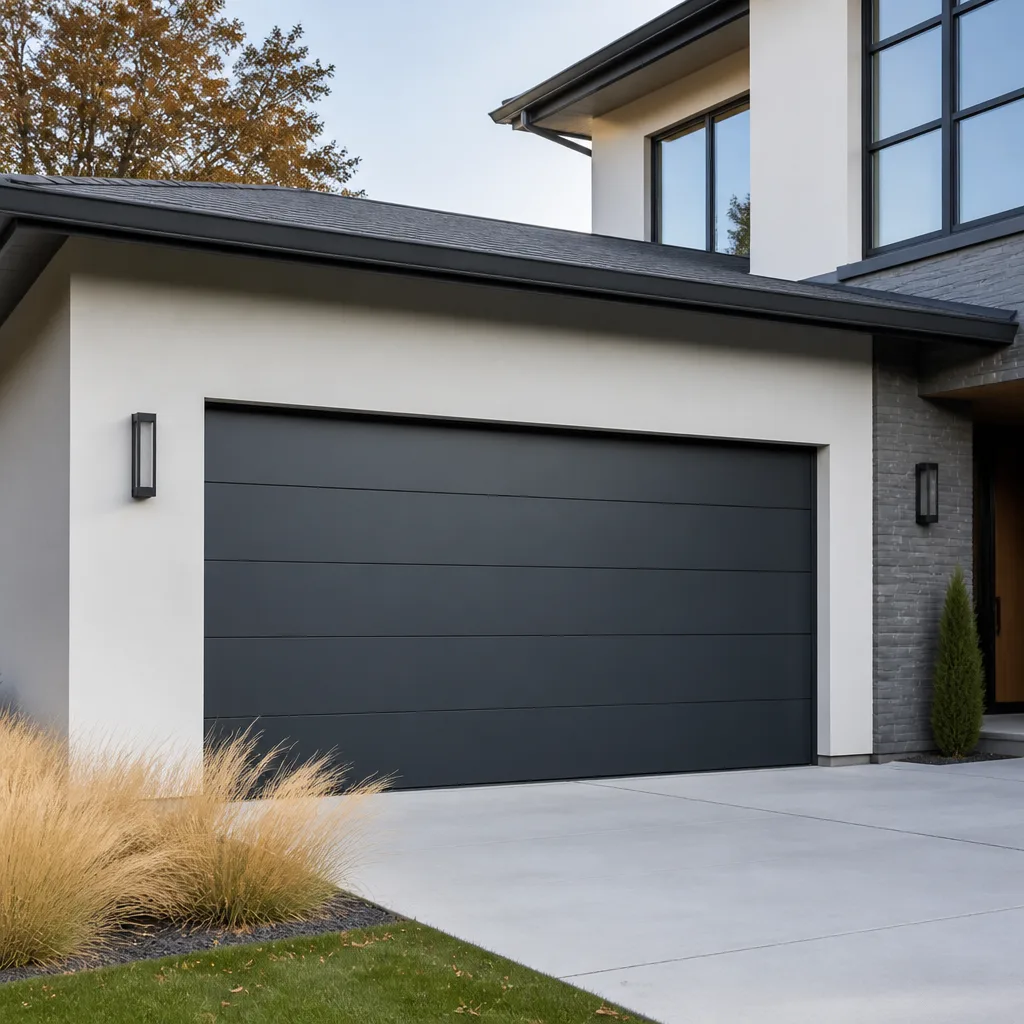 Modern flush
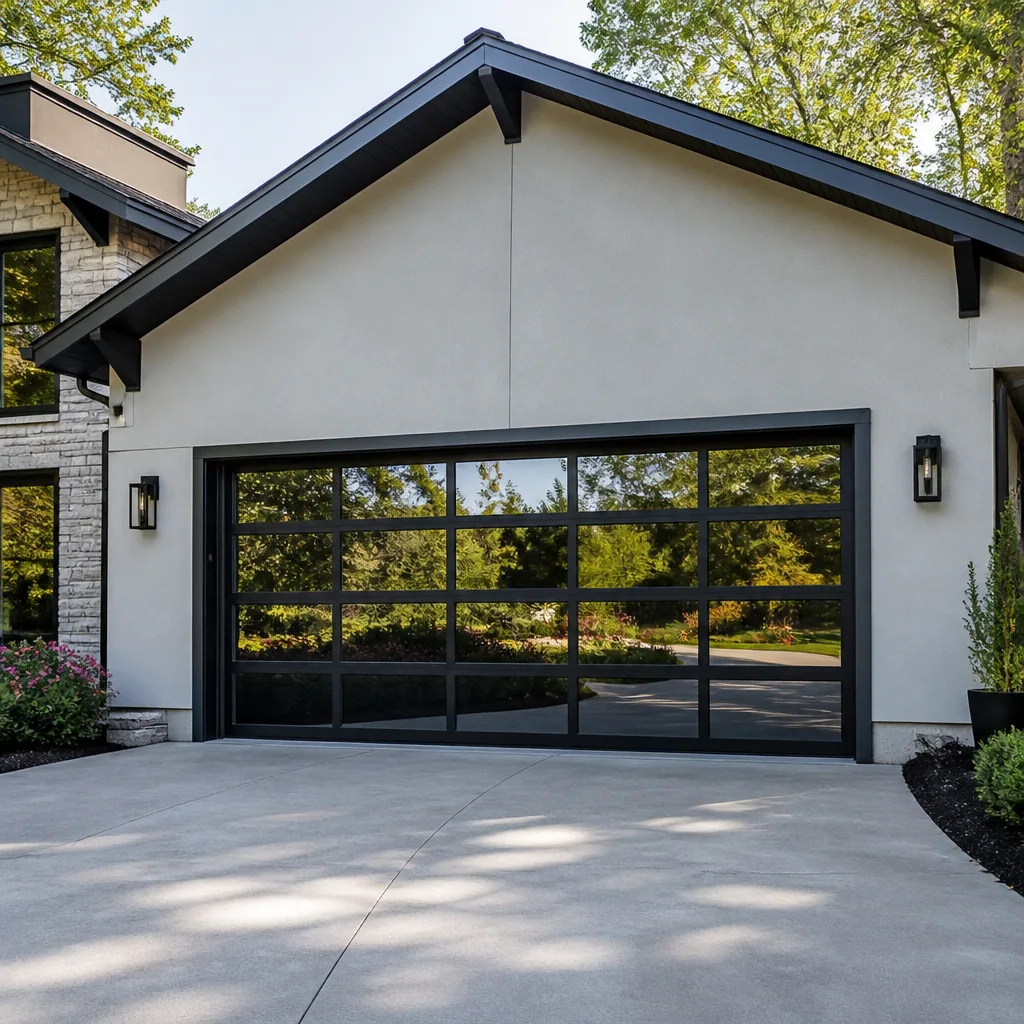 Full-view glass
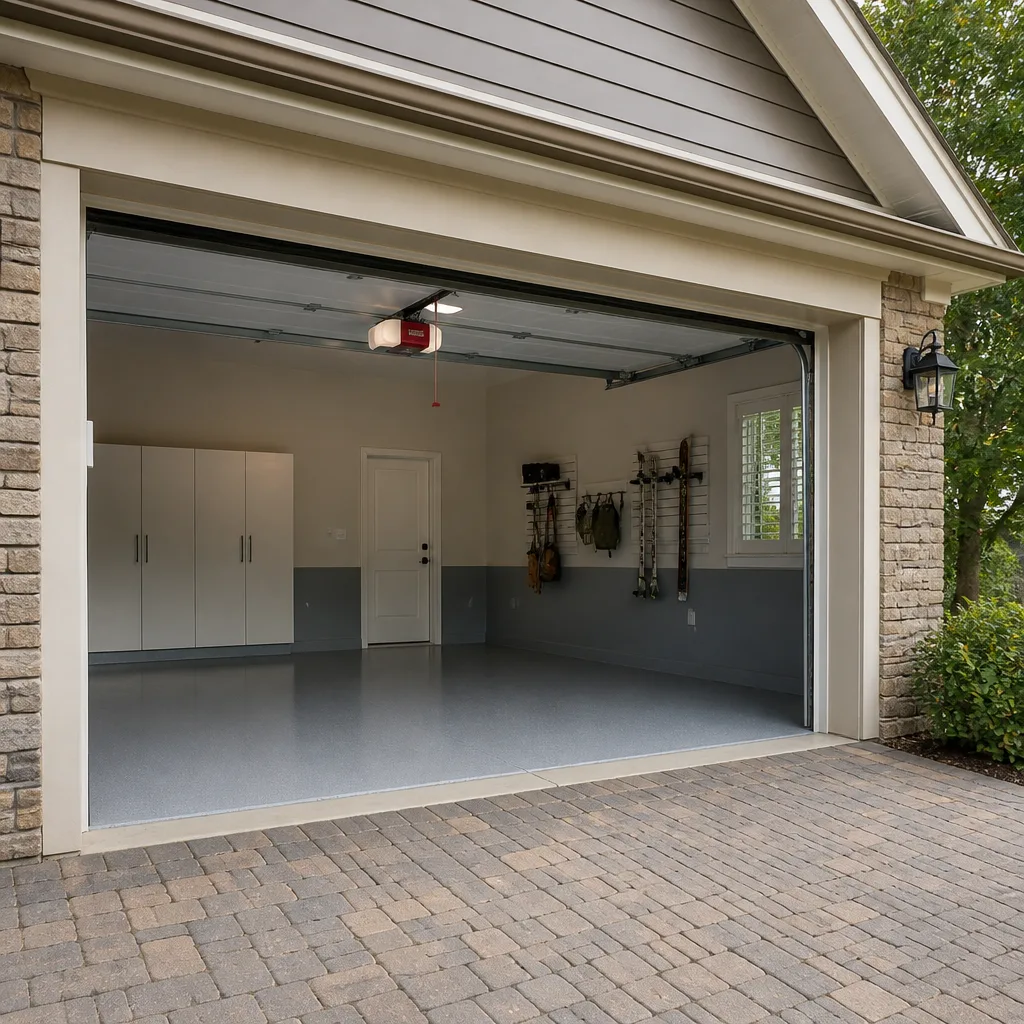 LiftMaster openers
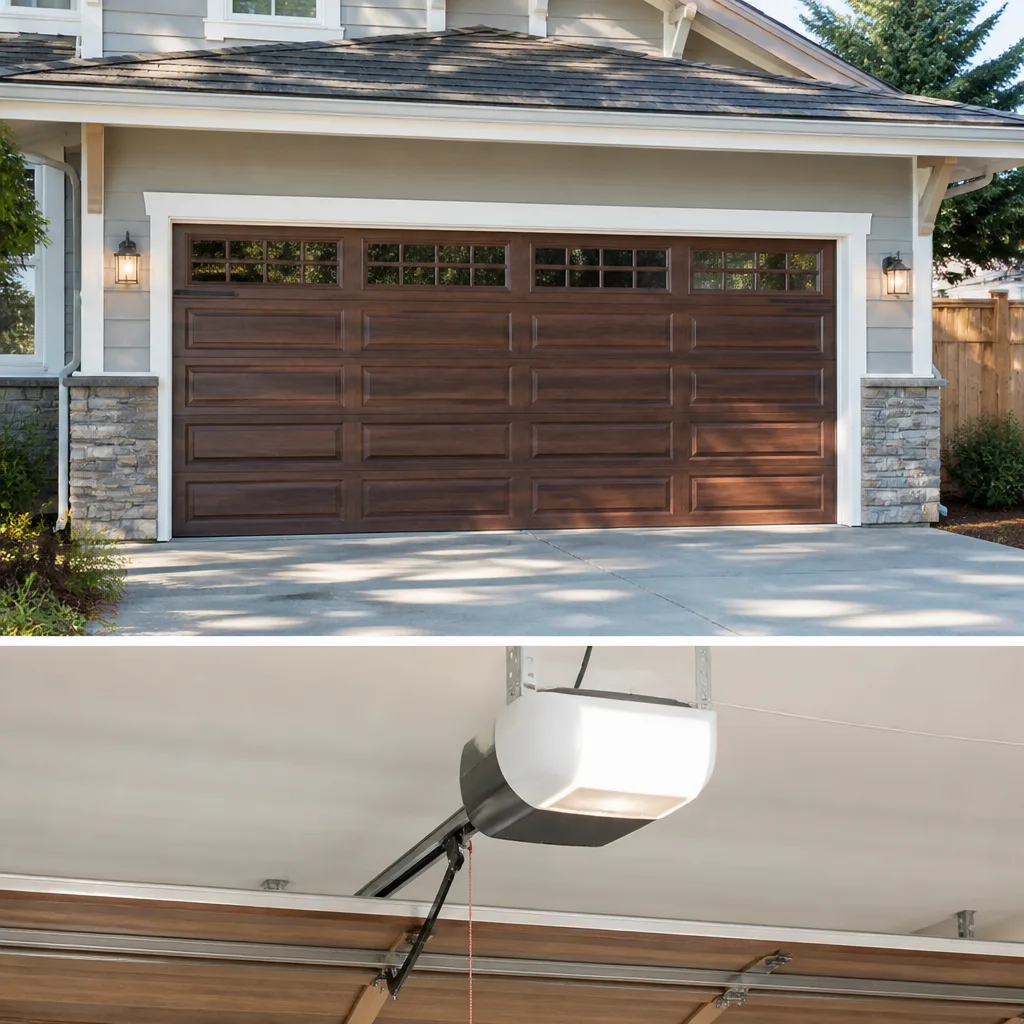 Chamberlain openers
Full 25-point door and opener safety check with every visit - springs, cables, rollers, tracks, and your LiftMaster or Chamberlain opener included
You get a price before we start. It does not change when the pro arrives.
Get your free estimateGarage Door Repair Troubleshooting in Fall River: Common Problems and How to Fix Them
A snapped torsion spring and a stripped cable drum can produce the exact same symptom: a door that won’t lift. Treating them the same way is how small repair bills become big ones. Most homeowners in Fall River chase the symptom – the loud bang, the slow door, the remote that quit – instead of identifying which system actually failed. A garage door is four separate systems working together: springs, cables, opener, and tracks and rollers. Each one fails differently, and each one demands a different response. This guide teaches you to troubleshoot by component, not by noise, so you can isolate the real problem, decide what’s safe to handle yourself, and know exactly what to tell a technician when you call.
Quick Answer
Most garage door problems in Fall River trace back to one of four components: worn or broken springs, frayed cables, a failing opener, or misaligned tracks and rollers – and you can usually identify which one by how the door behaves rather than what it sounds like. Lubrication, sensor alignment, and remote reprogramming are safe to handle yourself, but torsion springs, cables, and bottom brackets carry serious injury risk and need a trained technician. When in doubt, a free estimate costs you nothing and prevents a small failure from turning into a large one.
Styles & brands we work with
- Raised-panel steel
- Carriage house
- Modern flush
- Full-view glass
- LiftMaster openers
- Chamberlain openers
Table of Contents
- Why Component-First Troubleshooting Beats Symptom-Chasing
- How Fall River Weather Accelerates Specific Failures
- The Disconnect Test: Is It Mechanical or Electrical?
- Springs and Cables: The Failures You Should Never Touch
- Opener Problems: When the Motor Is Fine and the Logic Isn’t
- Tracks, Rollers, and the Door That Drags
- What’s Genuinely DIY-Safe and What Isn’t
- What to Tell a Technician When You Call
Why Component-First Troubleshooting Beats Symptom-Chasing
Symptoms are misleading because garage door components fail into each other. A door that reverses immediately after touching the floor could be a misadjusted limit switch, a stretched cable, or a sensor knocked out of alignment. Three different systems, three different fixes, one identical symptom. If you start by guessing at the symptom, you’ll often replace the wrong part.
Component-first troubleshooting works by narrowing the field before you spend anything. Here’s the framework we use:
- Isolate the door from the opener. Pull the emergency release and try the door by hand. If it moves freely, the mechanical door is likely fine and the opener is the suspect. If it fights you, the problem is in the door itself.
- Check the springs by sight, not sound. A torsion spring has a visible gap in the coil when it breaks. Extension springs stretch along the track above the door and often come with safety cables running through them.
- Inspect the cables at both ends. Fraying near the drum or a cable that’s jumped its groove points to a cable problem, even if the door still moves.
- Watch the door travel for the first six inches. Binding, jerking, or a door that goes crooked signals a track, roller, or cable issue rather than an opener fault.
- Listen for the opener without the door. With the door disconnected, run the opener. If it cycles smoothly, the motor and logic board are probably healthy.
This order matters. It prevents the most expensive mistake in garage door repair: paying to replace an opener when the actual failure is a $60 cable. About a third of the calls we handle in Fall River start with the homeowner convinced the opener is dead when the door is the real problem. For a full picture of what garage door repair involves once you’ve isolated the failure, that’s the place to start.
How Fall River Weather Accelerates Specific Failures
Fall River sits on Mount Hope Bay and the Taunton River, and the humidity that comes with that geography does specific things to a garage door that inland homeowners don’t see as often. Wooden door panels absorb moisture and swell, which throws the door out of square and puts uneven load on the rollers. Steel panels hold up better, but the bottom section – closest to the pavement and the snow line – is where paint fails first and rust takes hold. Once moisture gets behind a painted panel, the section starts to delaminate or warp.
The bigger factor is freeze-thaw. Fall River gets real winters with repeated cycles of freezing nights and above-freezing days. That cycle does two things:
- It works fasteners loose. Track bolts, hinge screws, and bracket lag bolts back out fractionally with every expansion and contraction. A track that was perfectly aligned in October can be a half-inch off by February.
- It stiffens lubricant. Grease that flowed fine at 70 degrees can thicken enough on a cold morning to make the opener strain. That strain shows up as a door that lurches or reverses partway up on the coldest days of the year.
We also see more roller and hinge wear in Fall River than in drier inland towns. The combination of humidity in summer and salt-free but still wet winters means moving parts sit in moisture longer. A roller that would last several seasons inland may need attention sooner here. None of this means a Fall River door is fragile – it means the maintenance schedule matters more, and you shouldn’t be surprised when a door that ran quietly in June complains in January. Knowing which components take the seasonal hit lets you predict failures instead of reacting to them.
The Disconnect Test: Is It Mechanical or Electrical?
Before you call anyone, run the disconnect test. It’s free, it takes two minutes, and it separates the two biggest repair categories: mechanical door problems and electrical opener problems. The emergency release cord hangs from the opener trolley, usually with a red handle.
- Close the door fully. Never pull the release with the door open – the door can drop.
- Pull the release cord straight down and toward the door. You’ll hear the trolley disengage from the carriage.
- Lift the door by hand to about waist height. A properly balanced door moves easily and stays where you let go of it.
- Lower it slowly. It should come down under moderate control, not slam.
Now interpret what you felt. If the door lifts smoothly and stays put, the springs, cables, and tracks are healthy – the problem is in the opener. If the door is heavy, fights you, or won’t stay up, the mechanical system is failing and no amount of opener repair will fix it. If the door lifts easily but grinds, squeals, or comes down crooked, you have a track, roller, or cable issue independent of both.
Before you reconnect, push the door back down to fully closed and pull the release cord again to re-engage the carriage. Then run the opener once. If the opener runs but the door doesn’t move, the carriage never reconnected. If the opener hums without moving at all, that’s a separate problem covered under garage door opener repair. Either way, the disconnect test tells you which specialist call to make.
Springs and Cables: The Failures You Should Never Touch
Torsion springs and cables are the two components where troubleshooting means “identify and stop,” not “identify and repair.” A torsion spring stores enough energy to lift a door that weighs hundreds of pounds, and that energy stays in the spring until it’s properly unwound. When a spring breaks – and they fail with a bang loud enough to hear through the house – the energy releases all at once. Cables under tension snap with the same force. Neither failure is a place to experiment.
Here’s how to identify each without touching them:
- Broken torsion spring: a clean gap in the coil on the shaft above the door. The door will be extremely heavy, and the opener may run while the door stays put or moves an inch.
- Broken extension spring: one of the two springs along the horizontal track is stretched out of shape or dangling. Safety cables should have caught it; if the cables are missing, that’s a separate safety issue.
- Frayed cable: strands of wire starting to separate near the drum at the top corner, or a cable that’s come off the drum and is bunched up.
- Bottom bracket damage: the bracket that holds the cable at the bottom corner is bent or loose. This is where cable tension is highest, and this bracket is the single most dangerous part of a garage door to touch.
If you see any of these, leave the door closed and call a professional. Garage door spring repair is one of the highest-risk repairs in any home, and the tools required – winding bars of the correct diameter, a proper understanding of spring counts – are not improvised. Our technicians handle torsion and extension spring work using proper tools and safety protocols because we’ve seen what happens when a homeowner, or an under-equipped general contractor, tries it. Springs are also where failing to fix a small problem escalates: a broken spring left unaddressed puts the opener under loads it was never built for, and openers burn out.
Opener Problems: When the Motor Is Fine and the Logic Isn’t
Openers fail in ways that look mechanical but aren’t. The motor can be perfectly healthy while the logic board, safety sensors, or limit switches misbehave. The most common opener faults, in order of frequency:
- Safety sensor misalignment: the two small lenses at the bottom of the track need to see each other. A bumped sensor, a spider web, or sun glare can break the beam. The door goes down partway then reverses.
- Limit switch drift: the opener doesn’t know when to stop. The door over-travels, or stops short of the floor. Adjusting the travel limits usually fixes it.
- Remote or keypad failure: dead battery, lost programming after a power outage, or a remote that got wet.
- Motor hums but doesn’t move: the capacitor, gear, or logic board has failed. This is a repair, not an adjustment.
Before calling, run these three quick checks. First, confirm the wall button works; if it does, the opener is alive and the problem is remote-side. Second, check for an LED on each sensor – a solid light on both means alignment is fine, a flickering or dark light means the beam is broken. Third, look for a lock icon on the wall control; some models have a vacation lock that disables remotes.
If the opener is a Genie, a Chamberlain, or a LiftMaster, the diagnostics differ slightly by model and generation, but the logic is the same. Our technicians work on all three daily, alongside Clopay, Amarr, Wayne Dalton, Craftsman, and Raynor systems, so there’s no learning curve when we arrive. When an opener has genuinely failed – usually past 10 or 12 years of use – replacing it is often cheaper than repairing a logic board on an aging unit. A replacement is measured and priced in writing before anything is ordered.
Tracks, Rollers, and the Door That Drags
Track and roller problems announce themselves differently. The door doesn’t refuse to move – it moves badly. It might jerk, screech, come down crooked, or leave a gap at one corner when closed. In Fall River, freeze-thaw cycles do more of this damage than anything else, because track bolts loosen a fraction every time the temperature swings.
What to check, and what it means:
- Visual track alignment. Stand inside the garage and sight along each vertical track. It should be straight and plumb. A visible bend – usually from a car bumper or a leaning ladder – needs straightening or replacement.
- Roller condition. Rollers are the wheels running inside the track. Metal rollers develop flat spots and squeal; nylon rollers crack and shed pieces. Worn rollers leave the door sloppy in the track.
- Hinge tightness. Every hinge should be snug against the panel and the roller stem should spin freely. Loose hinges let the door sag between panels.
- Bottom seal condition. A torn bottom seal lets water in during Fall River winters, which accelerates rust along the lowest panel.
Lubrication is the honest first step. A silicone-based spray lubricant on hinges, rollers, and the torsion spring (never grease on the tracks themselves) quiets most dragging doors. If lubrication doesn’t resolve it within a week, the problem is mechanical wear, not friction. Track straightening and roller replacement are moderately safe for a handy homeowner on a single-car door; on a double door, the panels are heavy enough that we recommend a professional. For anything that involves releasing the door from the tracks, don’t.
What’s Genuinely DIY-Safe and What Isn’t
Not every garage door problem needs a service call, and we’d rather tell you what you can handle than have you pay for something you don’t need to. The dividing line is simple: if the repair involves stored energy under tension (springs, cables, bottom brackets) or lifting weight with a helper, it’s a professional job. Everything else is fair game.
Safe to handle yourself:
- Lubricating hinges, rollers, and the torsion spring with a silicone spray.
- Cleaning and realigning the safety sensors – a soft cloth on the lenses and a nudge to point them at each other.
- Reprogramming a remote or keypad, and replacing remote batteries.
- Tightening hinge screws and track bolts that have worked loose.
- Replacing the bottom weather seal, provided the door is down and you’re not touching the cable bracket.
- Clearing obstructions from the door’s path.
Not safe, no exceptions:
- Any work on torsion springs or the winding bars.
- Any work on extension springs, including replacing safety cables.
- Touching the bottom brackets where cables attach.
- Removing the door from its tracks or replacing a panel on a two-car door.
- Adjusting the opener’s force settings beyond the manufacturer’s instructions – too much force disables the safety reverse.
The DIY line isn’t about skill, it’s about consequence. A misadjusted sensor costs you ten minutes. A misjudged spring costs you a hand. Our technicians have up to 12 years of experience, and every one of them still treats a spring replacement as a procedure, not a chore. That tells you something about where the risk sits.
What to Tell a Technician When You Call
The call goes faster and the quote is more accurate when you front-load the right details. A technician who knows what to expect arrives with the right spring, the right opener, or the right cable on hand – which means one visit instead of two. Here’s what helps:
- The door’s age and model if you know it. A sticker on the inside of the panel or on the opener housing often carries the model number.
- Which component you suspect based on your troubleshooting – spring, cable, opener, or track. Even a guess helps.
- What the door does and doesn’t do. “Lifts three inches and stops” is more useful than “it’s broken.” “Reverses at the floor” is more useful than “it acts weird.”
- The door’s size and material – single or double, steel, wood, or aluminum.
- Whether the opener is a Genie, LiftMaster, Chamberlain, or another brand, and roughly how old it is.
- Whether the door is currently in the up or down position, and whether you can safely operate it manually.
What you don’t need to do is agree to a repair on the phone before anyone has looked at the door. A repair should be quoted in writing, per job, after inspection, and the price you agree to before the work starts is the price you pay. If a technician calls out a failure you didn’t notice and can’t see for yourself, ask them to point it out and show you the part before anything is touched. Any honest shop will do that without hesitation. If you’re the property manager for a multi-unit building in Fall River, tell the technician that up front – a building with four doors and a shared opener setup needs a different visit plan than a single-family home.
Common Mistakes to Avoid
- Replacing the opener when the door is the problem. A heavy, hard-to-lift door burns out healthy openers. Fix the mechanical side first, then evaluate the opener.
- Assuming a loud bang was the opener. Torsion spring failures are the loudest garage door event there is. Check the springs before you call about the motor.
- Greasing the tracks. Tracks should be clean and dry. Grease collects grit and makes rollers slip, which is the opposite of what you want.
- Ignoring a small track bend. In Fall River’s freeze-thaw cycle, a slightly bent track gets worse every season until the rollers jump out entirely. Fix the bend while it’s cheap.
- Turning up the opener’s force setting to compensate for a stiff door. This masks the real problem and defeats the safety reverse, which is the one feature that prevents injuries.
- Letting a broken spring sit for weeks. The opener strains on every cycle and can fail from the extra load, and the door itself can twist and damage panels.
- Taking the cheapest quote without a written estimate. A verbal price for “springs and whatever else is wrong” is not a quote. Ask for the price in writing, per job, before any work starts.
See the difference
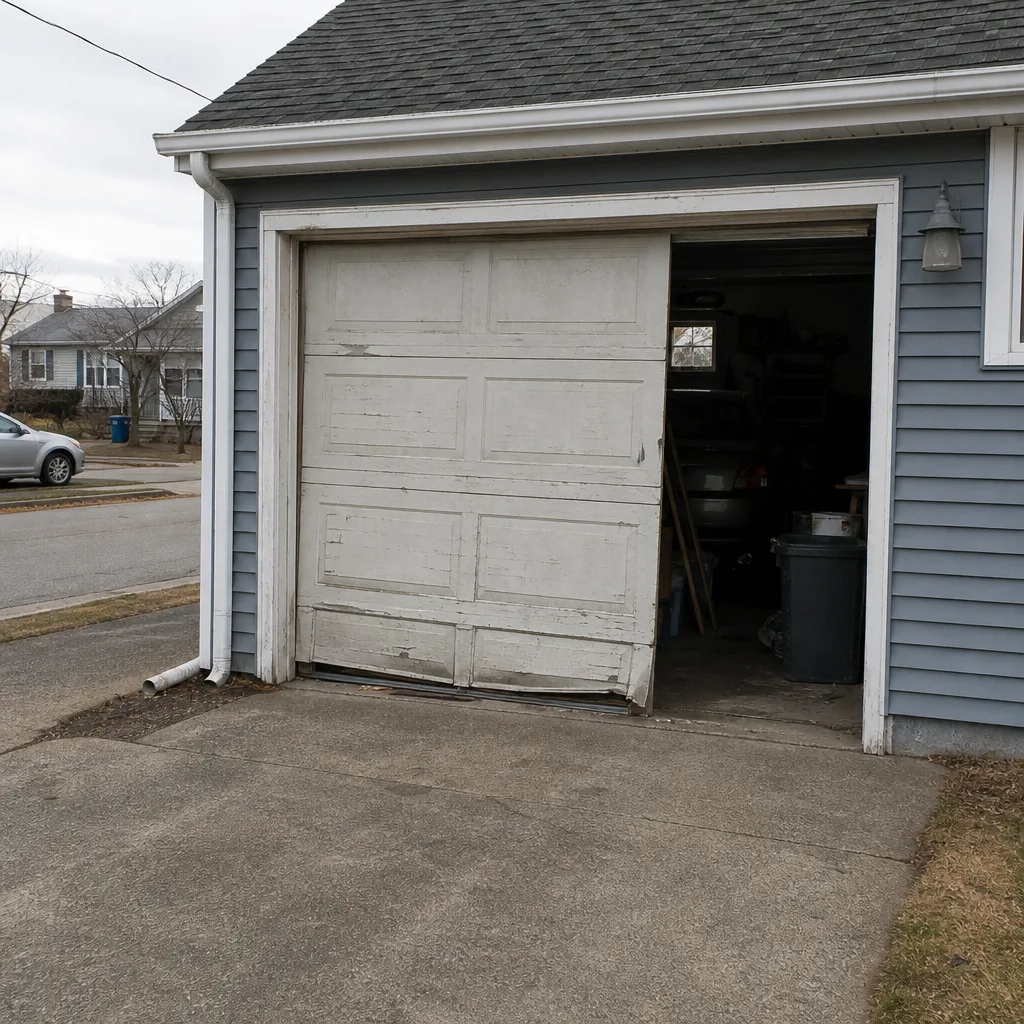 Before
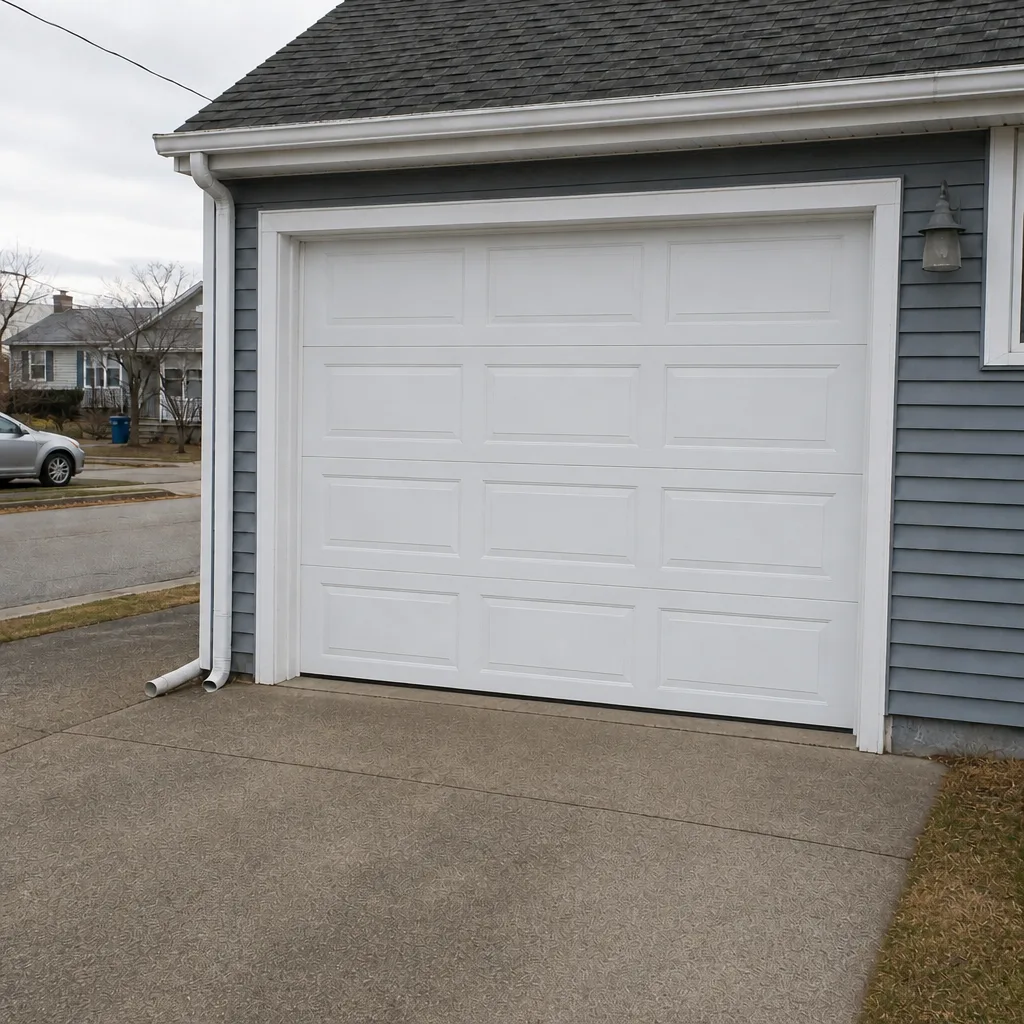 After
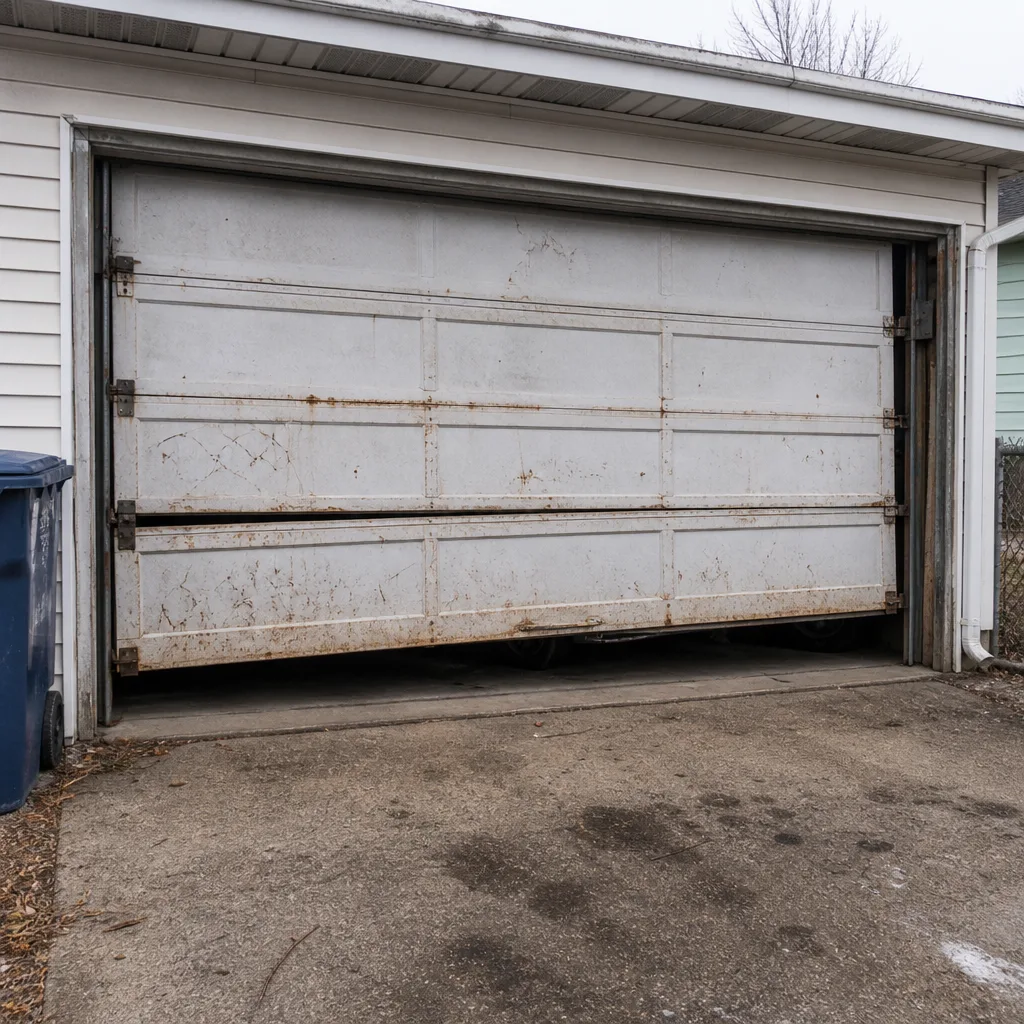 Before
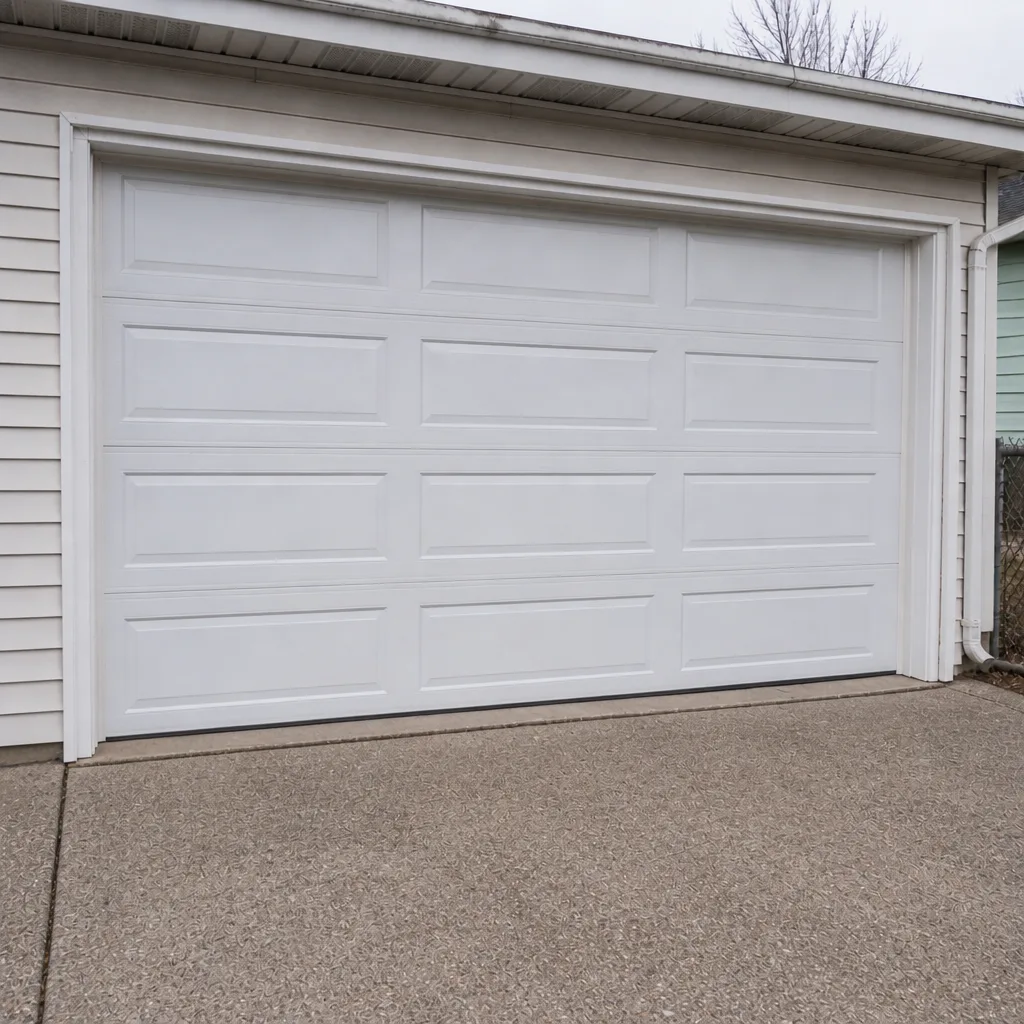 After
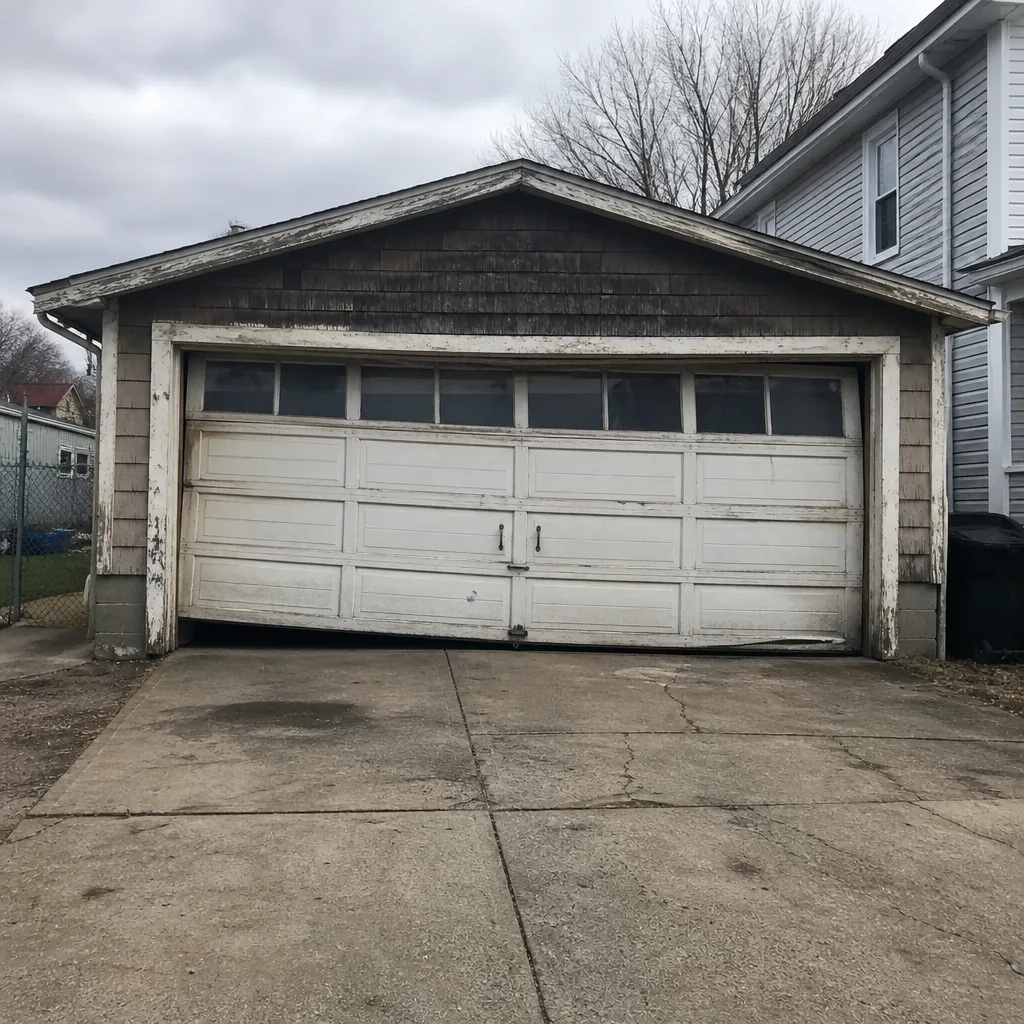 Before
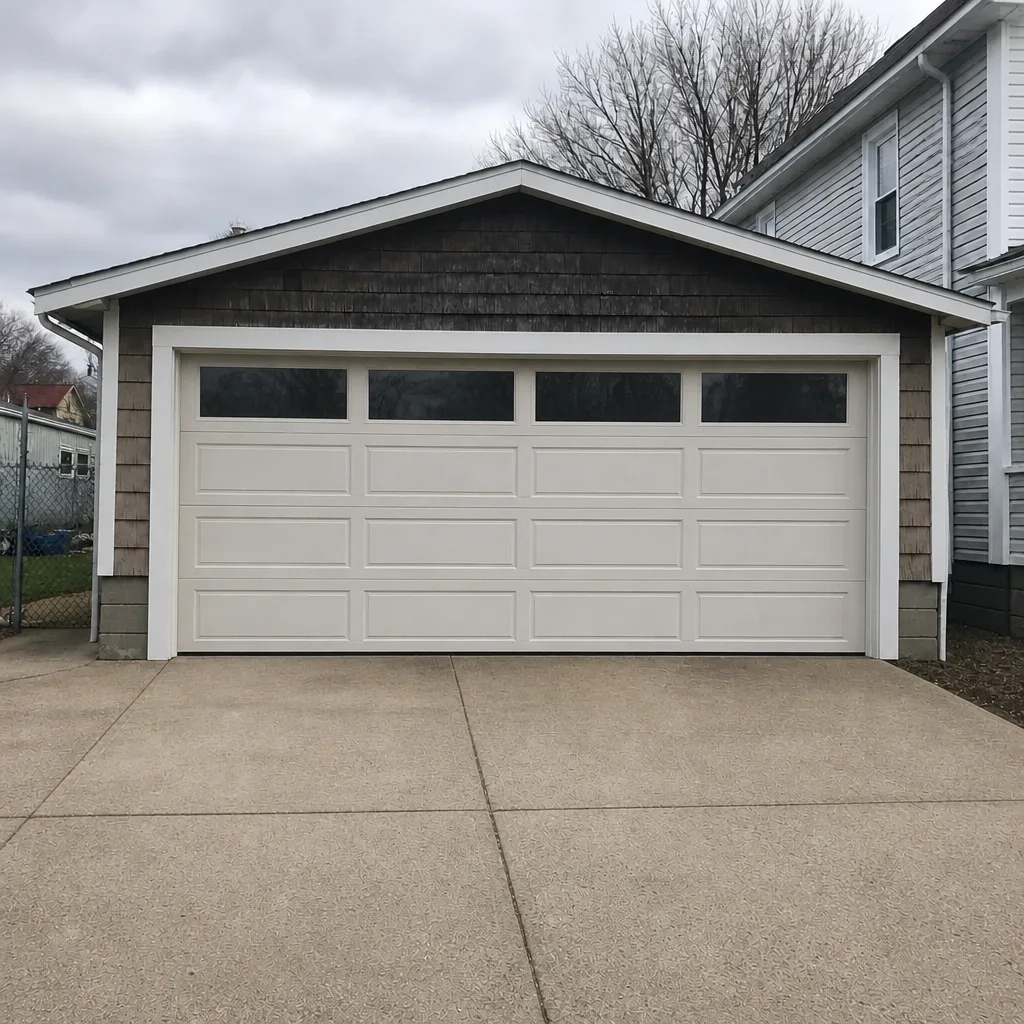 After
When to Call a Professional
Call a professional for any failure involving springs, cables, or bottom brackets, and for any door that’s come off its tracks or stopped moving entirely. Call us if the door is too heavy to lift by hand, if you see a gap in a torsion spring, if a cable is frayed or off its drum, or if the opener runs but the door doesn’t. For anything on a two-car door – rollers, panels, hinges with real weight behind them – we recommend a professional visit, because the geometry of a double-car door makes do-it-yourself repairs riskier than the same repair on a single. Fall River Garage Door Repair Pros offers free estimates in Fall River – call (855) 658-4171. We answer 24/7. Fast dispatch from 7am to 7pm, Sunday through Friday. Call (855) 658-4171. We answer 24/7. A call outside dispatch hours is booked into the next opening, Sunday through Friday, 7am to 7pm.
Frequently Asked Questions
Most garage door repairs in Fall River fall into a few common bands: sensor and alignment fixes are typically the smallest jobs at under $150, spring replacement for one spring is typically $180 to $340 with matched pairs costing roughly double, and opener repair or replacement typically runs $150 to $650 depending on the model and what failed. Track and roller work typically lands between $120 and $400. These ranges are typical estimates for the local market, not a quote. The written estimate sets the final price, and you agree to it before any work starts. Call (855) 658-4171 for an exact quote – estimates are free.
Run the disconnect test: pull the emergency release with the door fully closed, then lift the door by hand. If it’s heavy or won’t stay up, the springs (or cables) are failing and the opener is innocent. If it lifts easily and stays, the door is balanced and the opener is the problem. It takes two minutes and it tells you which specialist call to make. If you’re unsure what you felt, call (855) 658-4171 – we can walk you through it.
Repairs are often same-day when the parts on hand match the failure – springs, cables, sensors, and common opener repairs are the usual case. We answer 24/7, and we dispatch 7am-7pm Sunday through Friday. Installations are a different matter: those need a free measure and a written price before anything is ordered, so they’re scheduled. Call (855) 658-4171 to see what your repair needs.
The written estimate sets the price, and it’s quoted per job before any work starts. If the inspection turns up a second problem – a track bend behind the spring failure, for instance – you’ll hear about it and agree to the additional cost before anything is done. No surprise invoices, no work started without your approval. Call (855) 658-4171 for a free estimate.
Yes – the local professional we connect you with is licensed and insured as the state requires. Our technicians have up to 12 years of experience and work exclusively on garage doors, which is why we can diagnose the failure on the first visit rather than swapping parts to see what changes. Call (855) 658-4171 with any questions.
We work on all of the major residential brands, including LiftMaster, Chamberlain, Genie, Clopay, Amarr, Wayne Dalton, Craftsman, and Raynor. Rare models and older systems are typically workable too – tell us what you have on the phone and we’ll confirm before anyone is dispatched. Call (855) 658-4171.
Only if there’s a reason. If the opener is quiet, reverses correctly on an obstruction test, and controls the door smoothly, it’s doing its job. If it’s humming without moving, reversing erratically, or the motor struggles on the coldest mornings, that’s when replacement usually beats repair. A free estimate will tell you which side of the line you’re on – call (855) 658-4171.
Broken torsion springs and misaligned safety sensors are the two most common failures we see in Fall River, for different reasons. Springs wear out from normal cycle count and are more stressed by the temperature swings between heating season and summer. Sensors get knocked or fogged during wet stretches. Both are diagnosable over the phone. Call (855) 658-4171 and describe what the door is doing.
The Bottom Line
Troubleshoot by component, not by symptom. Identify which system failed – spring, cable, opener, or track – before you spend a dollar on parts or a service call. Run the disconnect test first; it separates mechanical failures from electrical ones in two minutes and saves you from paying to replace an opener when the door is the problem. Handle lubrication, sensor alignment, and remote reprogramming yourself. Never touch springs, cables, or bottom brackets. Tell the technician what the door does and doesn’t do, and get the price in writing before any work starts. For a full picture of the services behind this guide, see Fall River Garage Door Repair Pros. When you’re ready for a free estimate, call (855) 658-4171. We answer 24/7. Fast dispatch from 7am to 7pm, Sunday through Friday.
Written by the team at Fall River Garage Door Repair Pros.