
Last updated November 22, 2026
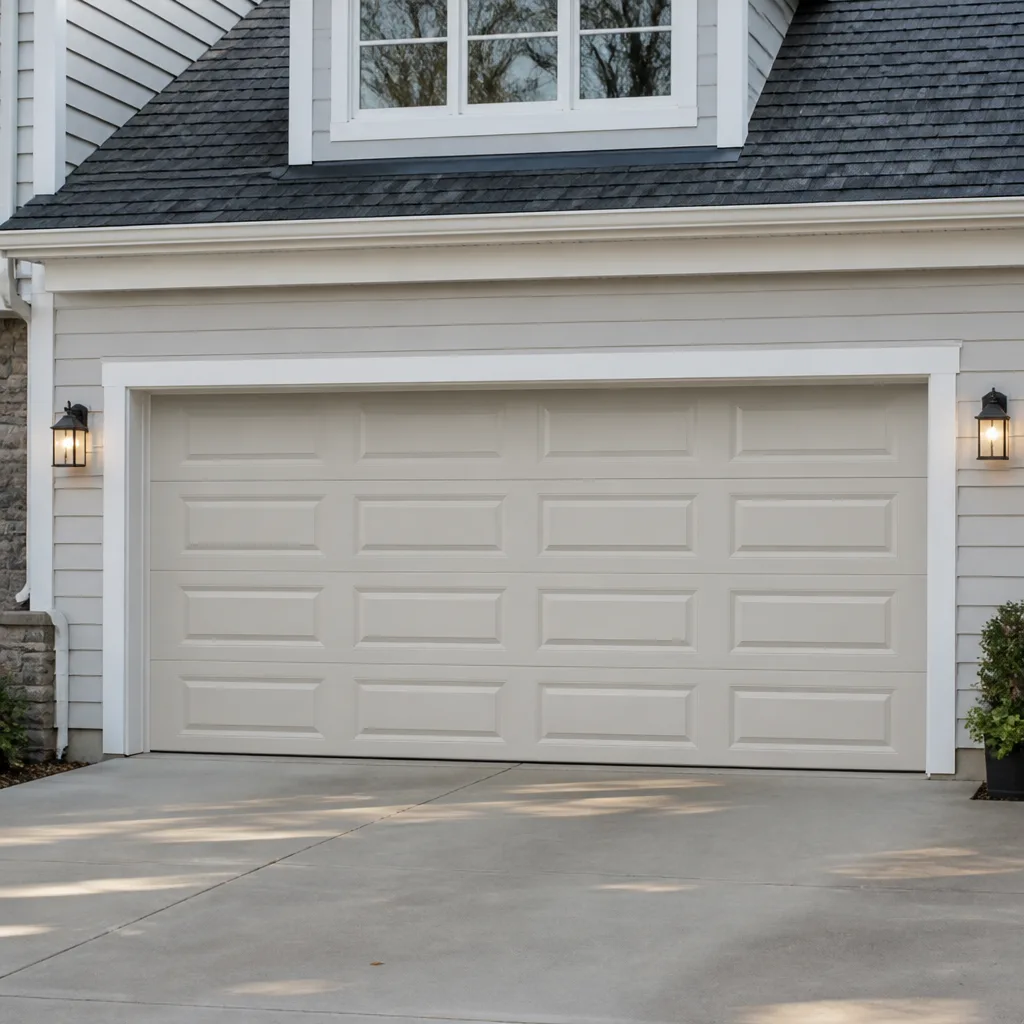 Raised-panel steel
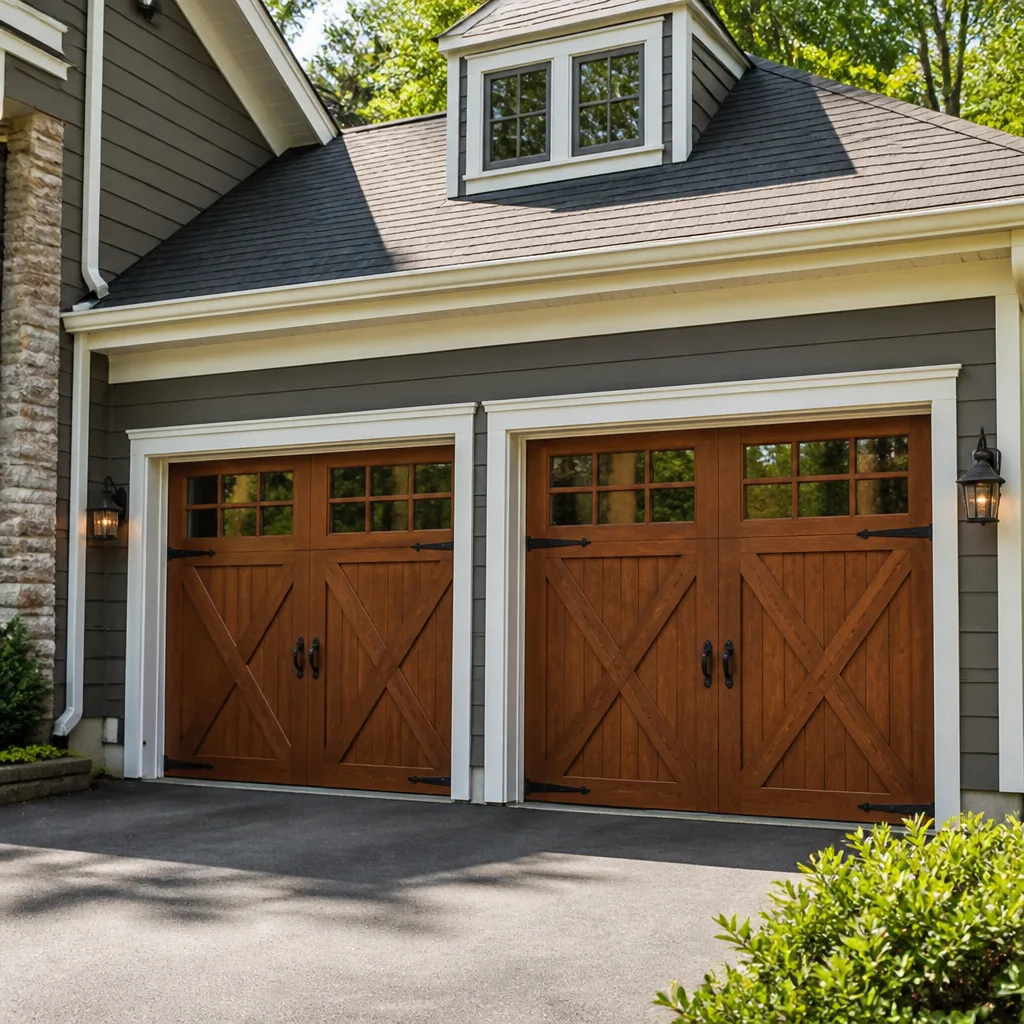 Carriage house
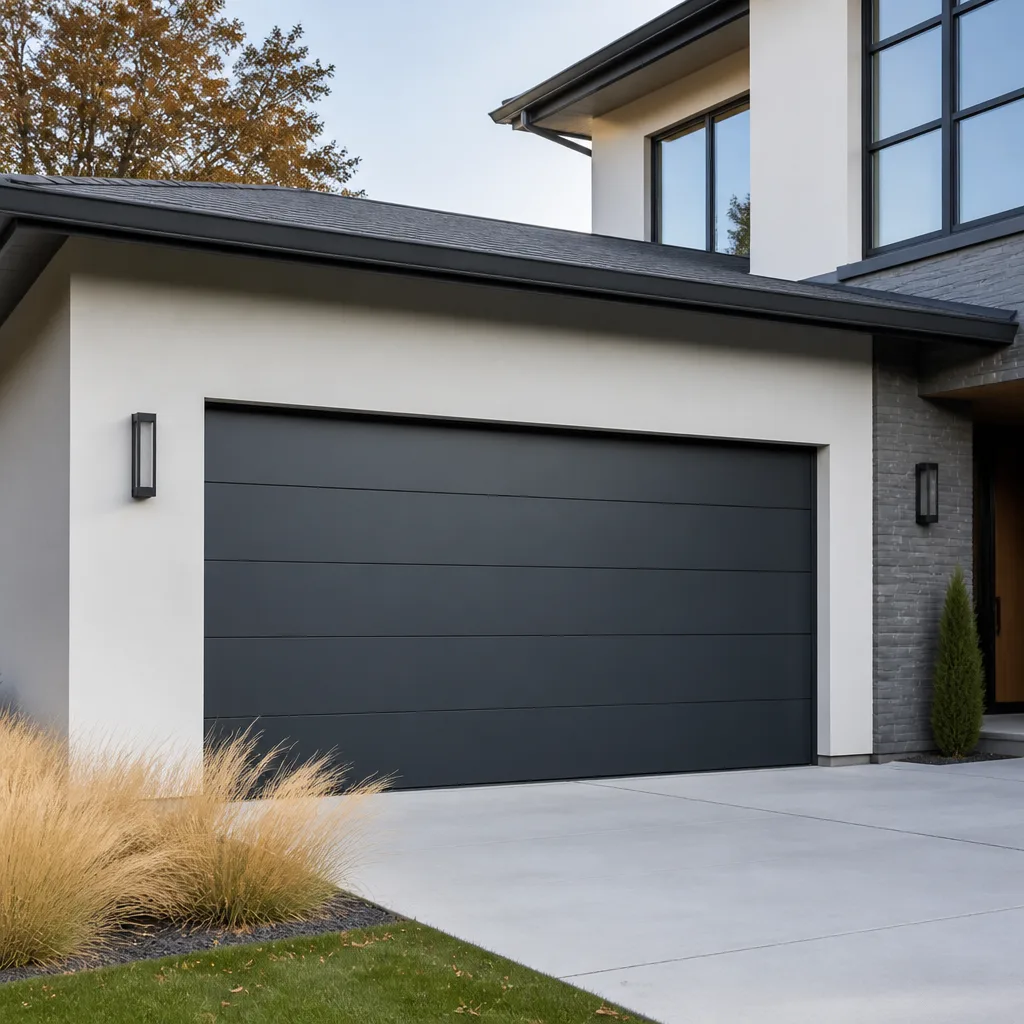 Modern flush
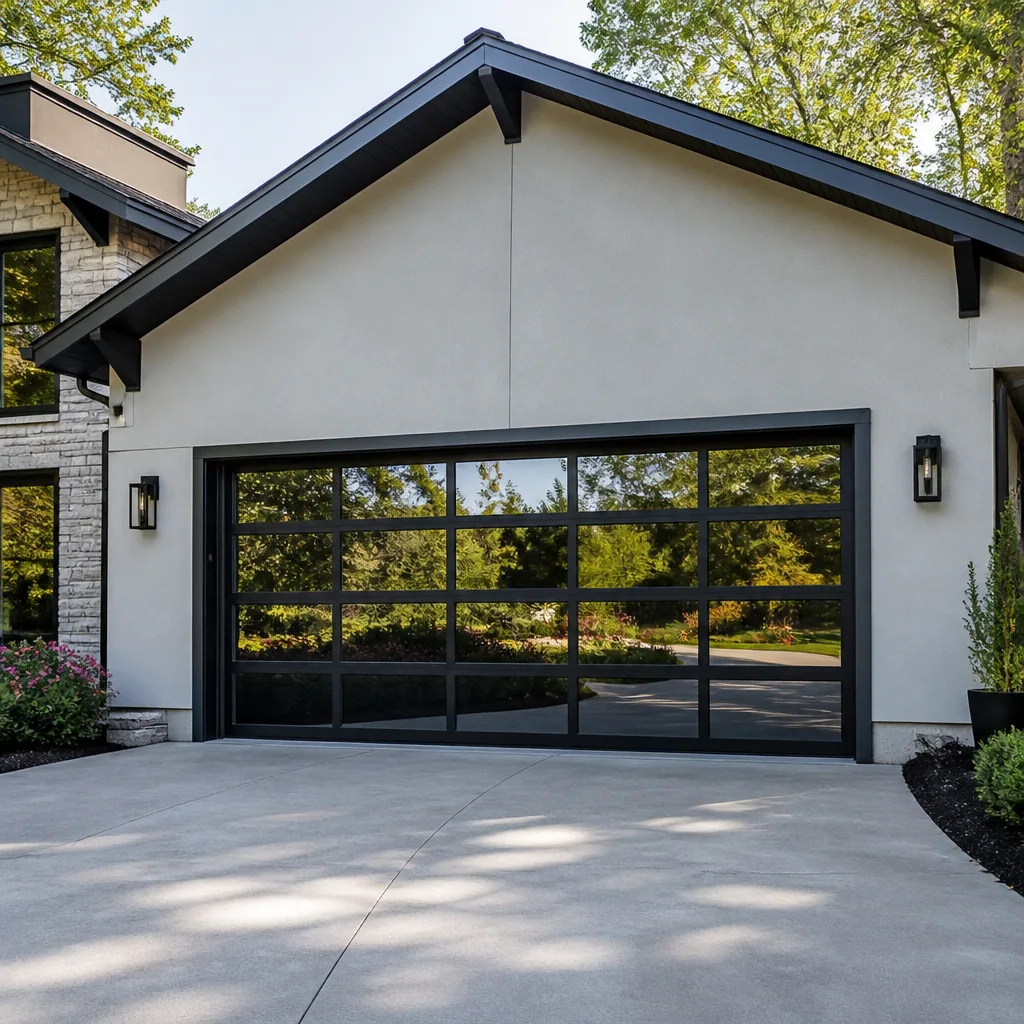 Full-view glass
 LiftMaster openers
 Chamberlain openers
Full 25-point door and opener safety check with every visit - springs, cables, rollers, tracks, and your LiftMaster or Chamberlain opener included
You get a price before we start. It does not change when the pro arrives.
Get your free estimateGarage Door Warning Signs: A Fall River Homeowner’s Reference Guide
Most advice about garage door warning signs is useless in the exact moment you need it. “Listen for unusual noises” tells you nothing about whether the sound you just heard means a twelve-dollar roller or a spring that’s about to let go. The difference isn’t in whether the door sounds different. It’s in what the sound is, when it happens in the door’s cycle, and where it’s coming from. That’s what separates a wait-and-watch problem from a stop-using-it-now problem. This guide breaks warning signs down symptom by symptom, with the urgency levels attached, so a Fall River homeowner can make a real decision instead of guessing. We’ll cover sounds, visual clues, and the fall and winter patterns that show up again every year here.
Quick Answer
A garage door that grinds, squeals, pops, jerks, or moves unevenly is telling you something specific, and the sign itself points to the likely cause. Grinding usually means a roller, track, or opener gear issue; squealing points to dry or worn moving parts; a loud pop from a spring means stop using the door. Visual signs like a crooked door, frayed cables, or a gap at the bottom rank from monitor-and-watch to emergency. Any door that could drop, or that has a broken spring or a slack cable, should be treated as a safety emergency regardless of how smoothly it still runs.
Styles & brands we work with
- Raised-panel steel
- Carriage house
- Modern flush
- Full-view glass
- LiftMaster openers
- Chamberlain openers
Table of Contents
- What the Sound Tells You: Grinding vs. Squealing vs. Popping
- Visual Warning Signs, Ranked by Urgency
- How to Tell an Opener Problem from a Spring Problem from a Track Problem
- Warning Signs That Show Up After a Fall River Winter and Spring Thaw
- The Two Symptoms That Mean the Door Is a Safety Risk
- The Urgency Ladder: What to Fix Today, This Week, or This Month
- A Monthly Walk-Around Checklist for Fall River Homes
What the Sound Tells You: Grinding vs. Squealing vs. Popping
Sound is the earliest warning a garage door gives you, and it’s also the most misread. The key detail is the type of noise and where in the door’s travel it happens. Listen on the way up and on the way down separately. A noise that only shows up in one direction or at one point tells a very different story than a noise that runs the whole cycle.
Here’s how the three main categories break down, and what each usually indicates mechanically:
- Grinding is a harsh, rough, metal-on-metal sound. It usually points to worn steel rollers that have lost their bearings, a bent or misaligned track the rollers are dragging against, or a stripped opener drive gear. If the grinding comes from the opener unit overhead rather than the door itself, suspect the opener’s internal gearing.
- Squealing is a high-pitched squeal, often constant through the travel. It’s the classic sign of dry or worn rollers, hinges, and springs, or a torsion tube that needs lubrication. Squealing is the most forgiving of the three and often the cheapest to resolve, but ignoring it wears parts faster.
- Popping is a sharp snap or bang. If it comes from a torsion spring above the door or the extension springs along the horizontal track, stop using the door and call for service. A pop from these components can signal a spring that’s failing or a cable that’s jumped. Popping can also come from loose panel hinges or a roller jumping its track, which is less dangerous but still needs eyes on it.
In Fall River, the houses we work on range from older triple-deckers with tight, low garages to newer builds with standard two-car openings. The garage-door mechanics are the same across all of them, but in a tight low-clearance garage, a grinding noise is easier to hear and easier to mistake for the door rubbing the framing. If the sound tracks with the door’s travel rather than a single spot, it’s mechanical, not structural.
Visual Warning Signs, Ranked by Urgency
Not every visual warning sign means stop. Some are cosmetic or early and can be watched for a season. Others mean the door could drop, which is a different category entirely. Here’s the ranking we use, from lowest to highest urgency:
- Monitor and wait: Minor paint or finish wear, a small gap at one corner that appears only in cold weather, or a slightly noisy roller that still spins freely. These are early signals. Book a service call when convenient, but the door is safe to use.
- Schedule this week: A roller that no longer turns, a hinge that’s visibly cracked, a door that binds at one point, or a photo-eye that failed a test. The door works but is wearing or has a safety feature down.
- Stop using and schedule promptly: A door that hangs crooked, a visible gap at the bottom that a weather seal won’t close, a panel with a dent along the track edge, or an opener that reverses for no reason. These are safety-adjacent.
- Emergency, stop using now: A broken spring (a gap in a torsion spring, or an extension spring stretched out of shape), a frayed or slack cable hanging off a drum, or a door that’s come off one track and is hanging at an angle. These can result in the door dropping or the cable whipping. Don’t operate the door at all; call for emergency garage door service.
The single most common visual sign people dismiss is a torsion spring with a small visible gap in the coil. That gap means the spring has snapped and the door is being held by the opener and cables alone. That’s a stop-using-it-now sign, no matter how smoothly the opener still runs. On Fall River doors that see heavy seasonal temperature swings, spring fatigue is a recurring diagnosis, and a snapped spring is one of the two classic emergency signs we see most.
How to Tell an Opener Problem from a Spring Problem from a Track Problem
You can narrow the diagnosis from a distance without touching the door. The trick is to separate the three systems by what each one controls. The opener is the motor that drives the door. The springs balance the door’s weight. The track and rollers guide the door. Each fails in its own way, and the symptoms rarely cross over.
Here’s how to tell them apart without putting your hands on anything:
- Run the opener with the door disconnected, if your opener has a manual release. Pull the release cord with the door in the down position, then run the opener by itself. If the motor runs and the carriage moves but the door doesn’t, the opener is working and the problem is at the door or spring. This is a diagnostic test, not a repair. Do it from a safe position and don’t stand under the door.
- Look at door balance. A door that’s heavy to lift by hand (with the opener disconnected) or that won’t hold position halfway usually has a spring problem, not an opener problem. Springs do the heavy lifting; the opener is a light assist.
- Look at door travel. If the door runs but drags or binds at one location in its track, that’s a track or roller issue. If it runs perfectly but reverses immediately or stops mid-travel, that’s an opener sensor or logic problem.
- Listen at the opener head. If the noise or clicking comes from the ceiling unit while the door is stationary, it’s an opener problem. If the noise follows the door, it’s a door-mechanics problem.
For a suspected opener fault, the right next step is a professional diagnostic on your specific unit. Our technicians work on LiftMaster, Chamberlain, Genie, Craftsman, and the other major brands, so the diagnostic starts from familiarity, not trial and error. For a suspected spring problem, call for service before you run the door again. Spring repair is not a DIY job, and we’ll say that plainly in the next section.
Warning Signs That Show Up After a Fall River Winter and Spring Thaw
Fall River’s winters are cold and wet, and its springs are thaw-and-freeze cycles. That combination drives a predictable set of garage door problems that show up as “settling” but aren’t. Homeowners who wait for the garage door to warm up and fix itself usually end up with a bigger repair later.
The seasonal warning signs to watch for:
- A door that binds or sticks at one spot in cold weather. Metal contracts, tracks and hardware move, and a door that only sticks when it’s cold usually has a hardware or alignment issue rather than a true “settling” problem. Note where it sticks and whether it improves on a warm day. If it doesn’t, it’s not the temperature.
- A gap or draft at the bottom after the thaw. Frost heaves lift a foot or two of slab or pavement under the door, and the door’s bottom seal no longer meets the floor cleanly. That’s not settling; it’s a seal and threshold issue that will only get worse.
- A torsion spring that gets noticeably louder or seems to sag. Cold weather stiffens springs, and the spring that was always a little noisy in January becomes a snapped spring in March. Spring fatigue is accelerated by temperature cycling in Fall River, and a loud or sagging spring is the earliest warning it will fail.
- Panel swelling and gaps around door edges after a wet winter. Wooden or insulated doors that absorb moisture can swell and pull away from the track or frame, creating binding and visible gaps. That’s a track adjustment or panel issue, not cosmetic.
- An opener that struggles or reverses in the cold. Grease thickens and photo-eyes get condensation. An opener that reverses in a Fall River winter is a sign to check the safety sensors, not to hold the button down.
Whatever the suspected cause, the right move after a Fall River winter is a walk-around check before you trust the door. Book a garage door repair visit if any of these signs persist. The pattern of these is that they start small and get expensive only when ignored.
The Two Symptoms That Mean the Door Is a Safety Risk
Among all the warning signs, two are in a category of their own. They mean the door could drop or the hardware could fail violently, and they should be treated as an emergency regardless of how well the door still runs.
Symptom one: a broken spring or a spring that’s clearly failing. On a torsion spring, that’s a visible gap in the coil. On an extension spring, it’s a spring that’s stretched out of shape, hangs loose, or has a broken end. A broken spring means the door is alive on the opener and cables alone, and the door is far heavier than the opener is designed to move safely. Operating it risks opener damage, cable failure, or a drop.
Symptom two: a frayed, slack, or hanging cable. Cables carry the full counterweight of the door. A frayed cable can snap, and a cable that’s jumped its drum can whip. Both are dangerous. Don’t touch the cable, don’t try to re-route it, and don’t operate the door. Call for emergency service and keep the area clear.
These are also the repairs where a trained technician with proper tools and safety protocols matters most. Spring repair in particular is one of the most dangerous DIY repairs in the home, and we say that bluntly to every Fall River customer who asks. The reason isn’t liability language; it’s that a torsion spring is under hundreds of pounds of tension and can release it without warning. Our technicians have up to 12 years of experience handling these units, and that’s the work we want handling yours.
The Urgency Ladder: What to Fix Today, This Week, or This Month
Once you’ve identified a sign, put it on the ladder. The ladder has three rungs: today, this week, and this month. The distinction matters because the wrong rung costs you either money (fixing something you could have watched) or safety (watching something you should have fixed).
Fix today (emergency garage door service):
- A broken or failing spring
- A frayed, slack, or dangling cable
- A door that’s off-track and hanging at an angle
- Any sign the door could drop on a person or vehicle
Fix this week (scheduled repair, door can still be used with caution):
- A door that binds or jerks in one spot
- A roller that’s flat-spotted or no longer turning
- An opener that reverses for no reason or a failed safety sensor
- A visible gap at the bottom that a seal won’t fix
Fix this month (or schedule at your convenience):
- Minor squealing from dry hinges or rollers
- Cosmetic finish wear
- A noisy but functional roller
- A slight gap that appears only in cold weather
If you’re not sure which rung applies, the safe default is to treat it as today’s rung and get it checked. The cost of a diagnostic is nothing compared to the cost of a dropped door. We quote a written estimate per job before any work starts, and that estimate sets the final price.
A Monthly Walk-Around Checklist for Fall River Homes
Ten minutes a month catches most of these signs before they become a repair. Do the check with the door down and the opener disconnected (use the manual release). Don’t reach under the door, don’t touch the springs or cables, and stay clear of the door if it’s moving.
- Look at the door’s straight lines. Stand inside the garage and look up at the panels. A door that’s visibly out of level or has a panel out of line needs attention.
- Look at the bottom seal. A clean, even line along the floor means the seal is sealing. A gap at one corner or a visible draft spot needs a seal or threshold check.
- Look at the torsion spring (don’t touch). A visible gap in the coil means the spring has snapped. Stop.
- Look at the cables (don’t touch). A cable that’s frayed, hanging, or slack is an emergency. Stop.
- Look at the rollers. Rollers should be round and should spin if you touch the wheel edge. Flat spots or a roller that won’t turn is a scheduled repair.
- Look at the track. A track that’s been hit or bent, or a roller that’s out of the track channel, needs service.
- Test the opener’s safety reverse. Put a small box in the door’s path and close the door. It should reverse. If it doesn’t, the safety sensors need service before the door is used.
Do this check once a month, and again in the first warm weeks of spring after a Fall River winter. The spring check is the one that matters most, because so many of the seasonal issues only become visible as the thaw sets in. If you find something on the list you don’t understand, call and describe it. We’d rather talk you through a diagnostic on the phone than have you guess at a spring.
Common Mistakes to Avoid
- Treating a snapped spring as an opener problem. If the door runs but is heavy and bangs, the opener is being asked to do the spring’s job. Don’t keep running it while you diagnose the opener; the real repair is the spring, and running the opener damages it in the meantime.
- Assuming the door will “settle in” after a Fall River winter. Cold-weather binding and thaw gaps usually don’t self-correct. If they persist past a week of mild weather, they’re a hardware or seal issue, not settling.
- Ignoring a single squeal or squeak. Squealing is the cheapest warning sign to address and the most expensive to ignore. Dry rollers and hinges wear out, and a worn roller eventually flat-spots and drags the track.
- Holding the opener button down when the door reverses. A door that reverses in the cold is signaling a sensor or travel-limit problem. Forcing the door by holding the button bypasses the safety reverse, which is the exact mechanism that protects a person in the path.
- Watching a frayed cable instead of calling. Cables fray before they fail, and a frayed cable is a stop-using-it-now sign. It’s not a maintenance item for next month.
- Trying a spring repair yourself. Torsion springs are under extreme tension and are one of the most dangerous DIY repairs in a home. The proper tools and protocols matter; this is the one repair to leave to a technician.
- Making the diagnosis harder by moving parts. When you’re trying to figure out whether it’s the opener or the door, don’t start adjusting the track or the springs. Leave the hardware alone and describe the symptom.
If you find yourself on this list, don’t panic. Every one of these is something we deal with on Fall River doors routinely. The point is to catch it at the symptom stage rather than the failure stage. A garage door opener repair call after a suspected opener fault, and a garage door spring repair call after a snapped or sagging spring, are exactly the right next moves.
See the difference
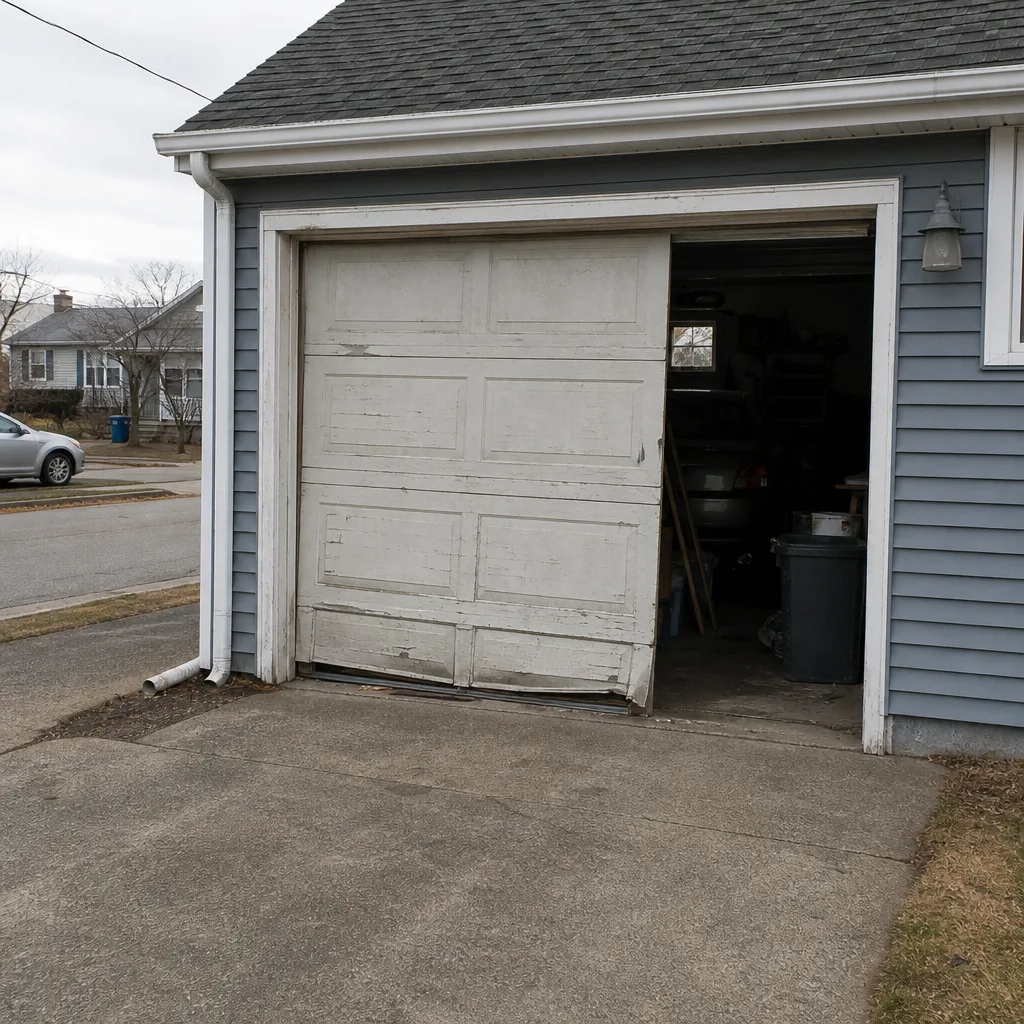 Before
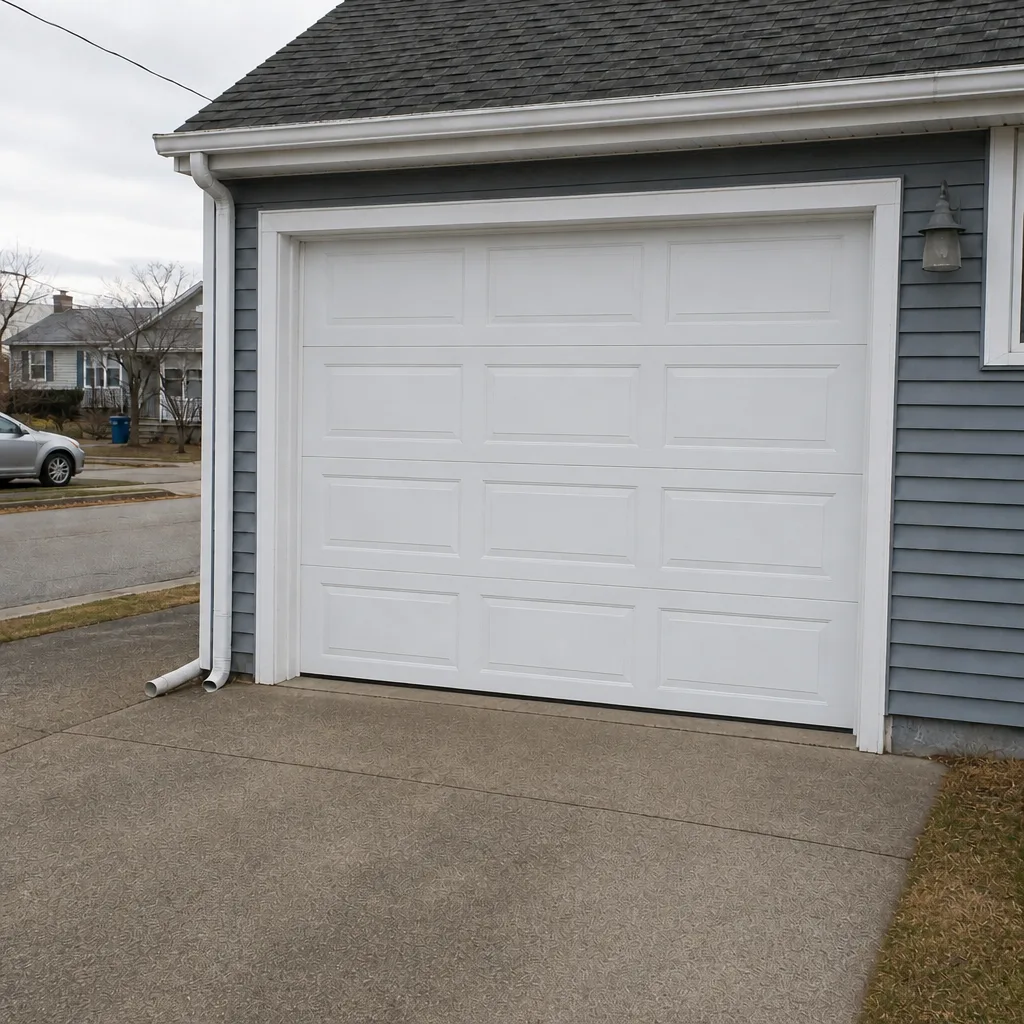 After
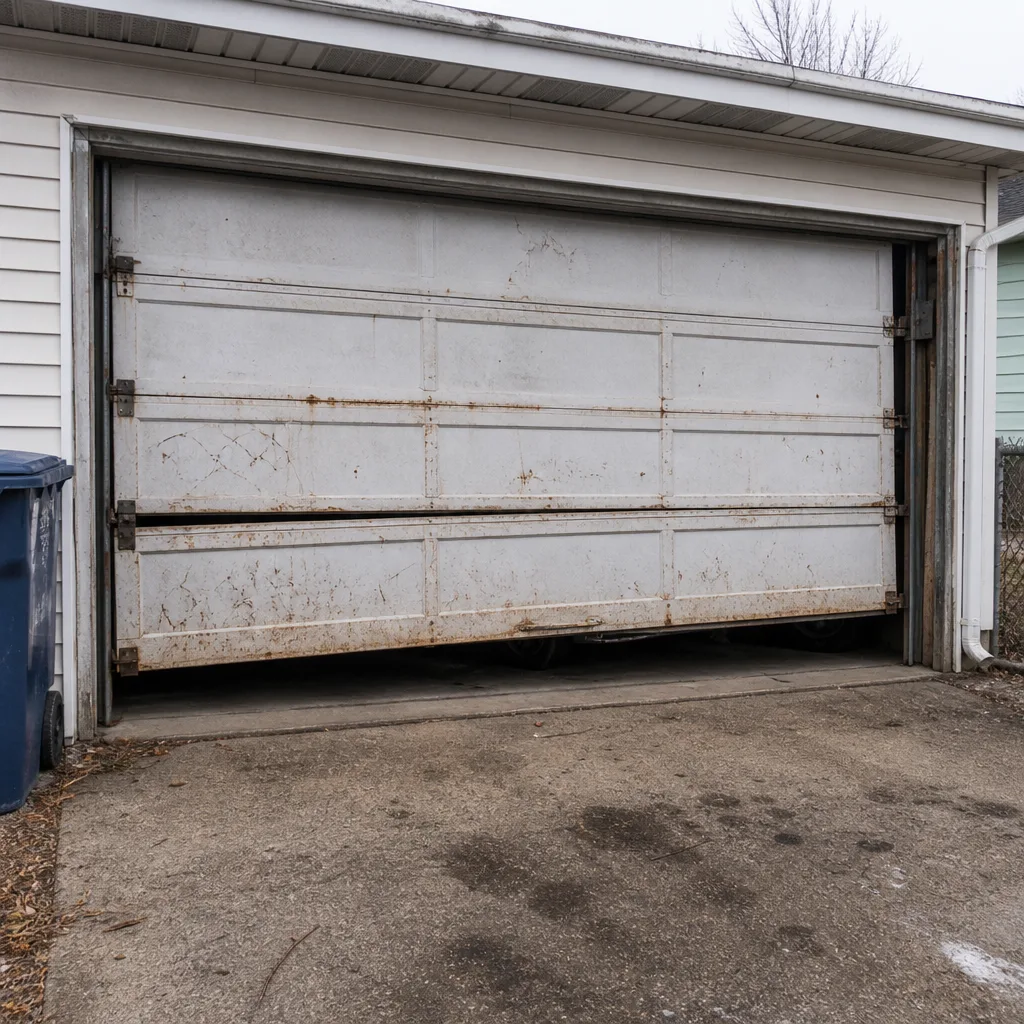 Before
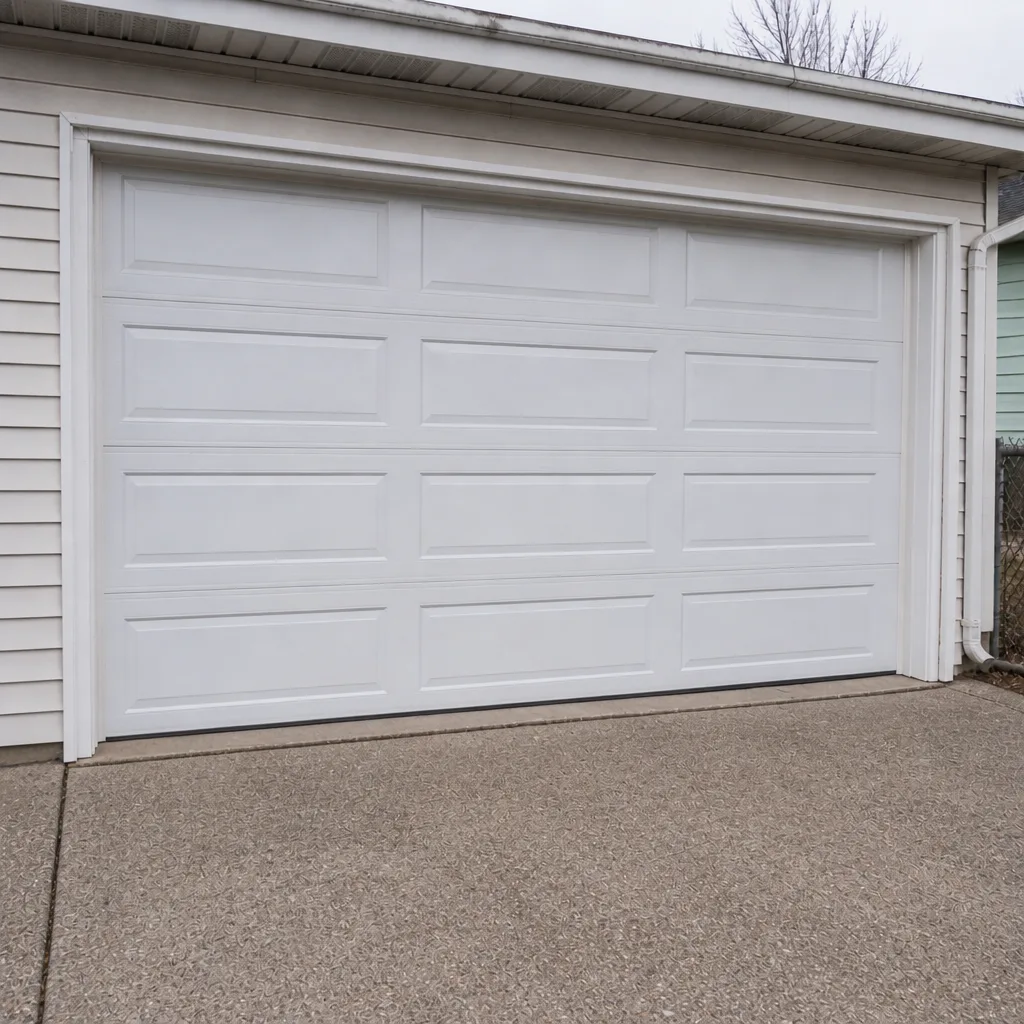 After
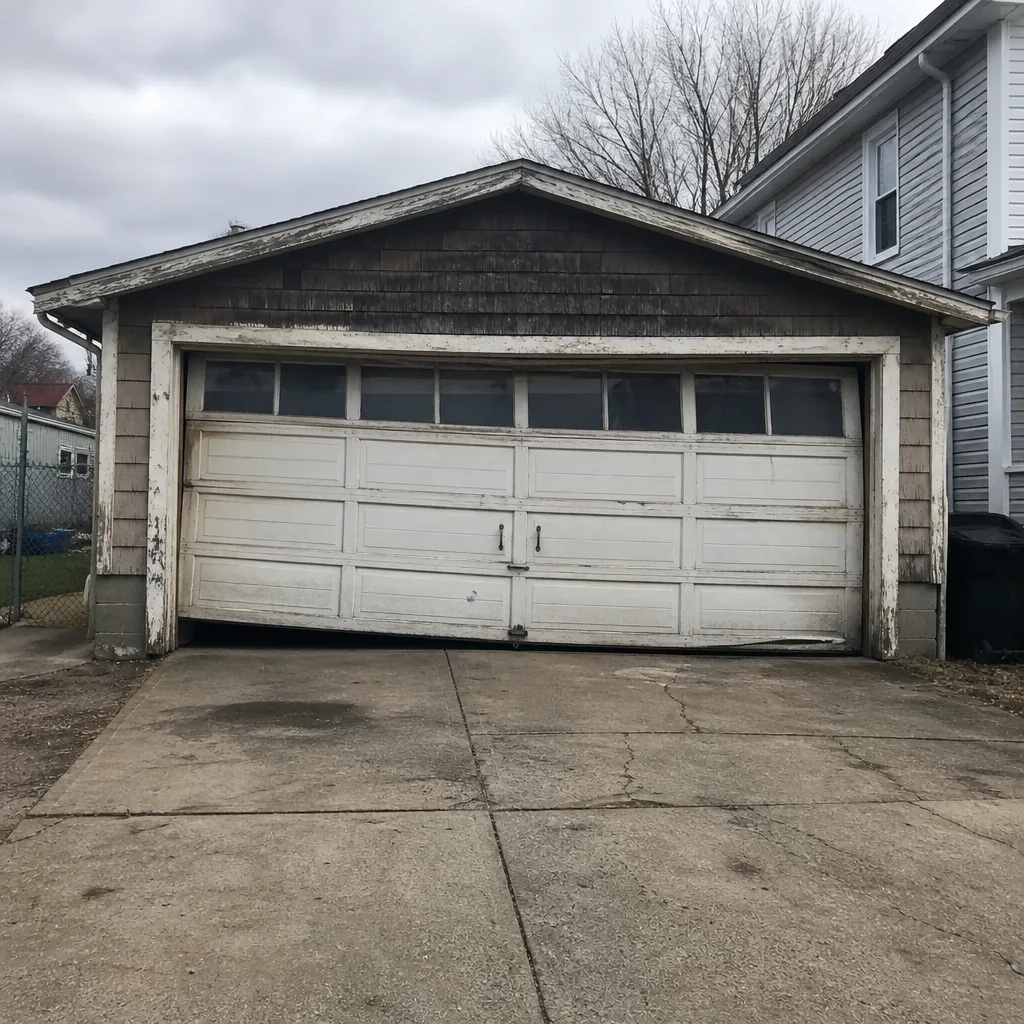 Before
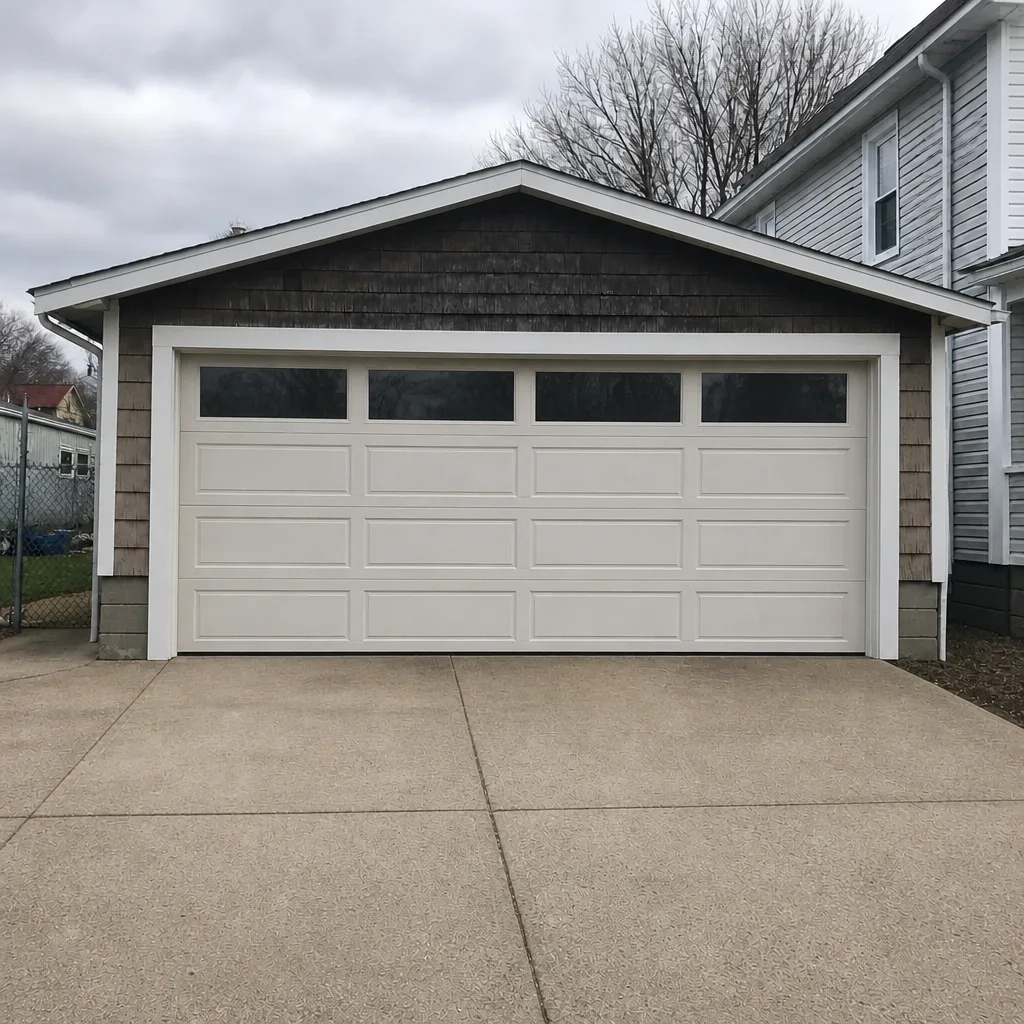 After
When to Call a Professional
Call a professional for any sign on the today rung or any symptom you can’t clearly place on the ladder. That means a snapped or sagging spring, a frayed or slack cable, a door that’s come off its track, a door that reverses for no reason, or a door that visibly hangs crooked. Those are all situations where a trained technician with the right tools should be the one looking at it, not a homeowner on a ladder. Our technicians have up to 12 years of experience and work exclusively on garage doors, so the diagnosis starts from familiarity with the specific tolerances of your system, regardless of brand.
Fall River Garage Door Repair Pros offers free estimates in Fall River. Call (855) 658-4171. We answer 24/7. Fast dispatch from 7am to 7pm, Sunday through Friday. A call outside dispatch hours is booked into the next opening, Sunday through Friday, 7am to 7pm. The estimate is free, and the price is quoted and agreed in writing before any work starts.
Frequently Asked Questions
The most common warning sign we see is a door that binds or sticks at one spot in cold weather, usually a hardware or alignment issue rather than a true settling problem. It’s often dismissed as the temperature, but if it persists into milder weather it’s a real repair. Call (855) 658-4171 for an exact quote; estimates are free.
Grinding, squealing, or popping from the door usually means something mechanical needs attention, and popping from a spring or cable means stop using the door. Compare the noise to where it comes from and when it happens. If you’re not sure, get it checked. Call (855) 658-4171 for an exact quote; estimates are free.
Yes. A broken spring is one of the two classic garage door emergencies, the other being a frayed or slack cable, because the door is running on the opener and cables alone and could drop or fail. Stop using the door and call for emergency service. Call (855) 658-4171 for an exact quote; estimates are free.
No. A door that’s heavy when the opener is disconnected usually has a spring problem, and running it strains the opener and risks a cable failure. Treat it as a spring issue and stop using the door until it’s serviced. Call (855) 658-4171 for an exact quote; estimates are free.
Cold weather stiffens springs, contracts metal, and drives freeze-thaw cycles that lift slabs and open gaps at the bottom seal. The result is binding, sagging springs, and drafty gaps that appear only after the thaw. If they don’t clear up in mild weather, book a visit. Call (855) 658-4171 for an exact quote; estimates are free.
No. The written estimate you agree to before any work starts sets the final price, so there’s no surprise invoice after the repair. The on-site assessment is what the estimate is based on, and the price is set per job by that written estimate. Call (855) 658-4171 for an exact quote; estimates are free.
Yes. The local pros we connect you with are licensed and insured as their state requires, and our technicians work exclusively on garage doors. Call (855) 658-4171 for an exact quote; estimates are free.
The Bottom Line
Garage door warning signs aren’t a single “listen for noise” checklist; they’re a system of sounds and visual clues that map to specific diagnoses and specific urgency levels. Grinding usually points to rollers, track, or opener gearing; squealing to dry or worn parts; popping to springs or cables. Broken springs and slack or frayed cables are the two symptoms that mean emergency, regardless of how well the door still runs. Fall River’s winters and springs drive a predictable seasonal set of signs that shouldn’t be dismissed as settling. Our technicians have up to 12 years of experience and work on LiftMaster, Chamberlain, Genie, Craftsman, and the other major brands, plus doors from Clopay, Amarr, Wayne Dalton, and Raynor. Catch the sign at the symptom stage, not the failure stage, and a repair stays a repair.
Contact
If you’ve found a warning sign on your Fall River garage door and you’re not sure what it means, call (855) 658-4171 for a free estimate. We’ll talk through the symptom, schedule a visit, and give you a written price before any work starts. We answer 24/7. Fast dispatch from 7am to 7pm, Sunday through Friday. Whether it’s a noisy roller, a dead opener, or a snapped spring, Fall River Garage Door Repair Pros is the specialist to call. Garage doors are all we do, which means we do them right.
Written by the team at Fall River Garage Door Repair Pros.